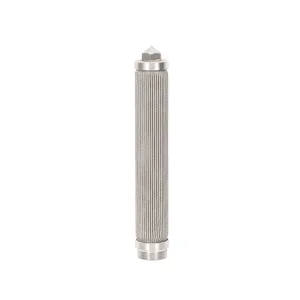
Explore our leading, factory-direct polymer melt filters, candle filter packs, leaf discs, and granulating equipment certified for demanding industrial melt processing line environments.
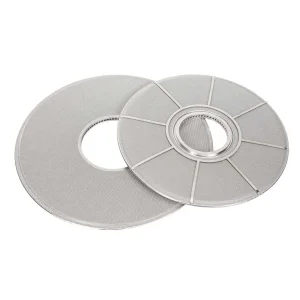
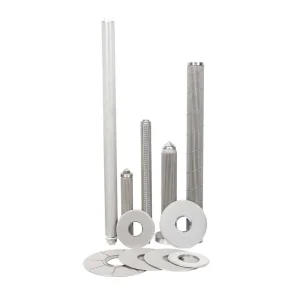
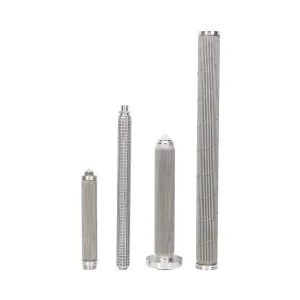
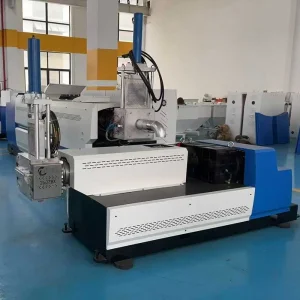
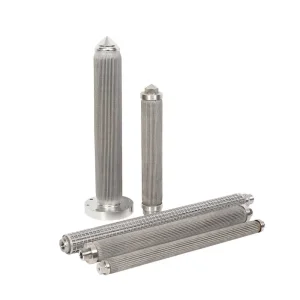
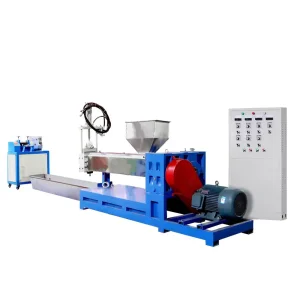
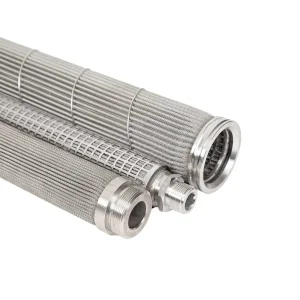
The global polymer extrusion industry is undergoing a paradigm shift driven by stringent sustainability mandates, high throughput targets, and the rapid transition toward closed-loop circular economy models. Polymer melt filtration is no longer merely a protective step to safeguard gear pumps and spinning dies; it has evolved into a strategic lever for product quality, operational efficiency, and material yield optimization.
Processing Post-Consumer Recycled (PCR) resins such as rPET, rPP, and rPE introduces highly variable contamination streams—including foreign particulates, aluminum specs, cross-polymers, and degraded gel agglomerates. Modern extrusion screen filter factories must manufacture specialized filter mesh structures capable of maintaining ultra-high dirt holding capacity (DHC) while preventing rapid delta-P (ΔP) pressure spikes.
Modern extrusion production lines run at elevated extrusion speeds and internal melt pressures reaching up to 300–350 bar. Filter media must retain absolute structural integrity without wire displacement, weave separation, or seam breakdown under intense shear forces and elevated thermal profiles up to 350°C.
Downstream applications such as optical-grade BOPET film, ultra-thin CPP food wrap, and fine-denier synthetic filament yarn require absolute retention ratings as low as 3 to 10 microns (μm). Achieving this level of precision demands multi-layered sintered wire cloth matrices and non-woven metal fiber felts engineered with extreme pore density controls.
Understanding the fluid dynamics of polymer melt behavior across porous stainless steel structures is vital for selecting optimal screen filter specifications. The interaction between polymer viscosity, shear rates, thermal stability, and mechanical strength dictates screen selection.
The geometric layout of woven wire cloth dictates both continuous flow rate and contaminant entrapment performance:
Chemical degradation and stress corrosion cracking are primary failure modes in harsh polymer processing environments:
| Filter Element Type | Filtration Rating (μm) | Porosity Range (%) | Max Temp (°C) | Primary Industrial Application |
|---|---|---|---|---|
| Sintered Wire Mesh Discs | 5 - 200 μm | 35% - 55% | 480°C | Recycling Extruders, Sheet Extrusion, Blown Film |
| Polymer Candle Filter Elements | 3 - 60 μm | 65% - 85% | 350°C | Synthetic Fiber Spinning, BOPET/BOPP Melt Systems |
| Multi-Layer Spot Weld Mesh | 10 - 500 μm | 30% - 45% | 400°C | Continuous Ribbon Screen Changers, Pipe Extrusion |
| Pleated Stainless Cartridges | 1 - 40 μm | 70% - 85% | 500°C | Monofilament Spinning, High-Viscosity Resins |
B2B procurement directors and technical engineers evaluating Chinese extrusion screen filter exporters must move beyond initial unit price and analyze Total Cost of Ownership (TCO), continuous delivery compliance, and rigorous quality assurance protocols.
In high-pressure continuous screen changers (slide-plate or piston type), even micro-level deviations in rim thickness or disk diameter lead to melt leakage (flashing), downtime, and expensive machine damage. Procurement frameworks require strict verification of CNC punching tolerances (±0.05mm).
Processing optics, medical tubing, or electronic capacitor films demands screen mesh clean of residual drawing lubricants, cutting oils, and metallic burrs. Reliable exporters deploy multi-stage ultrasonic degreasing baths and automated optical inspection (AOI) prior to vacuum sealed packaging.
Full batch-level metallurgical traceability is mandatory. Leading manufacturing partners supply material test certificates (MTC) conforming to EN 10204 3.1 standards, detailing chemical composition analysis via PMI (Positive Material Identification) testing and ISO 9001 compliance.
Tailored melt filtration architectures designed to solve unique processing challenges across major plastic conversion and fiber production sectors.
Challenge: Frequent filter changes on high-capacity stretch film lines cause line speed drops and thickness variations.
Solution: Large-surface polymer leaf disc assemblies combined with 316L sintered metal fiber media. Provides exceptionally high dirt loading capacity, maintaining stable differential pressure over extended operational cycles (up to 60 days uninterrupted).
Challenge: High contamination rates in agricultural film and shredded bottle flakes quickly clog standard screen mesh packs.
Solution: Heavy-duty continuous belt screens and auto-backwash filter screens. Designed to automatically flush out accumulated contaminants without stopping the extruder screw, reducing polymer loss to under 0.5%.
Challenge: Micro-particulates cause filament breakage, spinneret clogging, and uneven fiber elongation strength.
Solution: High-precision candle filter cartridges featuring gradient density sintered wire cloth. Ensures sub-micron gel trapping and absolute 5-micron particulate isolation under high viscosity shear stress.
Challenge: High throughput requirements with heavy filler loading (e.g., CaCO3 filled PP/PE) causing rapid mesh abrasion.
Solution: Multi-layered spot-welded screen mesh packs with reinforced outer boundary rings, providing structural rigidity and resistance against abrasive particle erosion.
Ensuring smooth international transactions and seamless factory integration requires strict adherence to global regulatory frameworks, localized customer support channels, and reliable logistics execution.
All extrusion screen filters and candle elements intended for food packaging (e.g., FDA 21 CFR 177.1520) comply with European REACH, RoHS, and EU 10/2011 regulations. Heavy metal migration and toxic residue risks are completely eliminated during manufacture.
Our quality verification processes incorporate ISO 4572 Multipass Testing for filtration efficiency, ISO 2942 Bubble Point Testing for structural integrity, and ISO 2941 Collapse/Burst Resistance Validation under maximum differential pressures.
We provide localized technical assistance, customized buffer stock agreements for regular manufacturing accounts, express courier dispatch for critical spare parts, and dedicated engineering consultation for custom OEM tooling.
As smart factories and Industry 4.0 automation transform polymer processing plants worldwide, next-generation filtration systems are incorporating advanced materials and digital monitoring tools.
Integration of real-time differential pressure telemetry with AI predictive maintenance models. Smart sensors analyze rate of ΔP rise to predict exact screen blinding times, scheduling automatic screen changes without operator intervention.
Application of low-surface-energy fluoropolymer and ceramic thin-film coatings to stainless steel wire surfaces. Reduces polymer melt adhesion, preventing thermal degradation and carbonized gel formation over extended runs.
Developing high-efficiency thermal vacuum pyrolysis and TEG (Triethylene Glycol) cleaning systems that allow polymer candle filters and leaf discs to be cleaned and reused up to 20+ times without structural loss of pore accuracy.
Direct answers to technical queries regarding extrusion screen selection, material grades, cleaning protocols, and customization options.
Explore our full line of specialized candle filters, replacement elements, and high-efficiency plastic recycling granulators manufactured in our ISO 9001 certified facility.