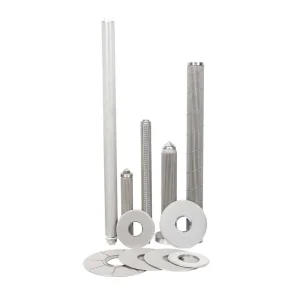
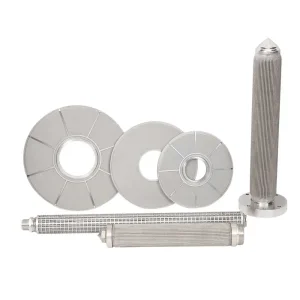
Explore our factory-direct stainless steel SUS 304/316L filter elements, engineered for demanding industrial filtration environments.
In the hyper-competitive global manufacturing landscape, liquid-solid and melt separation efficiency has become a critical baseline for operational profitability. For any tier-one mesh for filter manufacturer & company, providing off-the-shelf woven wire screens is no longer sufficient to meet modern industrial standards. The global industrial shift toward ultra-fine synthetic yarn spinning, zero-defect optical film manufacturing (BOPP/BOPET), complex chemical refining, and circular polymer recycling demands advanced metallurgical science, micro-pore geometry control, and rigorous structural integrity.
Modern polymer melt processing involves non-Newtonian fluids operating under extreme thermal stress (up to 350°C / 662°F) and extreme hydraulic pressures (reaching up to 250 to 300 bar). Standard wire mesh constructions under these conditions often suffer from pore deformation, wire migration, mechanical fatigue, and rapid differential pressure ($\Delta P$) escalation. To solve these core failure modes, leading manufacturers have pioneered advanced sintering techniques, multi-layer gradient structures, and customized stainless steel alloys (SUS 304, SUS 316L, Hastelloy C-276, and Inconel).
Multi-layer sintered media provides progressive depth filtration, trapping coarse gels on outer layers while securing absolute micron ratings deep within the core matrix.
Vacuum thermal diffusion bonding welds individual wire intersection points together, eliminating physical wire displacement under severe surge pressures.
By optimizing dirt-holding capacity (DHC) per unit surface area, operating cycles between off-line cleaning or filter replacements are increased by 40% to 120%.
An in-depth user intent mining analysis across Fortune 500 procurement teams, plant engineers, and global polymer OEMs reveals a decisive change in search and sourcing criteria. Industrial buyers looking for a mesh for filter manufacturer are moving beyond simple unit pricing. They are actively quantifying the **Total Cost of Ownership (TCO)**, which evaluates four key metrics:
| Procurement Benchmark | Legacy Filter Mesh Supply | High-Precision Engineered Mesh (HG Polymer Filter) | Impact on Plant Operational Economy |
|---|---|---|---|
| Micron Rating Integrity | Nominal ratings with wide pore size distribution. | Absolute bubble-point validated micron control (1μm – 200μm). | Prevents spinneret hole clogging and film tear rates by over 85%. |
| Differential Pressure ($\Delta P$) | Rapid pressure spikes due to surface-only blinding. | Linear, slow pressure growth via optimized void volume. | Reduces extruding drive motor power consumption and thermal shear stress. |
| Cleanability & Reusability | Single-use or degrades after 1-2 TEG/ultrasonic washes. | Withstands up to 10–15 calcination/ultrasonic cleaning cycles. | Lowers annual filtration consumable expenses by up to 60%. |
| Mechanical Creep Resistance | Premature mesh sagging under high temperature melt pressure. | Diffusion-bonded multi-layer reinforcement skeleton. | Eliminates catastrophic blowout risks and unplanned downtime. |
When evaluating global suppliers, procurement directors demand verifiable empirical proof: certified material test reports (MTRs compliant with EN 10204 3.1), automated bubble-point test logs, and ISO-standardized surface roughness metrics ($Ra < 0.4 \mu m$ on sealing flanges). High-quality filter mesh manufacturers must deliver complete supply chain traceability alongside top-tier physical performance.
The international filtration market has experienced significant supply chain volatility over recent years. In response, China's advanced manufacturing ecosystem—exemplified by enterprise facilities like **Pujiang HG Plastic Machinery Co., Ltd.**—has evolved into a hyper-efficient hub driven by **Industry 4.0 automation**.
Utilizing computer-controlled heavy-duty weaving looms to maintain consistent wire spacing, tight warp/weft tolerances, and zero defect counts across large production runs.
Robotic micro-plasma and fiber laser seam welding ensures seamless joint strength on candle filter elements and pleated mesh packs without thermal wire degradation.
Direct strategic access to top-grade Chinese stainless steel mills guarantees material purity (low carbon SUS 316L), shorter raw material lead times, and stable price structures.
Filtration dynamics vary drastically across different industrial settings. A premier mesh for filter supplier and exporter must tailor wire geometry, weave type (Plain, Twill, Plain Dutch, Reverse Dutch, Sintered Felt), and element architecture to match specific process fluid parameters.
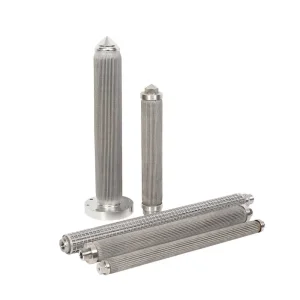
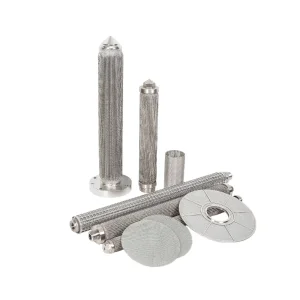
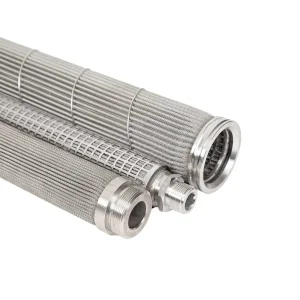
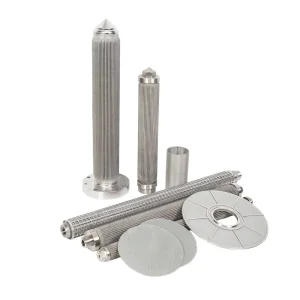
In filament spinning (POY, FDY, BCF) and nonwoven fabric lines (Spunbond & Meltblown), microscopic gel clusters can break individual filaments, leading to costly line stoppages. Our CPF Polymer Candle Filters utilize 3D multi-layered sintered stainless steel fiber felt. This structural arrangement offers an ultra-high void ratio (up to 80%), capturing soft gels under minimal pressure drop without shearing the polymer melt.
Optical grade films used in flat-panel displays and high-barrier packaging require defect-free extrusion. Continuous leaf disc filters (hydraulic screen changers) rely on our rim-welded, hard-segment or soft-segment Leaf Disc Filters. Manufactured with smooth outer edges and uniform pore sizes down to 3 microns, these elements prevent pinholes, black specs, and fish-eyes in the finished film sheet.
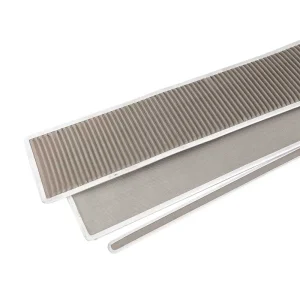
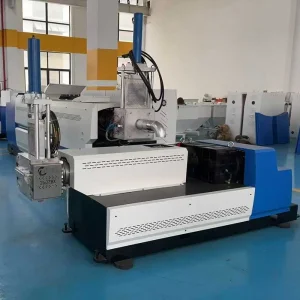
Recycling post-industrial and post-consumer PE/PP films introduces heavy contaminants like paper fibers, aluminum foil fragments, and cross-linked polymers. Our continuous auto-belt filter screens and heavy-duty circular Extruder Screen Mesh Filters feature high tensile strength weaves that handle intense continuous abrasion while extending screen changer shift cycles.
Outside polymer processing, our specialized stainless steel filter elements operate effectively in corrosive catalyst recovery, amine gas treating, and hot gas filtration systems. Utilizing corrosion-resistant alloys (SUS 316L, Monel), these elements withstand thermal shocks and aggressive chemical environments without structural breakdown.
Select from our premium line of polymer filter candle elements, mesh screens, and recycling machinery engineered to international standards.