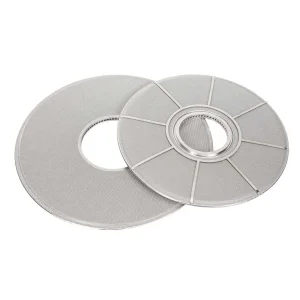
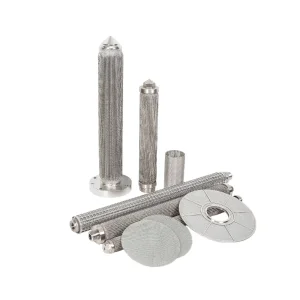
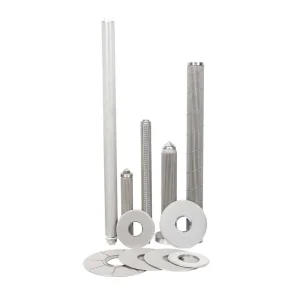
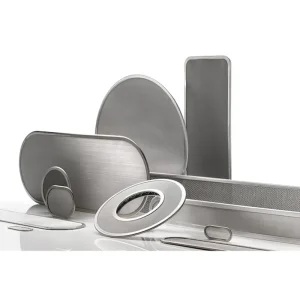
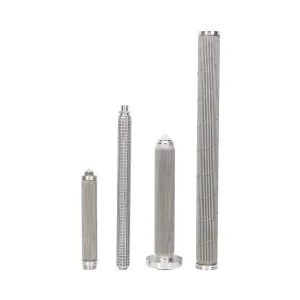
High-precision mesh steel wire assemblies, polymer candle filters, and plastic pelletizing equipment engineered for zero-defect extrusion operations.
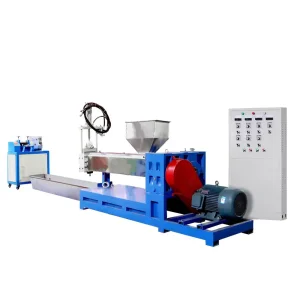
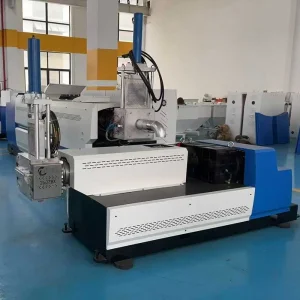
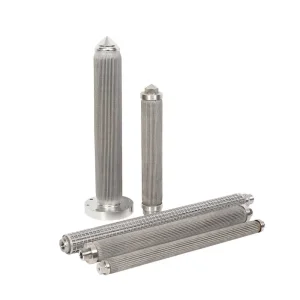
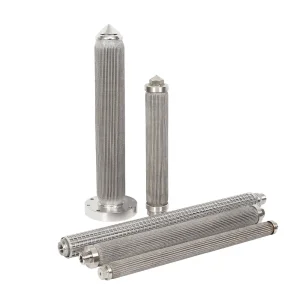
In modern industrial polymer processing, chemical fiber spinning, and continuous extrusion manufacturing, the structural integrity and micro-filtration efficiency of mesh steel wire assemblies serve as the ultimate bottleneck for operational yield. Modern high-quality mesh steel wire factories do not merely weave wire; they formulate precise metallurgical barriers designed to endure hydraulic pressures exceeding 250 bar, operating temperatures reaching up to 350°C, and highly aggressive chemical media.
The transition toward sustainable plastic recycling, ultra-thin BOPET/BOPP film manufacturing, and high-tenacity synthetic yarns has accelerated the demand for micro-rated mesh wire elements. When filtering recycled polymers such as Post-Consumer Recycled (PCR) PET or High-Density Polyethylene (HDPE), standard filter screen packs suffer from rapid gel blinding, localized pore distortion, and premature pressure spikes ($\Delta P$). High-performance mesh steel wire manufacturing solves these systemic failures through controlled wire drawing tolerances, precise cold-working metallurgy, and advanced vacuum sintering technologies.
Information Gain Metric: Traditional wire mesh manufacturing relies on basic tensile drawing of standard AISI 304 alloy. Advanced Industry 4.0 factories utilize low-carbon SUS 316L and Hastelloy C-276 ultra-fine wires subjected to double vacuum annealing. This eliminates internal lattice shear stress, enabling dynamic elastic recovery when subjected to extreme pressure pulses in continuous screen changers.
The mechanical efficiency of a steel wire mesh filter cartridge or leaf disc depends fundamentally on the weave geometry and alloy purity. Leading mesh steel wire factories employ shuttleless computer-controlled looms equipped with laser tension transducers to ensure consistent aperture dimensions across miles of continuous wire cloth.
Configured with heavy warp wires and extremely tight, overlapped shute (weft) wires. Provides high mechanical strength and absolute surface retention for fine polymer melt filtration down to 5 micrometers.
Designed specifically for automatic continuous belt screen changers. Features high-density warp wires and larger shute wires, delivering immense longitudinal tensile strength to resist breaking under high extrusion torque.
Fuses fine filtration mesh layers between protective structural mesh cores at temperatures near melting point under high vacuum. Eliminates wire displacement and prevents media migration under severe backwashing.
| Weave Topology / Type | Common Alloy Grade | Filtration Micron Range | Primary Industrial Advantage | Target Polymer Application |
|---|---|---|---|---|
| Plain Dutch Weave (PDW) | AISI 304L / 316L | 10 - 100 μm | High pore density & low flow resistance | BOPP / BOPET Film Lines |
| Twill Dutch Weave (TDW) | AISI 316L / Hastelloy C276 | 2 - 25 μm | Extremely smooth surface, zero fiber snagging | Chemical Fiber (Spunbond/Meltblown) |
| Reverse Dutch Weave (RDW) | High-Tensile SUS 304 | 40 - 250 μm | High tensile strength along continuous ribbons | Auto Continuous Belt Screen Changers |
| 5-Layer Sintered Wire Mesh | SUS 316L / 904L | 1 - 60 μm | Permanent pore structure, high backwash capability | High-Viscosity Monomer & Resin Filtration |
| Sintered Metal Fiber Felt | 316L Non-woven Fiber | 3 - 80 μm | Ultra-high dirt holding capacity (DHC) | Polymer Candle Filter Cartridges |
China's modern mesh steel wire factories have evolved beyond manual manufacturing to fully integrated Smart Factories. By combining automated wire drawing, real-time laser diffraction measurement, automated cleanroom assembly, and robotic plasma welding, top-tier domestic manufacturers offer unmatched supply chain resilience and cost efficiency.
High-strength mesh steel wire screen packs remove cross-contaminated paper, aluminum, wood fibers, and unmelted gels from post-industrial and post-consumer PE/PP/PET plastic waste during pelletizing.
Leaf disc filter assemblies made of ultra-clean SUS 316L wire mesh eliminate micro-gel pinholes and prevent web breaks in ultra-high-speed BOPP, BOPET, and BOPA film manufacturing lines.
Pleated candle filter cartridges constructed with gradient porosity wire mesh maximize total filtration area within compact housings, extending on-stream operational life in nylon and polyester spinning plants.
As global environmental regulations push manufacturers toward circular plastics and zero-carbon targets, mesh steel wire technology is undergoing rapid innovation. Key technical vectors shaping the future include:
For procurement directors, plant engineers, and OEM machine builders, sourcing mesh steel wire filter components requires evaluating technical metrics beyond per-unit price. Using a total cost of ownership (TCO) methodology ensures operational safety and prevents unscheduled line shutdowns.
Critical Audit Metric: Bubble Point Pore Size Verification (ASTM F316-03). Always request factory test documentation verifying the maximum pore size via isopropyl alcohol bubble point testing. This confirms that no oversized apertures exist due to loom vibration or irregular wire tensioning.
Partnering with an established mesh steel wire factory guarantees robust international compliance standards. Top export-oriented manufacturers adhere strictly to global regulatory quality protocols, mitigating cross-border sourcing risks for enterprise buyers.
Comprehensive quality management systems covering every production phase from raw wire entry to final bubble point certification.
Full environmental compliance ensuring freedom from heavy metals, toxic drawing lubricants, and restricted chemical substances.
Vendor-Managed Inventory (VMI) services and customized export packaging (VCI anti-rust wrapping) to protect goods during ocean transit.
Answers to critical technical questions regarding mesh steel wire selection, melt filtration efficiency, and factory customization.
Explore our full line of specialized leaf disc filters, high-viscosity candle elements, and plastic recycling granulating systems.