1 / 3
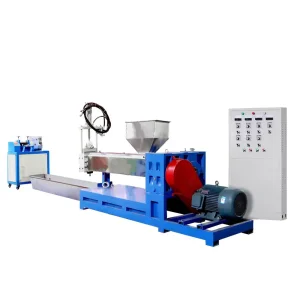
The plastic waste is fed into an extruder, where it is melted and formed into a continuous strand.
The melted PP is cooled, often using cold water or air cooling systems to solidify the strands.
The cooled strands are chopped into small pellets using a pelletizing die or cutter.
Any excess moisture is removed from the pellets to prepare them for further use or sale.
| Model | Diameter (mm) | Length (mm) | Power (kw) | Temp Control | Output (T/24H) |
|---|---|---|---|---|---|
| 100 | 100 | 2800 | 30 | 6 | 4ton |
| 110 | 110 | 3200 | 37 | 6 | 5ton |
| 120 | 120 | 3200 | 45 | 6 | 6ton |
| 130 | 130 | 3200 | 55 | 7 | 7-8ton |
| 140 | 140 | 3800 | 75 | 7 | 8-9ton |
| 150 | 150 | 4200 | 90 | 7 | 10-11ton |
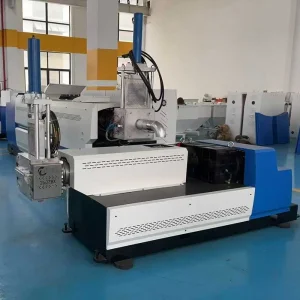
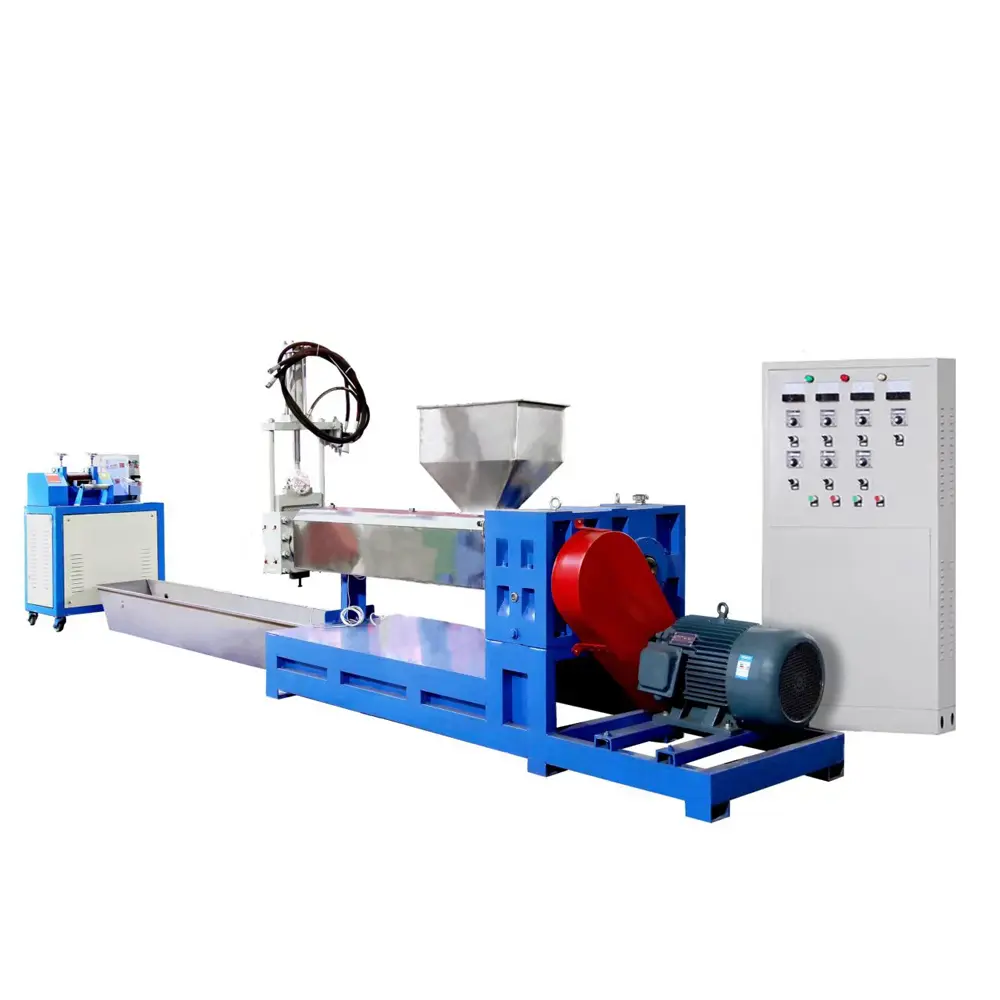
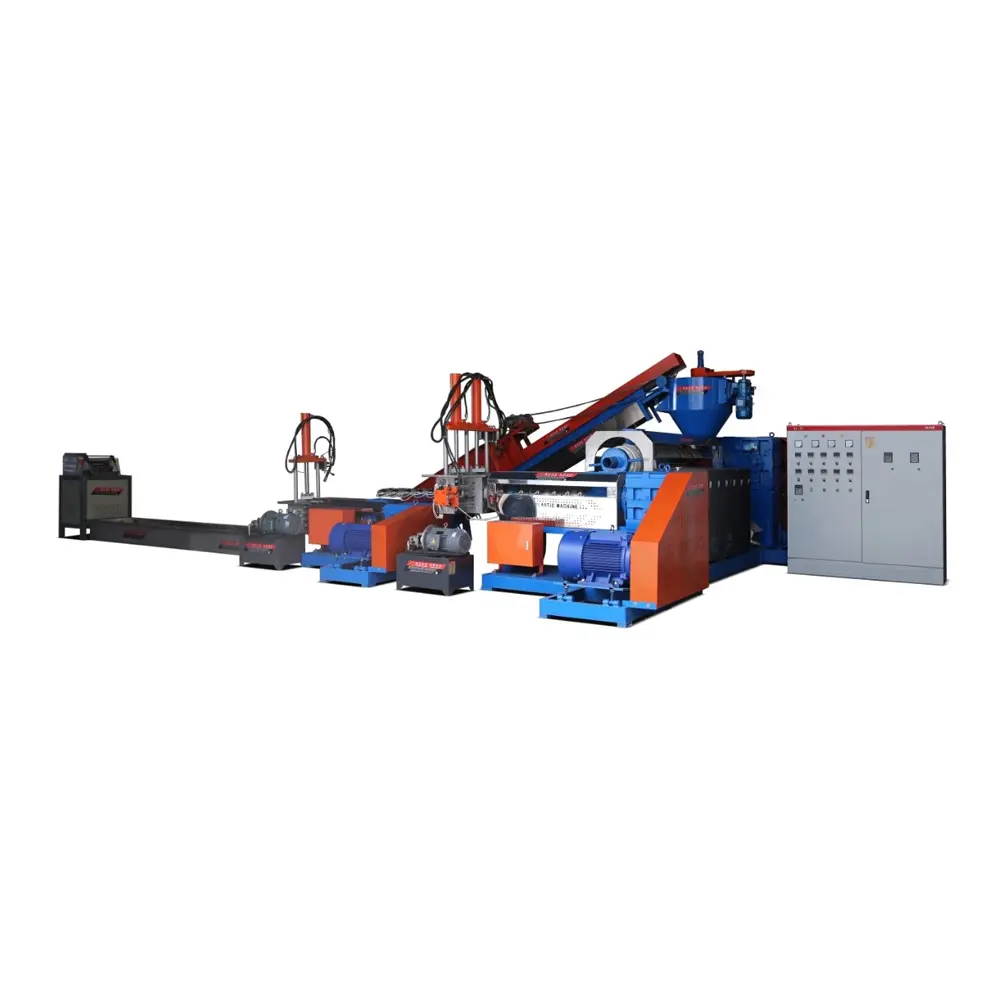
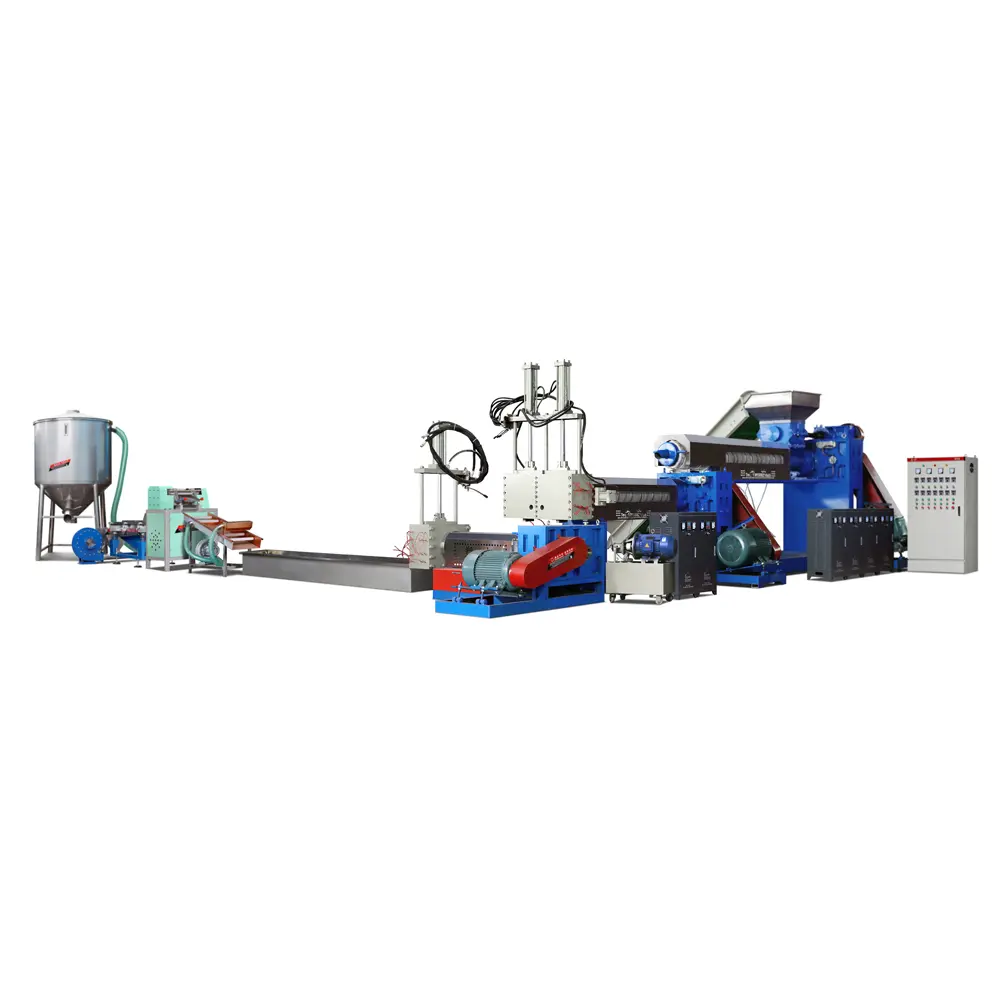
Our pelletizing machine is designed to process various plastic materials including PP, PE, HDPE, LDPE, as well as dry materials, tide materials, and water washing recycled plastics.
Equipped with single and double exhaust structures, the system effectively drains moisture and gas during processing, ensuring the produced pellets are dense, strong, and full of gloss.
Depending on the machine model selected (from Model 100 to Model 150), daily output ranges from 4 tons to 11 tons per 24 hours.
The machine features a large-torque gearbox, an optimized screw design, and high-efficiency electric motors that maximize plasticizing while maintaining low energy consumption.
Yes, HG Machinery provides complete customized recycling solutions engineered to meet your specific output requirements and raw material characteristics.