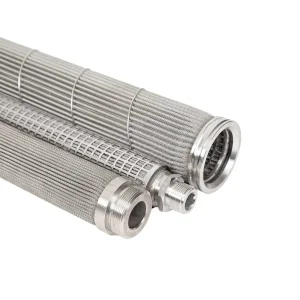
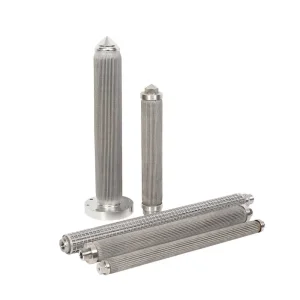
Explore our factory-direct stainless steel candle filter elements, melt pleated cartridges, and screen mesh systems designed for high-contamination polymer recycling lines.
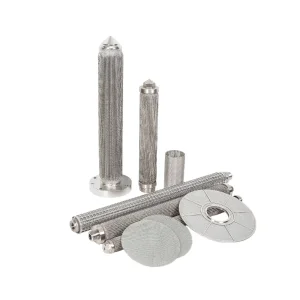
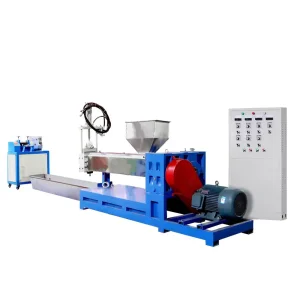
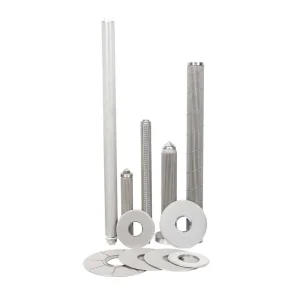
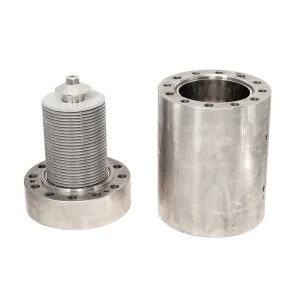
The global plastics recycling landscape is undergoing a systemic structural transformation driven by strict regulatory mandates, such as the European Union's Packaging and Packaging Waste Regulation (PPWR) and post-consumer recycled (PCR) content quotas across North America and Asia-Pacific. As industrial converting lines shift toward processing complex post-consumer waste streams (such as agricultural PE films, ocean-bound PP, and contaminated PET bottle flakes), the operational challenge shifts dramatically toward high-efficiency melt decontamination.
Extrusion machine manufacturers and specialized recycling factories now operate at the intersection of thermal fluid dynamics, mechanical shear optimization, and advanced metallurgy. Modern recycling extrusion lines cannot deliver virgin-grade resin substitute pellets without robust, multi-stage melt filtration hardware capable of handling high dynamic pressure differentials ($\Delta P$) and heterogeneous particulate loading.
Technical Takeaway: Modern recycling extrusion machinery relies entirely on melt filtration integrity. High quality melt filter media (such as SUS 304/316L sintered felt and pleated candle elements) extends downstream screen changer lifetime, preserves melt index uniformity, and eliminates melt spinning breakages in re-extruded fibers.
Converting heavily contaminated post-consumer plastic scrap into high-value resin pellets suitable for food-contact packaging and automotive applications.
Optimizing melt flow channel geometries to prevent polymer thermal degradation, gel formation, and chain scission during continuous high-pressure filtration.
Deploying SUS 316L stainless steel alloys and sintered metal mesh to resist abrasive inorganic filler wear (silica, calcium carbonate) and acidic degradants.
In high-throughput plastic recycling pelletizing factories, the filtration unit acts as the primary defense mechanism protecting spinning nozzles, sheet dies, and blow-molding heads. Melt filtration hardware must operate continuously under extreme operational parameters: temperatures ranging from 180°C to 340°C, pressures up to 350 bar (35 MPa), and melt viscosities spanning 50 Pa·s to over 3,000 Pa·s.
Leading manufacturers like Pujiang HG Plastic Machinery Co., Ltd. engineer customized filtration media tailored to distinct polymer rheologies. Below is an engineering comparison of the primary filtration mechanisms deployed in industrial extrusion lines:
| Filtration Media Type | Metallurgical Material | Filtration Rating (μm) | Max Operating ΔP | Primary Application Area |
|---|---|---|---|---|
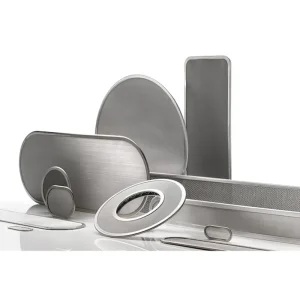
| Sintered Wire Mesh Discs | SUS 304 / SUS 316L | 10 - 250 μm | 210 bar | Extruder Screen Changers, PP/PE Film Granulation |
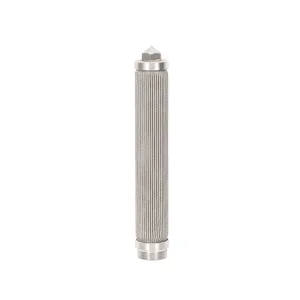
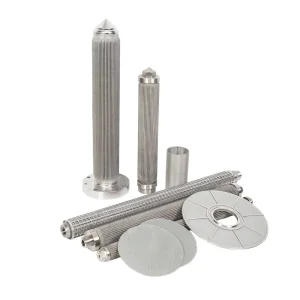
| Pleated Candle Filter Cartridges | SUS 316L Sintered Fiber Felt | 3 - 60 μm | 250 bar | CPF Polymer Melt Units, PET Chemical Fiber, BOPP Lines |
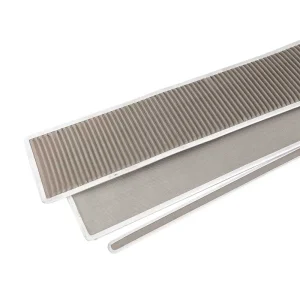
| Square & Dutch Weave Belts | SUS 304 High-Tensile Wire | 40 - 400 μm | 180 bar | Auto Continuous Ribbon Screen Changers |
| Multi-Layer Sintered Laminates | SUS 316L (5-Layer Composite) | 5 - 100 μm | 300 bar | High-Viscosity Polycarbonate, PA66, Engineering Plastics |
Filtration performance is governed by Darcy’s Law for fluid flow through porous media, modified for non-Newtonian polymer melts:
$$\frac{Q}{A} = \frac{k \cdot \Delta P}{\mu_{eff} \cdot L}$$
Where $Q$ represents volumetric throughput, $A$ is the total active filtration surface area, $k$ is the permeability coefficient of the metallic medium, $\mu_{eff}$ is the effective shear-dependent viscosity, and $L$ is media thickness. To prevent rapid pressure spikes ($\Delta P$) that force recycling machines into automatic shutdown, high-quality factories utilize pleated candle filter geometry. By pleating the stainless steel mesh or fiber felt, active surface area ($A$) is multiplied by 300% to 500% within the same structural outer housing diameter, dramatically increasing contaminant holding capacity.
Key parameters for procurement teams, plant engineers, and OEM machine builders when selecting tier-1 filtration component suppliers.
High-quality factories enforce micro-meter level tolerances (±0.005mm) on end cap welds and hub connections, preventing bypass leakage of molten polymer at 300 bar pressures.
Tier-1 suppliers validate cleanability. SUS 304/316L candle filters must undergo vacuum pyrolysis, calcination, and multi-stage ultrasonic baths for complete resin removal and reuse.
Full Positive Material Identification (PMI) testing guarantees that SUS 316L stainless steel meets exact Ni-Cr-Mo composition specs, preventing premature chemical pitting in aggressive melts.
How leading polymer processing factories deploy specialized melt filtration components across key global industrial sectors.
Location & Market: European Union (Germany, Italy, Netherlands)
Technical Challenge: Food-grade rPET pelletizing requires removing non-melting polymer contaminants (PVC, PA, silicone) down to 20 microns while operating continuous 24/7 extrusion lines.
Engineering Solution: Implementation of dual-bolt continuous hydraulic screen changers fitted with SUS 316L multi-layer sintered wire mesh disc packs and high-surface CPF candle filter elements from Pujiang HG Plastic Machinery.
Location & Market: North America & Latin America (USA, Mexico, Brazil)
Technical Challenge: Heavy sand, soil, and paper label contamination in post-agricultural LDPE/LLDPE mulch film washing plants causes rapid filter screen blinding and high scrap rates.
Engineering Solution: Continuous rotary backflush screen changers utilizing high-strength Dutch weave stainless steel wire filter belts, enabling continuous automatic dirt discharge without line interruption.
Location & Market: Asia-Pacific (China, Vietnam, India, Turkey)
Technical Challenge: Microscopic carbon gel particles cause filament breakage during ultra-high-speed spinning (4000 m/min) of recycled Polyester (rPET) staple fiber and filament yarns.
Engineering Solution: High-viscosity polymer candle filter assemblies manufactured from 3-micron SUS 316L metal fiber felt, delivering exceptional gel retention and thermal integrity.
Location & Market: Global Industrial Manufacturing Hubs
Technical Challenge: Shredded e-waste plastics contain abrasive flame retardants, glass fibers, and residual metallic fragments that destroy conventional extruder screens.
Engineering Solution: Heavy-duty, reinforced multi-layer sintered square mesh plates with high structural collapse ratings (over 150 bar differential pressure).
Operating industrial recycling extrusion machinery requires full compliance with international safety, pressure equipment, and food-contact material standards. Leading filtration suppliers ensure that every filter cartridge, screen mesh disc, and candle filter assembly undergoes strict quality control protocols before global export.
Comprehensive quality management systems governing raw stainless steel inspection, precision weaving, automated sintering cycles, and final pressure drop testing.
Pressure Equipment Directive certification ensuring CPF candle filter vessels and high-pressure housings safely withstand extreme hydraulic working pressures.
Verification that stainless steel filter elements contain no hazardous extractables, making them safe for food-contact packaging resin manufacturing.
Furthermore, localized technical support programs provide extrusion plant managers with on-site engineering consultations, custom OEM filter element reverse engineering, CAD drawing validation, and emergency spare part stocking programs in regional distribution nodes across Europe, North America, and Southeast Asia.
The next decade of plastics recycling technology will be defined by smart digital integration, sub-micron filtration precision, and automated self-cleaning mechanisms. As global recycling targets approach 50%+ mandatory PCR inclusion in premium consumer products, filtration hardware must evolve rapidly.
Integration of IoT differential pressure ($\Delta P$) sensors and machine-learning algorithms to predict filter mesh clogging, dynamically adjusting backflush cycles before melt flow degradation occurs.
Advancements in chemical depolymerization pre-filtration using nano-scale metallic fiber matrixes to isolate chemical catalysts and microscopic oligomers in advanced recycling.
Next-generation high-pressure hydraulic purge channels that eliminate polymer melt loss during backflush cleaning, reducing operational scrap rates below 0.1%.
Expert answers to common engineering, procurement, and maintenance questions regarding recycling extrusion machine filtration systems.
Browse our specialized SUS 304 melt filter elements, polymer candle filters, and industrial plastic pelletizing machinery.