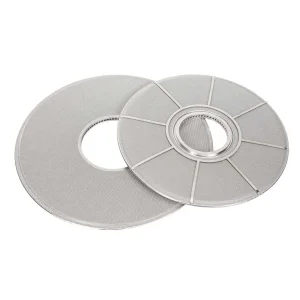
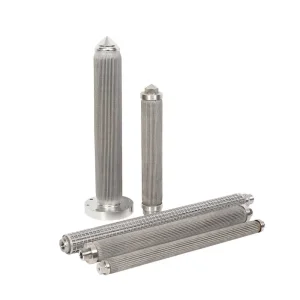
Explore our ISO-certified industrial filtration elements and extruder component systems matching global OEM standards.
Providing definitive engineering clarity on sealing integrity, deformation thermodynamics, and zero-defect melt containment for tier-1 fiber manufacturers.
In high-speed synthetic fiber spinning (POY, FDY, BCF) and ultra-fine nonwoven fabric production, the spinneret assembly operates under continuous mechanical stress. Molten polymers such as Polyester (PET), Polyamide (PA6/PA66), and Polypropylene (PP) are extruded at pressures exceeding 300 bar and operating temperatures ranging between 260°C and 340°C.
A failure in the spinneret seal causes microscopic polymer leaks, leading to catastrophic degradation of fiber denier uniformity, carbonization of leaked polymer on the die face, unexpected line downtime, and severe damage to expensive spinneret packs and distribution plates.
Leading spinneret seals manufacturers & factories must balance ductility with creep resistance. When the spinneret pack is bolted into the spin beam, the sealing ring undergoes controlled plastic deformation to fill the microscopic asperities of the stainless steel housing faces.
Using proprietary annealing protocols, high-purity aluminum alloys (e.g., Al 1050/1100), oxygen-free copper, and ultra-soft stainless steel grades are calibrated to provide precise yield strength. This ensures immediate gas-tight sealing during cold torque installation while maintaining elastic memory throughout thermal expansion cycles.
Comparative technical analysis of industrial spinneret sealing media based on polymer viscosity, operational temperature, and chemical exposure.
| Seal Material Grade | Hardness (HB / HV) | Max Temp (°C) | Pressure Rating | Primary Polymer Application | Key Mechanical Advantage |
|---|---|---|---|---|---|
| High-Purity Soft Aluminum (Al 1050 / 99.5%) | HB 20 - 28 | 320 °C | Up to 300 Bar | PET Filament, PP Spunbond, Nylon 6 | Maximum plastic flow under low bolt torque; flawless micro-asperity filling. |
| Deoxidized High-Conductivity Copper (C10200) | HB 45 - 60 | 400 °C | Up to 400 Bar | PA66 Engineering Yarns, PBT, High-Viscosity PET | Exceptional thermal conductivity prevents localized heat spots; high creep resistance. |
| Annealed Stainless Steel 316L | HV 110 - 130 | 550 °C | Up to 500 Bar | Fluoropolymers (PTFE/PVDF), Corrosive Monomers | Ultimate chemical inertness and extreme pressure stability under acidic melt conditions. |
| Graphite-Reinforced PTFE Composites | Shore D 55 - 65 | 260 °C | Up to 180 Bar | Low-temperature Masterbatch & Elastomer Extrusion | Self-lubricating release properties; non-stick removal during pack changeovers. |
Micro-burrs on sealing ring edges are the primary cause of line leaks. Modern manufacturing facilities employ optical sorting and chemical deburring to ensure 100% edge flatness and zero flash.
Sealing rings are engineered with calculated thermal expansion coefficients ($\alpha$) to maintain constant sealing pressure as the spin pack transitions from room assembly to operating temperature.
From oval and rectangular gasket geometries for sheet dies to multi-ring concentric steps for complex spin packs, custom CAD/CAM tooling delivers rapid prototyping for global buyers.
Leveraging Zhejiang's industrial hardware cluster, Pujiang HG Plastic Machinery Co., Ltd. combines 20+ years of polymer filtration expertise with world-class manufacturing scale.
Located in Pujiang, Zhejiang Province, our manufacturing infrastructure sits at the heart of China’s non-ferrous metal precision processing cluster. We secure high-purity aluminum coils, electrolytic copper plates, and premium SUS 304/316L wire mesh directly from primary smelters.
This localized supply chain eliminates multi-tier middleman markups, ensuring global buyers receive premium-grade spinneret seals and melt filter elements at a 30% to 45% cost advantage over European or North American distributors without sacrificing metallurgical purity.
Every batch of spinneret gaskets produced in our factory undergoes rigorous Quality Control (QC) protocols:
Strategic purchasing recommendations for procurement managers, plant directors, and OEM equipment integrators.
In continuous filament spinning plants, a single spinneret leak costs thousands of dollars per hour in lost output and manual cleaning effort. Purchasing precision-certified spinneret seals guarantees reliable pack sealing from startup to burn-off cleaning.
Our custom engineering team designs spinneret seals fully compatible with major OEM spinning machine systems including Barmag, Neumag, Rieter, Meccaniche Moderne, and domestic Chinese spinning frames. Drawing-to-part production is completed within 7 to 10 days.
To shield global buyers from global logistics disruptions, Pujiang HG offers vendor-managed inventory (VMI) programs, scheduled blanket orders, and express air dispatch to over 80 countries worldwide.
Tailored sealing solutions for specialized extrusion environments and high-stress manufacturing conditions.
In high-speed spinning plants operating at winder speeds over 4,500 m/min, pressure stability inside the spin pack is crucial. Soft aluminum spinneret seals adapt perfectly to the micro-grooves of the distribution plate, sealing the pack under intense dynamic pressure fluctuations while allowing clean disassembly during pyrolytic cleaning cycles.
Spunbond dies often exceed 3 to 5 meters in continuous length, requiring long, perfectly straight, or sectional rectangular gaskets. Our precision-punched soft copper and aluminum seals prevent polymer bypass across multi-zone die heads, protecting delicate spinneret hole capillaries from cross-contamination.
Processing recycled flake polymers (rPET) or biodegradable polymers (PLA/PBAT) introduces volatile organic compounds and moisture-induced thermal shifts. Specialized annealed copper seals resist acidic degradation and maintain elasticity during chemical recycling filtration.
Industrial technical yarns for tire cord, geotextiles, and carbon fiber precursor production demand extreme polymer viscosity and extrusion pressures up to 350 bar. Stainless steel 316L and copper composite seals ensure total leak isolation under heavy-duty continuous thermal stress.
Guaranteeing full regulatory compliance and seamless integration for overseas manufacturing plants.
Our entire manufacturing pipeline—from raw metal slitting, stamping, and annealing to ultrasonic washing and final inspection—operates strictly under certified ISO 9001 quality management protocols.
All aluminum, copper, and stainless steel raw materials are 100% compliant with EU REACH and RoHS regulations. Certificate of Analysis (CoA) and heavy metal test reports accompany every export shipment.
For spinneret seals used in food packaging film extrusion (BOPP/BOPET) or medical nonwoven production, our gaskets are certified free of toxic lubricants and fully safe for direct food contact applications.
Anticipating the technological demands of next-generation synthetic fiber and bio-polymer manufacturing.
As consumer demand shifts toward sea-island and segment-pie ultra-fine microfiber synthetic fabrics, spinneret capillary diameters are shrinking below $0.15\text{ mm}$. This demands micro-level filtration and spinneret sealing accuracy. Even a sub-micron metallic particle or seal edge flaking can plug capillaries. Next-generation seals feature electro-polished edges and laser-etched alignment guides.
With global sustainability mandates driving the adoption of post-consumer recycled (PCR) plastics, melt filtration systems must process higher gel contents and abrasive particles. Sealing materials are evolving toward hybrid multi-layer metal-graphite composites that handle frequent pressure surges during automated backwash screen changes.
Direct engineering answers to common questions regarding spinneret seal procurement, material selection, and installation.
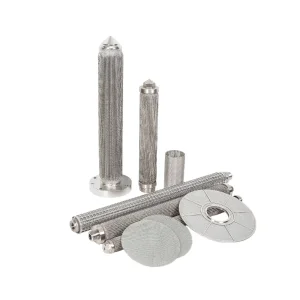
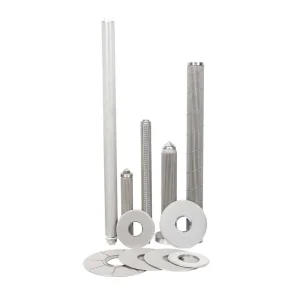
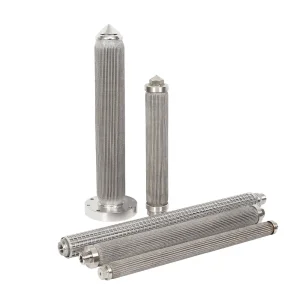
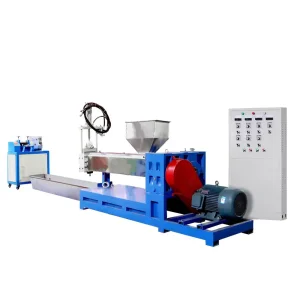
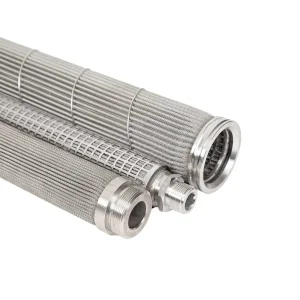
Explore our full line of candle filter elements, screen mesh filters, leaf discs, and recycling equipment.