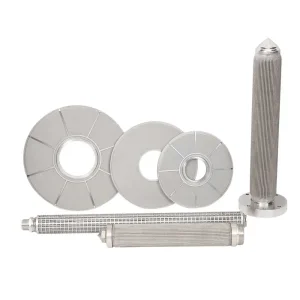
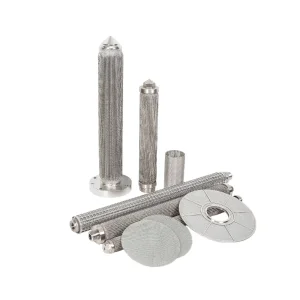
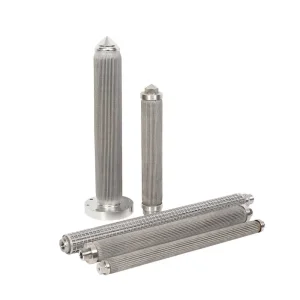
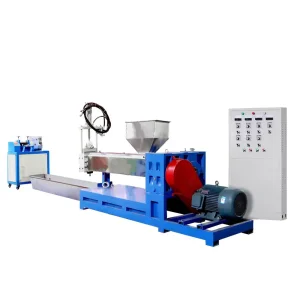
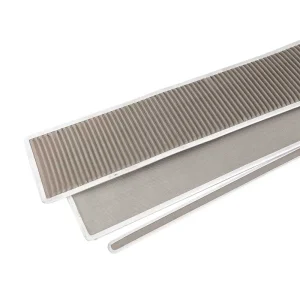
Explore our core engineering product line manufactured with precision SUS304/316L stainless steel alloys, tailored for high-viscosity melt polymer processing and industrial extrusion.
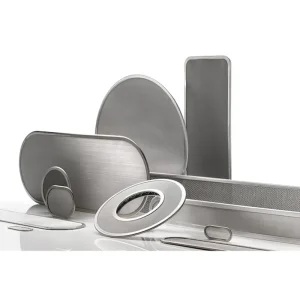
In modern industrial manufacturing—spanning polymer extrusion, petrochemical refining, aerospace containment, and architectural engineering—stainless welded mesh represents the foundational barrier for structural integrity and microscopic particle separation.
As global industrial demands transition toward higher process temperatures, aggressive chemical media, and stringent micron-level purity requirements, selecting verified High-Quality Stainless Welded Mesh Suppliers & Exporters has become a critical operational leverage point. Traditional woven wire cloths often suffer from mesh slippage under extreme hydraulic shear pressure. In contrast, electro-fusion resistance-welded stainless mesh locks wire intersections at the molecular level, delivering fixed aperture dimensions, exceptional tensile rigidity, and zero mechanical deformation.
The reliability of stainless welded mesh under harsh industrial stress depends directly on chemical composition and phase microstructure. Leading exporters engineer products utilizing standardized chromium-nickel and chromium-nickel-molybdenum alloys:
| Alloy Grade | UNS Standard | Key Chemical Elements | Corrosion & Thermal Resistance | Primary Industrial Use Case |
|---|---|---|---|---|
| SUS 304 / 304L | S30400 / S30403 | 18% Cr, 8% Ni (Low Carbon L-grade) | Good atmosphere & mild acid resistance; up to 650°C. | Architectural mesh, general filtration, industrial cages. |
| SUS 316 / 316L | S31600 / S31603 | 16% Cr, 10% Ni, 2-3% Mo | Superior pitting resistance in chloride environments; up to 800°C. | Polymer melt filtration, chemical fiber, marine screens. |
| SUS 904L | N08904 | 20% Cr, 25% Ni, 4.5% Mo, 1.5% Cu | Extreme sulfuric & phosphoric acid resistance; zero stress corrosion cracking. | Petrochemical processing, acid gas scrubbing units. |
| Inconel 625 / 825 | N06625 / N08825 | High Nickel-Chromium-Molybdenum matrix | Extreme thermal stability (>1000°C); withstands halogenated compounds. | Aerospace heat shields, nuclear reactor filtering media. |
Utilizing CNC automated multi-head resistance spot welding, each joint undergoes localized Joule heating. Solid-state diffusion locks the wire matrix without degrading the surrounding austenitic structure or causing grain-boundary chromium carbide precipitation.
Wire diameters ranging from 0.05mm to 6.0mm are drawn through polycrystalline diamond dies, guaranteeing diameter tolerances within $\pm 0.003\text{ mm}$ and aperture uniformity across square or rectangular grids.
Post-weld ultrasonic bath degreasing combined with citric/nitric acid passivation removes thermal oxide scales, restoring the self-healing $\text{Cr}_2\text{O}_3$ passive layer across all weld zones.
Stainless welded mesh is not merely a hardware commodity; it is an engineered component serving multi-sector supply chains globally.
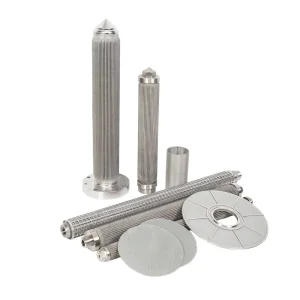
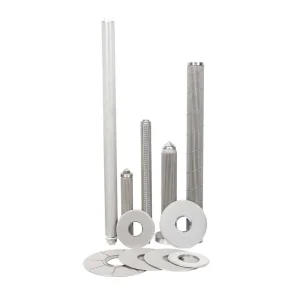
In high-output continuous extrusion lines for PP, PE, PET, and PA66, stainless welded mesh serves as the rigid support structure for pleated candle filters and screen packs. It withstands continuous melt pressures up to 350 bar and operating temperatures exceeding 300°C without wire migration or burst failures.
Refineries and off-shore platform processing units rely on heavy-gauge SUS316L welded wire mesh panels for catalyst support beds, demister pad backing, and intake water screens. The non-corrosive properties prevent scale accumulation and fluid channelling.
Modern architects specify electro-polished SUS304 welded mesh for exterior building facades, solar shading panels, and high-security anti-climb fencing. The visual transparency paired with high shear modulus provides both security and aesthetic modernism.
From EV battery pack thermal runaway barrier frames to jet engine acoustic intake liners, customized light-gauge stainless welded mesh provides lightweight reinforcement, electromagnetic interference (EMI) shielding, and flame arrestor properties.
Global procurement requires navigating regional regulatory environments, climate challenges, and localized industrial engineering standards.
Mandates compliance with ASTM A580 / A580M (Stainless Steel Wire Standards) and ASTM A185 for concrete reinforcement welded mesh. North American buyers prioritize full mill test report (MTR) traceability, imperial gauge sizing (AWG), and DFARS compliance where applicable.
Enforces strict EN 10088 material standards alongside REACH and RoHS environmental directives. EU polymer chemical processing plants require 316L low-carbon mesh elements to prevent intergranular corrosion under pressurized thermal cycles.
Focuses heavily on high-humidity, high-salinity resistance for coastal petrochemical complexes. Suppliers must offer specialized packaging (VCI anti-corrosion wrap & sealed aluminum foil) to prevent marine-atmosphere oxidation during maritime transit.
The wire mesh industry is undergoing an Industry 4.0 revolution. Emerging innovations enhance operational life, precision, and smart factory integration.
Replacing conventional resistance welding with ultra-fast picosecond laser pulses allows wire mesh fabrication down to 0.02mm wire gauges, opening new frontiers in ultra-fine micro-filtration for biomedical and semiconductor applications.
Deposition of Titanium Nitride (TiN) or Diamond-Like Carbon (DLC) via Physical Vapor Deposition (PVD) onto stainless mesh surfaces increases surface hardness to >2000 HV, drastically reducing polymer melt shear friction and anti-fouling tendencies.
Embedding micro-sensor arrays directly into welded mesh filter housing flanges enables real-time monitoring of $\Delta P$ pressure differentials, fluid temperature, and localized cake buildup, powering predictive maintenance algorithms.
Why Tier-1 global EPC contractors and industrial distributors partner with top-tier Chinese stainless welded mesh manufacturers.
Chinese manufacturing clusters in Zhejiang and Hebei benefit from direct co-location with world-class stainless steel wire drawing mills (such as Tsingshan and Baosteel). This proximity guarantees continuous access to virgin alloy wire rod coils with guaranteed nickel/molybdenum ratios, eliminating raw material shortages.
Utilizing automated 2500mm-wide CNC mesh welding looms running 24/7 enables Chinese factories to deliver high volume outputs with minimal unit cost variance. Cost savings are passed directly to international buyers without compromising metallurgical precision.
In-house tooling centers allow custom aperture dies, non-standard mesh counts, and complex geometric panel shapes to move from CAD drawing to physical sample within 72 hours—drastically shortening project commissioning timelines.
Proximity to Ningbo-Zhoushan and Shanghai deep-water ports provides seamless ocean shipping schedules worldwide, supported by integrated customs clearance and flexible trade terms (FOB, CIF, DDP, DAP).
Rigorous quality control ensures every square meter of stainless welded mesh meets zero-defect standards before shipment.
100% positive material identification (PMI) using handheld XRF analyzers to verify exact chemical alloy ratios.
Hydraulic tension testing of individual wire intersection points according to ASTM A185 standards to guarantee zero joint popping.
Automated camera sensors scan mesh rolls for aperture uniformity, pitch variance, and micro-burr defects.
Fully certified under ISO 9001:2015 Quality Management Systems and CE directives for structural applications.
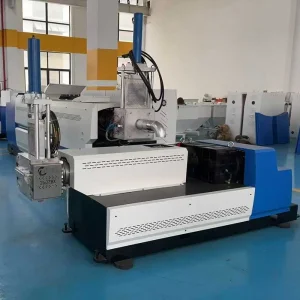
Secondary product showcase featuring extruder screen elements, plastic granulating machinery, and custom-engineered polymer filtration assemblies.
Direct answers from our metallurgical engineering team regarding stainless welded mesh selection, structural limits, and export logistics.