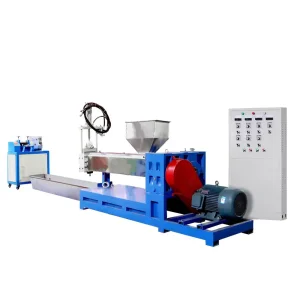
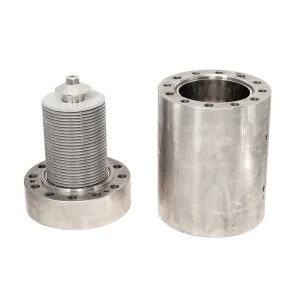
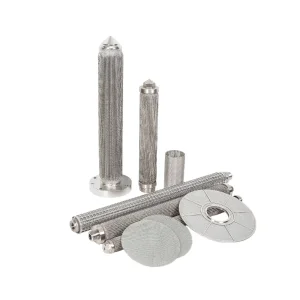
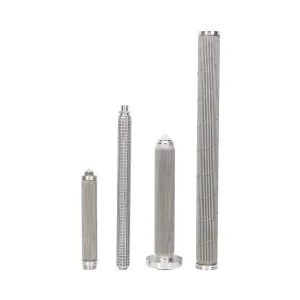
High-performance filter elements, leaf discs, and pelletizing systems engineered for continuous polymer processing and melt impurity removal.
Analyzing market growth, polymer degradation kinetics, and advanced ODM manufacturing protocols for high-precision extrusion environments.
In modern industrial extrusion, chemical fiber melt spinning, and high-pressure polymer recycling, the demand for precision filtration media has escalated from simple contaminant barrier filtration to highly sophisticated thermal-rheological control. As global polymer production scales toward ultra-thin film blowing (such as BOPET, BOPP, and BOPA) and ultra-fine denier synthetic yarns, even sub-micron solid inclusions, carbonized gel aggregates, or metallic shearing debris can lead to catastrophic web breakages, die-lip scoring, and costly manufacturing downtime.
As a leading ODM Metal Filter Screen Supplier & Exporter, Pujiang HG Plastic Machinery Co., Ltd. operates at the intersection of mechanical engineering, powder metallurgy, and polymer rheology. Stainless steel metal filter screens serve as the definitive defense mechanism within extrusion barrels, continuous hydraulic screen changers, and filter housings. They convert irregular melt pressure profiles into uniform, laminar viscous flows while capturing microscopic particulate impurities under extreme hydraulic pressures (often exceeding 30–35 MPa) and high operational temperatures (up to 350°C).
Selecting the optimal stainless steel or high-nickel alloy grade is essential for ensuring process chemistry integrity and structural fatigue resistance over continuous campaign runs lasting several months:
From basic square woven wire cloth to 5-layer sintered mesh composites and high-porosity metallic fiber felts.
Plain and twilled square weaves provide predictable open area for coarse filtering. Plain Dutch Weave (PDW) and Reverse Plain Dutch Weave (RPDW) pack maximum wires per unit area, providing high mechanical strength for high-pressure continuous ribbon changers.
By diffusion bonding multiple layers of woven wire mesh under high vacuum and heat, sintered mesh elements eliminate wire migration. They preserve pore geometry even under violent pressure surges (Delta P > 25 bar).
Fabricated from non-woven micro-denier stainless steel fibers, sintered felts offer up to 85% volumetric porosity. This delivers significantly lower initial pressure drop and 3x longer dirt-holding capacity compared to traditional wire mesh.
When polymer melt passes through an undersized screen pack, localized shear rates spike dramatically, triggering thermal-mechanical polymer degradation. Custom ODM multi-layer screen combinations utilize coarse buffer meshes (e.g., 20 mesh / 60 mesh / 250 mesh / 20 mesh) to balance shear stress, equalize flow distribution, and protect fine filter wires from physical deformation.
Comprehensive quantitative comparison for industrial engineering selection and OEM system design.
| Filter Media Configuration | Available Micron Ratings | Porosity Range (%) | Max Delta P (Bar) | Cleaning / Reusability | Primary Industrial Application |
|---|---|---|---|---|---|
| Plain Square Mesh (SUS 304/316) | 150μm – 2000μm | 35% – 60% | 10 – 15 Bar | Ultrasound / Solvent wash | Coarse Masterbatch & Polyolefin Recycling |
| Reverse Plain Dutch Weave (RPDW) | 40μm – 120μm | 25% – 40% | 20 – 30 Bar | Backwashable on Continuous Belt Changers | Automated Continuous Screen Changers (PP/PE) |
| 5-Layer Sintered Wire Mesh | 5μm – 100μm | 30% – 45% | 50 – 100 Bar | Pyrolysis / Calcination & Ultrasonic | BOPP/BOPET Film Lines & High-Pressure Extrusion |
| 316L Sintered Metal Fiber Felt | 3μm – 60μm | 75% – 85% | 60 – 120 Bar | TEG Hydrolysis / Chemical Bathing | Polyester Filament & Spunbond Nonwoven Melt Spinning |
| Spot Welded Multilayer Pack | 20μm – 250μm | 30% – 50% | 15 – 25 Bar | Single-use / Disposable | Blown Film & Pipe Extrusion Breaker Plates |
Tailored OEM filter elements operating across high-demand processing environments worldwide.
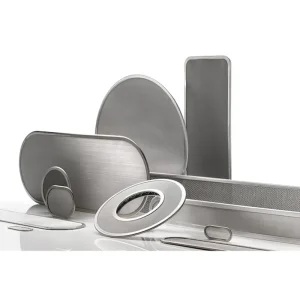
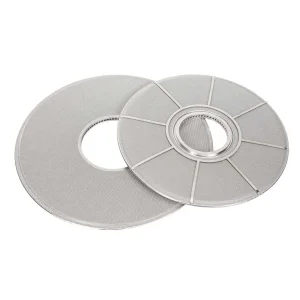
In thin film extrusion, minor gels or optical fish-eyes ruin dielectric properties and tensile strength. Our Custom Leaf Disc Filters (Segmented Disc Screens) provide maximum filtration surface area within a compact hydraulic footprint, allowing operational continuity up to 60 days without filter pack replacement.
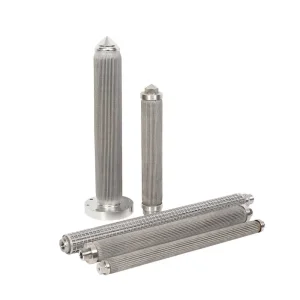
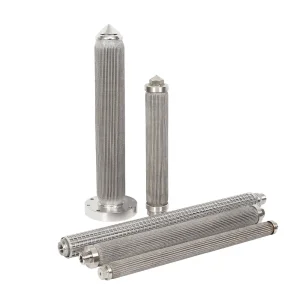
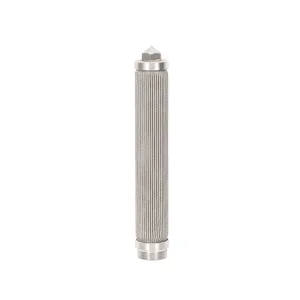
Spinning micro-denier filament yarns requires ultra-clean polymer melts to prevent spinneret hole clogging. Our Polymer Candle Filter Elements (SUS 316L Pleated Cartridges) offer enhanced effective area, delivering uniform hydraulic residence time and protecting spin packs from premature pressure buildup.
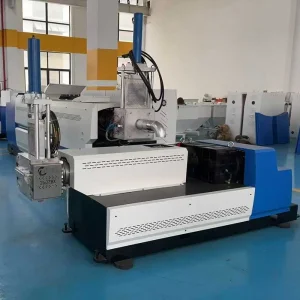
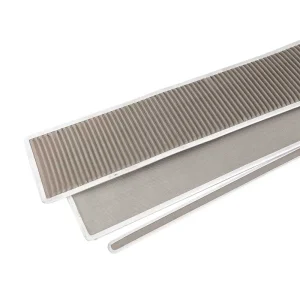
Recycled PP, PE, and PET contain paper fibers, metal flaking, and un-melted cross-linked polymers. Our high-durability Extruder Belt Screen Mesh Rolls and Heavy-Duty Breaker Plate Screens handle severe abrasive wear and intense contamination loads in continuous recycling lines.
From catalyst recovery in fluid catalytic cracking (FCC) to high-purity monomer clarification, our customized Inconel & Stainless Steel Filter Cylinders withstand extreme chemical exposure, preventing downstream pipeline scaling and pump cavitations.
Every filter screen undergoes stringent ISO 9001 quality controls from raw wire drawing to cleanroom ultrasonic degassing.
100% positive material identification (PMI) on incoming wire rods to ensure true alloy composition (Nickel, Chromium, Molybdenum content) before weaving begins.
Automatic multi-spot welding guarantees structural integration between filter layers and aluminium/copper/stainless steel edge frames, preventing bypass leaks under high shear pressure.
Multi-stage ultrasonic bath washing removes drawing oils and metallic micro-burrs. ISO 4003 Bubble Point testing confirms zero structural defects or oversized mesh apertures.
How AI-driven predictive maintenance, sub-micron coatings, and smart mesh architectures are shaping the next decade of industrial filtration.
Integration of hydrophobic and oleophobic nano-ceramic thin films directly onto sintered wire screens to reduce polymer melt adhesion, lowering cleaning cycles and preventing thermal gel carbonization.
Next-generation screen changers featuring embedded differential pressure sensors to transmit real-time clogging metrics directly to AI-driven plant control systems for predictive screen advance.
Designing fully backwashable sintered stainless steel filter packs that endure up to 100 thermal cleaning cycles, replacing single-use disposable screen packs in zero-waste manufacturing facilities.
Answers to common engineering questions regarding metal filter screen customization, micron ratings, material grades, and installation.
A: Standard SUS 304 is suitable for non-corrosive polyolefins (virgin PP, PE) operating under normal conditions. SUS 316L contains Molybdenum and lower carbon content, providing vital resistance against pitting corrosion and thermal degradation when processing recycled plastics (PCR/PIR), masterbatches with aggressive additives, or corrosive resins such as PET, PA, and fluoropolymers.
A: Spot-welded screen packs consist of loose wire cloth layers joined only at perimeter points; high melt pressures can cause wire shift and channel creation. Sintered mesh undergoes vacuum heat fusion, bonding every wire contact point to lock pore sizes permanently under high Delta P (>50 bar) and enabling multiple cleaning and re-use cycles.
A: Yes. As an experienced ODM manufacturer, we produce custom filter screen packs in any geometry—including circular discs, oval plates, kidney shapes, cylindrical cartridges, and continuous woven mesh belts—tailored precisely to your extruder barrel diameter and breaker plate specifications.
A: Mesh count specifies the number of openings per linear inch, whereas micron rating defines the actual particle size retained (in micrometers). Because wire diameter affects hole size, two 100-mesh screens with different wire gauge thicknesses will possess different micron ratings. Our engineering team provides exact micron-to-mesh cross-reference charts based on calibrated aperture measurements.
A: Rapid pressure spikes typically indicate high concentrations of sub-micron cross-linked gels, carbonized degradation particles, or incompatible polymer blending. Selecting a multi-layer mesh profile with progressive coarse-to-fine filtration layers distributes contaminant loading across multiple depths, extending overall screen life.
A: Common industrial cleaning protocols include Triethylene Glycol (TEG) hydrolysis for polyester removal, vacuum pyrolysis ovens to burn off organic polymers, followed by high-pressure fluid flushing and ultrasonic solvent agitation to remove inorganic ash residues without damaging fine filter pores.
Explore our full line of candle filter cartridges, leaf disc assemblies, screen mesh elements, and plastic pelletizing equipment.