In the contemporary realm of high-performance polymer synthesis, continuous sheet extrusion, synthetic fiber spinning, and circular plastic upcycling, melt filtration represents the critical quality enforcement barrier. As global petrochemical plants and OEM equipment manufacturers scale production velocities while simultaneously processing higher fractions of Post-Consumer Recycled (PCR) resins, the operational load on melt filtration hardware has escalated exponentially. Modern polymer processing demands Original Design Manufacturer (ODM) partners capable of engineering filtration architecture that withstands extreme rheological stresses, hydraulic pressure spikes up to 30 MPa, and process temperatures exceeding 350°C.
The transition toward high-purity micro-denier yarns (BOPA, BOPET, BOPP) and ultra-thin technical films requires continuous polymer filter equipment (CPF) capable of capturing microscopic gel structures, degraded black specks, inorganic catalyst residues, and metallic contaminants down to 3 microns. Failure in filtration integrity leads to catastrophic spinneret blockages, web tears, optical haze in packaging films, and costly unscheduled factory downtimes. Consequently, elite global buyers are shifting from off-the-shelf catalog filters to specialized ODM engineering factories that offer tailor-made structural geometries, flow-simulation optimized channels, and metallurgical enhancements.
As an authoritative OEM/ODM factory with over two decades of metallurgical research and mechanical fabrication excellence, our facility integrates advanced fluid dynamics modeling (CFD) with precision vacuum sintering technologies. This engineering whitepaper outlines the structural paradigms, procurement metrics, and macro-industrial solutions defining next-generation polymer filter equipment.
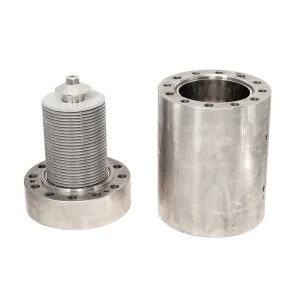
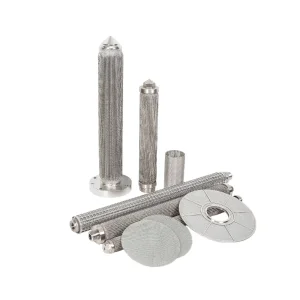
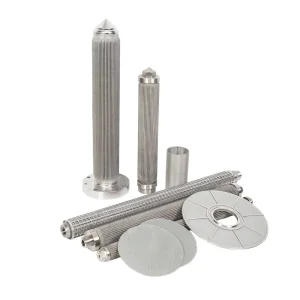
The efficiency of an ODM polymer filter lies in the synergistic interplay between structural support cores, drainage layers, and the primary filtration medium. Depending on the target polymer viscosity, shear-sensitivity, and permissible differential pressure ($\Delta P$), three main architectural configurations dominate industrial applications:
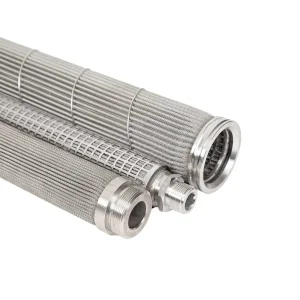
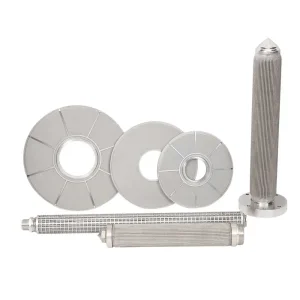
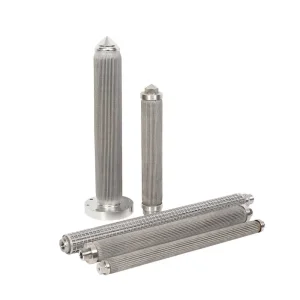
Utilizing longitudinal geometric pleating, candle elements maximize effective surface area within compact filter vessels. Ideal for high-flow-rate polyester (PET), polyamide (PA6/PA66), and polypropylene (PP) continuous spinning lines.
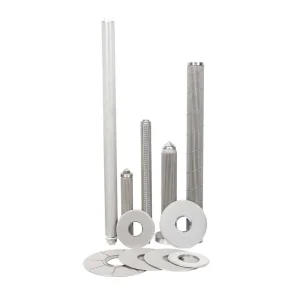
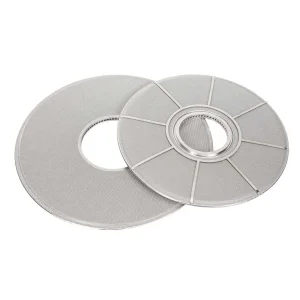
Designed for ultra-high-pressure film extrusion (BOPET/BOPP) and resin polymerization plants. Doughnut or sector-shaped discs assemble around a central core, offering exceptional mechanical rigidity and minimal dead zone risk.
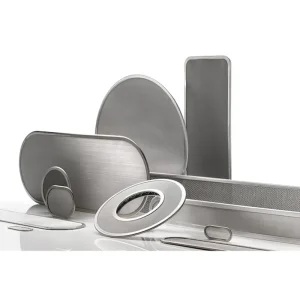
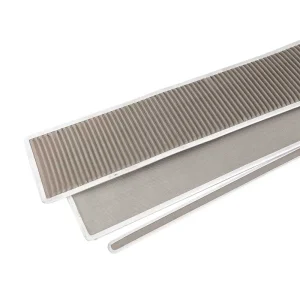
Multi-layer diffusion-bonded wire cloth and non-woven stainless steel fiber felt provide non-compressible depth filtration, capturing soft gel particles that would otherwise extrude through standard screens.
Corrosion resistance and thermal expansion stability dictate material choices in ODM manufacturing. We primarily utilize premium grade AISI 316L, AISI 304, and specialized nickel alloys (Hastelloy C-276) for aggressive chemical environments.
| Filter Medium Type | Material Alloy Grade | Micron Rating Range | Structural Advantage | Primary Target Industry |
|---|---|---|---|---|
| Vacuum Sintered Metal Fiber Felt | AISI 316L Low Carbon Stainless | 3.0 μm – 60 μm | High porosity (up to 85%), high dirt-holding capacity, low initial $\Delta P$ | BOPET / BOPA / BOPP Thin Films & Fine Yarns |
| Multi-Layer Sintered Wire Cloth | SUS 304 / SUS 316L | 5.0 μm – 250 μm | Fixed pore geometry, zero media migration under hydraulic shock | Spunbond & Meltblown Nonwovens, Monofilaments |
| Square / Dutch Weave Mesh Packs | SUS 304 / Galvanized Steel | 25 μm – 500 μm | Cost-effective, robust surface filtration for high-speed extruders | Plastic Recycling Granulation & Sheet Extrusion |
| Hastelloy Sintered Mesh | Hastelloy C-276 / Inconel 600 | 10 μm – 100 μm | Extreme acid/alkali corrosion tolerance at temperatures up to 550°C | Specialty Engineering Polymers (PEEK, PTFE, Fluoropolymers) |
Procurement executives in global plastic manufacturing conglomerates no longer base equipment sourcing decisions purely on initial Purchase Order (PO) pricing. Modern supply chain intelligence prioritizes Total Cost of Ownership (TCO), overall process uptime, energy consumption during backflushing, and off-line cleaning reusability.
By engineering customized flow distribution cores and optimizing pleat count densities, ODM equipment prolongs the time interval between element changes. Extending candle life from 30 days to 60 days directly cuts factory downtime by 50%, saving hundreds of thousands of dollars in lost melt throughput.
Industrial buyers require filter elements that can withstand multiple pyrolysis, TEG (triethylene glycol) boiling, ultrasound cleaning, and chemical washing cycles without structural deformation or pore collapsing. High-grade SUS316L elements manufactured by certified ODM factories can undergo 10 to 15 cleaning cycles, significantly lowering long-term consumable expenditure.
Hydraulic resistance inside the filter vessel forces melt pumps and main extruders to draw significantly higher electrical amperage. ODM design optimization reduces initial differential pressure drop by 15-25%, conserving megawatt-hours across continuous 24/7 manufacturing campaigns.
Global enterprises demand dual-sourcing reliability. Advanced ODM factories produce 100% drop-in replacements for major European and American filter housing systems (e.g., Maag, Kreyenborg, Nordson, Seebach, Fuji Filter compatibility), breaking vendor lock-in while assuring OEM-level tolerances.
Every polymer manufacturing matrix presents distinct rheological behaviors, melt temperatures, and shear sensitivity characteristics. As a specialized ODM factory, our operational methodology translates physical polymer properties into high-precision filtration hardware.
Challenge: Micro-gel formation causing optical defect bubbles and web breaks at 500 m/min line speeds.
ODM Solution: High-area Leaf Disc arrays with gradient multi-layer sintered metal fiber felt (10μm to 3μm absolute rating) eliminating dead space stagnant zones.
Challenge: Spinneret hole clogging leading to fiber diameter inconsistency and filament breakage.
ODM Solution: Seamless pleated stainless steel candle filter elements with reinforced internal perforated cores, designed for rapid hydraulic backflushing.
Challenge: Extreme contamination from paper fibers, aluminum bits, and mixed polymers in post-consumer waste streams.
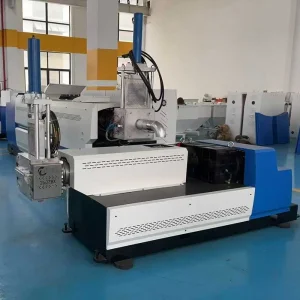
ODM Solution: Continuous automated screen changers paired with heavy-duty multi-layer sintered wire mesh packs rated to handle 250+ bar pressure surges.
Challenge: Massive hydraulic resistance causing thermal shear degradation in PET/PA melt.
ODM Solution: Coarse-to-fine step-down mesh geometry with hydro-dynamically flared internal flow channels to equalize shear stress distribution.
As a global ODM filter equipment manufacturer, maintaining rigorous quality control systems is non-negotiable. Every filter element leaving our factory undergoes comprehensive metallurgical, structural, and dimensional validation to ensure zero-defect integration into client plant environments.
Full compliance with international quality management frameworks. Material traceability certificates (EN 10204 3.1) accompanying every batch shipment.
Pore size distribution verified in accordance with ISO 4003. Structural integrity validated through collapse pressure testing under simulated hydraulic load according to ISO 2941.
Field service engineers and localized warehouse support across Europe, North America, and Southeast Asia to facilitate emergency response and custom retrofitting.
Our factory operates dedicated testing laboratories equipped with automated bubble point test rigs, scanning electron microscopes (SEM) for particulate analysis, and high-pressure hydraulic fatigue benches. We guarantee that every custom ODM candle filter or leaf disc exhibits uniform porosity, structural rigidity under thermal fatigue, and precise dimensional fitment.
The industrial landscape for polymer processing is evolving rapidly under the dual pressures of global decarbonization mandates and demanding material performance specifications. Our ODM engineering team is pioneering several next-generation technological vectors:
Application of hydrophobic and oleophobic ceramic nano-coatings onto stainless steel sintered fibers to drastically suppress thermal coking and polymer degradation on element walls during long production cycles.
Embedding high-temperature wireless micro-pressure and thermal sensors into filter support cores. Real-time predictive analytics calculate dynamic pore-clogging rates, giving plant operators exact advance notice for cleaning scheduling.
Transitioning complex filter manifold blocks and candle core supports to Selective Laser Melting (SLM) 3D printing, enabling internal flow geometries previously impossible via standard CNC machining, eliminating 100% of polymer flow dead zones.
Developing specialized multi-frequency ultrasonic and supercritical $\text{CO}_2$ cleaning protocols that restore used metal fiber felt cartridges back to 99.5% of original clean differential pressure values.