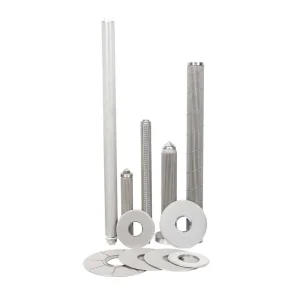
Engineered for high-temperature, high-viscosity polymer processing, spunbond non-woven extrusion, and continuous melt purification.
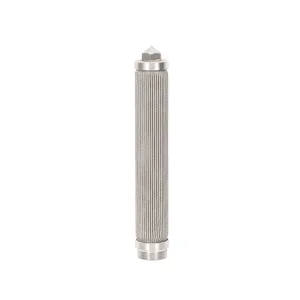
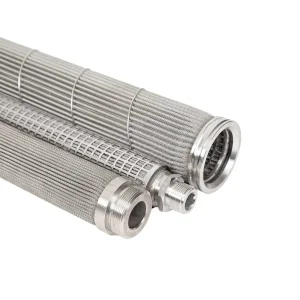
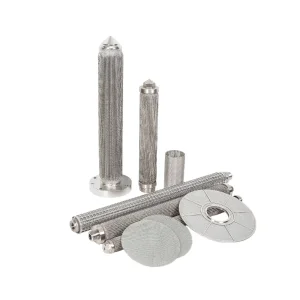
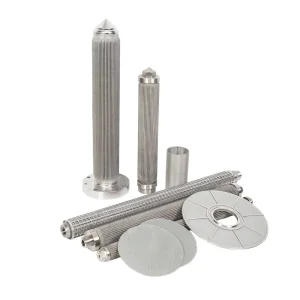
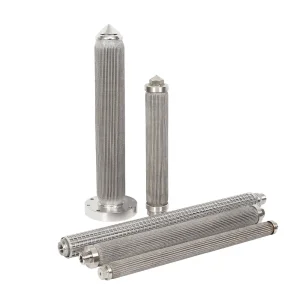
In the highly demanding domain of synthetic fiber production, non-woven fabric spinning, and optical-grade polymer film extrusion, the performance of the melt filtration architecture directly governs product quality, operational uptime, and total cost of ownership. As global chemical processing industries push towards micro-denier filaments, high-speed melt spinning, and circular economy recycled polymers (rPET, rPP, rPE), the engineering requirements placed on ODM Spinneret Mesh Filters Factories & Companies have evolved from simple mesh conversion into sophisticated thermodynamic and fluid dynamic metallurgy.
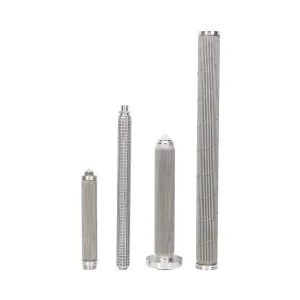
Pujiang HG Plastic Machinery Co., Ltd. stands at the forefront of this industrial transition. Backed by over two decades of dedicated research and advanced manufacturing experience, we specialize in the design, custom ODM engineering, and precision fabrication of multi-layer sintered spinneret mesh filters, polymer candle filter cartridges, leaf disc pack elements, and screen mesh packs. This comprehensive technical guide explores the fluid dynamics, metallurgical selections, localized application scenarios, and supply chain efficiencies that position China's advanced manufacturing clusters as global leaders in melt filtration innovation.
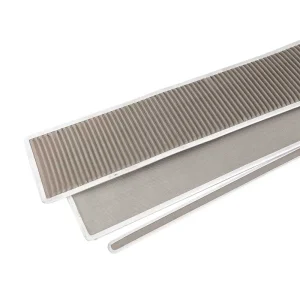
Traditional single-layer mesh screens suffer from rapid delta-P (pressure drop) spikes, gel deformation, and premature blinding. Modern ODM spinneret pack assemblies utilize gradient-density multi-layer sintered stainless steel wire cloth (SUS 316L/304L) combined with metallic fiber felt (sintered metal fleece). This architecture achieves a 300% increase in dirt-holding capacity (DHC) while preserving laminar flow profiles ahead of the spinneret micro-holes.
The operational environment inside a polymer melt filtration pack is severe: temperatures frequently exceed 280°C to 340°C, system pressures reach between 150 bar and 300 bar, and melt viscosities range from 500 to over 3,000 Pa·s. Under these extreme conditions, spinneret mesh filters must maintain absolute structural integrity without hydraulic rupture, wire migration, or media compression.
Features outer coarse protective wire mesh that traps large agglomerates, followed by intermediate diffusion layers and an inner micro-porous absolute filtration medium (3μm–40μm).
Utilizes high-vacuum thermal sintering where metallic wire contact points form atomic molecular bonds, preventing pore geometry shift under high shear stresses.
Precision spot welding, aluminum/copper frame encapsulation, and ultrasonic edge sealing eliminate loose wire fragments from entering the spinneret capillary orifice.
Our ODM factory technical team carefully formulates custom metal alloys based on the specific chemistry of the polymer melt being processed:
| Material Grade | Chemical Composition Highlights | Max Temp (°C) | Corrosion & Oxidation Resistance | Primary Application Industry |
|---|---|---|---|---|
| SUS 304 / 304L | 18% Cr / 8% Ni (Low Carbon) | 450°C | Standard polymer melt processing | PP / PE Extrusion, Masterbatch Granulation |
| SUS 316 / 316L | 16% Cr / 10% Ni / 2-3% Mo | 600°C | Superior acid & chloride pitting resistance | PET / PA6 / PA66 Fiber Spinning, BOPP Film |
| Hastelloy C-276 | Ni-Mo-Cr with Tungsten | 800°C | Extreme acidic, corrosive & halogenated fluids | Specialty Fluoropolymers (PVDF/PTFE), Chemical Fiber |
| Inconel 601 / 625 | Ni-Cr matrix with Aluminum | 1100°C | Exceptional high-temperature thermal creep resistance | High-Temperature Synthetic Resin Sintering |
The deployment of high-performance spinneret mesh filters spans numerous localized industrial application scenarios, each possessing distinct rheological and physical challenges:
In high-speed polyester (PET) and polyamide (PA6/PA66) yarn spinning lines running at speeds exceeding 4,500 meters per minute, spinneret orifices can be as small as 0.15mm in diameter. Even sub-micron hard particulate contaminants or organic gels can cause filament breakage (filament spinning drift), leading to costly line shutdowns. HG Polymer Filter’s customized multi-layer spinneret pack screens incorporate 3μm to 10μm sintered metal fiber fleeces, effectively capturing deformable gels under high pressure gradients while stabilizing melt distribution before the spinneret plate.
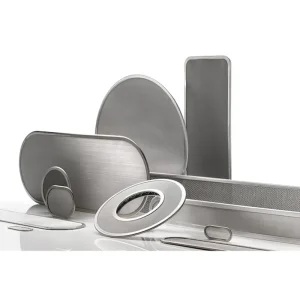
Spunbond polypropylene (PP) infrastructure demands long continuous operation cycles (often 30 to 60 days without pack changes). Our ODM rectangular, oval, and rimmed spinneret pack filters utilize extended-surface corrugated stainless steel wire mesh combined with high-porosity sintered wire cloth. This design minimizes pressure drop build-up across width dimensions up to 5.2 meters, ensuring web uniformity for medical non-woven gowns, hygiene products, and geotextiles.
Biaxially oriented film lines require zero-defect melt purity to prevent optical haze, pinholes, or dielectric breakdown in capacitor films. Utilizing leaf disc filters and spinneret mesh packs engineered with 5-layer sintered mesh, our solutions filter out micro-gels, degradation products, and catalyst residues down to 5 microns absolute.
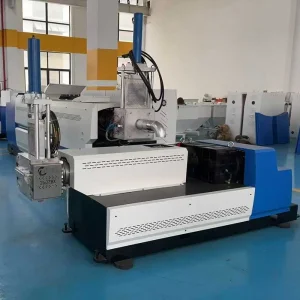
Post-consumer and post-industrial plastic recycling melts contain high impurity loads including paper fibers, cross-linked polymers, and residual minerals. HG's heavy-duty stainless steel screen mesh filters and auto-screen changer belt mesh provide exceptional mechanical strength, allowing recycling extruders to run continuously under high contamination rates without screen tearing.
The polymer melt filtration industry is undergoing rapid technological innovation driven by sustainability directives, digital manufacturing, and advanced materials engineering. As a leading ODM factory, Pujiang HG Plastic Machinery Co., Ltd. has established a clear technical development roadmap for next-generation filtration systems:
Integration of selective laser melting (SLM) to manufacture bio-mimetic internal flow channels within candle filter cores, reducing pressure drop by up to 35%.
Custom software modeling of polymer melt shear rate distribution across complex multi-layer mesh geometries to prevent localized dead zones and thermal polymer degradation.
Re-engineerable multi-use filter elements capable of undergoing 15–20 vacuum calcination and ultrasonic cleaning cycles with zero media degradation, advancing circular economy goals.
Partnering with a specialized ODM factory in China provides significant competitive, economic, and technical advantages for global chemical plant operators and original equipment manufacturers (OEMs):
As polymer processing facilities worldwide face stringent environmental regulations and market demands for higher purity, Pujiang HG Plastic Machinery Co., Ltd. adheres to international quality control frameworks:
Every batch of ODM spinneret mesh filters and candle elements undergoes rigorous quality inspection prior to dispatch, including:
• Bubble Point Testing (ISO 4003): Verifies maximum pore size and absolute filtration integrity.
• Permeability & Pressure Drop Testing (ISO 4022): Ensures consistent airflow and liquid throughput across all filter surfaces.
• Spectrometric Material Verification (XRF): Guarantees exact chemical composition of 316L/304L alloys.
• Visual Microscopic Inspection: Inspects mesh alignment, edge sealing integrity, and weld bead quality under 50x magnification.
Detailed technical answers regarding spinneret mesh filter selection, candle filter maintenance, micron ratings, and custom ODM manufacturing options.
Woven wire mesh packs consist of loose, individual mesh layers stacked together (often held by an aluminum rim). Under fluctuating polymer melt pressures, individual wires in plain woven mesh can shift or separate, changing the pore geometry. Sintered mesh spinneret filters undergo a high-temperature vacuum diffusion bonding process where all wire contact points melt together into a rigid, monolithic structure. This ensures fixed pore sizes, zero wire migration, and superior pressure resistance up to 300 bar.
Selection depends primarily on the spinneret orifice capillary diameter and the target filament denier. As a rule of thumb, the absolute micron rating of the filter pack should be approximately 1/3 to 1/5 of the smallest spinneret hole diameter. For example, for a spinneret hole diameter of 0.18mm (180μm), a 25μm to 35μm filter mesh is recommended to prevent clogging and filament breakage.
Yes. Stainless steel (SUS 316L/304L) filter elements are fully cleanable and reusable. Recommended cleaning methods include: (1) Vacuum Pyrolysis / TEG (Triethylene Glycol) boiling to burn off or dissolve residual polymer, followed by (2) High-pressure fluid backflushing, and (3) Ultrasonic bath cleaning with specialized detergent solutions. Proper cleaning protocols allow high-quality candle elements to be reused 10 to 20 times.
We provide full end-to-end ODM customization: (1) Custom dimensions, shapes, and rim metals (Aluminum, Copper, Stainless Steel); (2) Layer combinations (3-layer, 5-layer, up to 9-layer combinations); (3) Specific micron ratings from 3μm to 500μm; (4) Laser-etched part numbers and private-label logo branding on housing frames.
Our manufacturing facility operates under ISO 9001:2015 quality management standards. Every production lot is accompanied by a Certificate of Analysis (COA), material test reports (MTR) for stainless steel grade composition, and bubble point test documentation. All export products comply with RoHS and REACH environmental regulations.
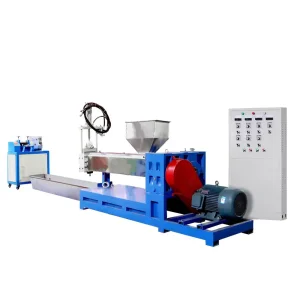
Comprehensive equipment and filtration components for plastic extruders, recycling granulators, and continuous melt processing.