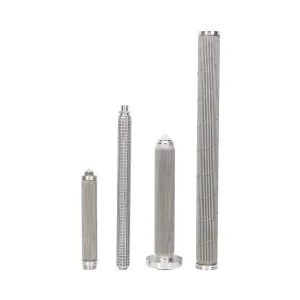
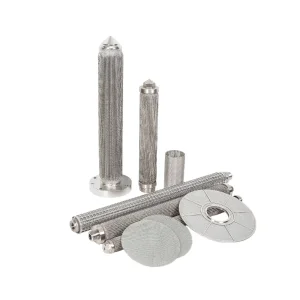
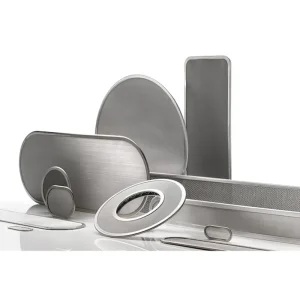
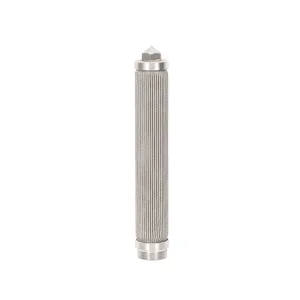
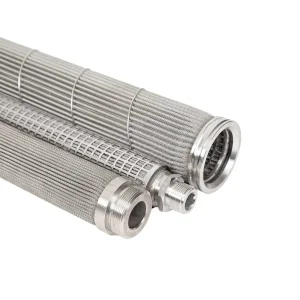
Explore our flagship OEM/ODM stainless steel extruder screens, candle filter elements, and multi-layer sintered disc assemblies designed for demanding industrial processing environments.
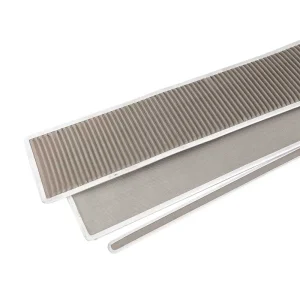
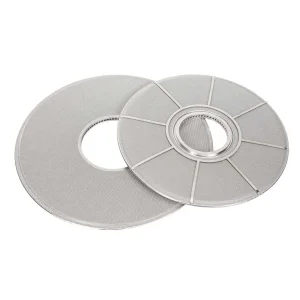
In modern high-speed polymer extrusion, synthetic fiber spinning, and continuous chemical processing, the demand for extreme structural integrity and exact micro-pore uniformity has transformed wire mesh from a simple consumable into a critical precision engineering component. As an industry-leading ODM Stainless Wire Mesh Screen Manufacturer, we specialize in solving the complex rheological and mechanical challenges that arise when processing high-viscosity polymer melts under extreme temperature and pressure conditions.
Traditional woven wire screens frequently suffer from wire displacement, gel pass-through, and early shear degradation under continuous loads above 200 bar. Next-generation multi-layer sintered screen packs and diffusion-bonded mesh structures have revolutionized melt filtration. By locking the geometric alignment of individual stainless steel wires via solid-state diffusion, our custom screen media eliminate wire movement, ensure consistent pore geometry down to 1 micron, and dramatically reduce system differential pressure ($\Delta P$).
Selecting the appropriate stainless steel alloy is paramount to prevent premature stress corrosion cracking (SCC) and intergranular degradation. We process austenitic alloys including AISI 304, 304L, 316, and 316L, alongside super-austenitic 904L and nickel-based superalloys such as Hastelloy C-276 and Inconel 625 for aggressive fluoropolymer and PET acid environments.
Optimized weave patterns—such as Reverse Dutch Weave (RDW) and Twill Dutch Weave (TDW)—provide exceptional mechanical strength along the warp direction while delivering high open area percentages. This geometric balance ensures maximum contaminant retention capacity without inducing melt shear or thermal degradation.
To assist system integrators and OEM engineers in selecting the optimal filtration media, the table below outlines the structural characteristics and operational boundaries of primary stainless steel screen weaves manufactured in our facility.
| Weave Type | Micron Rating Range ($\mu m$) | Mechanical Strength | Open Area Ratio | Primary Application Scenario |
|---|---|---|---|---|
| Plain Square Weave | 20 - 5000 | Standard | High (30% - 65%) | Coarse pre-filtration, polymer recycling breaker plates, support layers. |
| Twill Square Weave | 15 - 250 | Medium-High | Moderate (25% - 45%) | High-mesh counting screens, fine particulate removal, extruder screen packs. |
| Plain Dutch Weave (PDW) | 10 - 200 | High | Low-Moderate (15% - 30%) | High-pressure liquid filtration, hydraulic systems, polymer melt retention. |
| Twill Dutch Weave (TDW) | 1 - 80 | Extreme | Low (10% - 25%) | Ultra-fine melt filtration, BOPP/BOPET film production, chemical fiber spinning. |
| Reverse Dutch Weave (RDW) | 10 - 150 | Maximum Warp Tensile | Moderate (20% - 35%) | Automatic continuous belt screen changers (Auto-ribbon systems). |
| 5-Layer Sintered Mesh | 1 - 100 | Structural Solid-State | Engineered Optimized | Continuous high-differential pressure systems up to 250 bar. |
As global chemical manufacturers and polymer processors expand production capacities, B2B procurement strategies have shifted from localized spot-buying toward strategic, long-term partnerships with certified ODM wire mesh manufacturers. Industrial procurement teams now prioritize four critical operational pillars:
Variations in wire diameter or weave density cause unpredictable pressure spikes and short filter lifecycles. Advanced optical inspection (AOI) guarantees micron aperture uniformity across thousands of linear meters.
While low-grade screens appear economical initially, frequent line downtime for screen changes disrupts continuous extrusion. Superior alloy purity extends screen pack service life by 35% to 60%.
Modern screen changers require specialized rim sealing—including spot-welded aluminum frames, copper edges, or laser-welded stainless borders—to prevent melt bypass at elevated temperatures.
Enterprise buyers require agile engineering support capable of translating CAD drawings into validated physical prototypes within days, backed by comprehensive material test reports (MTR).
China’s advanced industrial transition to Smart Factory Industry 4.0 standards has repositioned premier domestic wire mesh manufacturers as world-class engineering hubs. Operating at the epicenter of integrated stainless steel metallurgy and automated weaving technology, our facility leverages significant systemic advantages:
Our cleanroom manufacturing floor houses state-of-the-art computer-controlled heavy-duty shuttleless weaving looms capable of maintaining constant warp tension, preventing micro-flaws across heavy wire diameters and ultra-fine mesh counts alike.
Multi-axis CNC fiber laser cutting systems ensure clean edge finish without wire fraying or thermal distortion. Automated ultrasonic degreasing lines eliminate residual drawing lubricants prior to sintered assembly.
Every production batch undergoes Positive Material Identification (PMI via XRF spectrum analyzer), bubble point testing according to ISO 4003, and optical pore size distribution testing prior to export packaging.
Our ODM custom wire mesh screen components are deployed across high-demand processing plants worldwide. Below are representative engineering applications demonstrating measurable performance gains:
Challenge: Micro-gel pinholes causing optical haze and web breakages on high-speed biaxially oriented film lines.
Solution: Custom 5-layer sintered stainless steel leaf disc filter packs engineered with 10-micron Twill Dutch Weave filter media.
Outcome: Extended continuous operational run-time by 42% while reducing optical film defects to zero.
Challenge: Heavy paper, aluminum, and cross-linked polymer contamination rapidly blinding standard mesh screens.
Solution: Heavy-duty Reverse Dutch Weave (RDW) continuous ribbon screens with reinforced selvage edges for auto-screen changers.
Outcome: Handled melt pressures up to 180 bar without screen tear, achieving 25% higher hourly pellet throughput.
Challenge: Thermal degradation and chemical corrosion of spinneret pack filters during high-temperature nylon 6,6 synthesis.
Solution: Pleated stainless steel 316L candle filter elements engineered with high porosity sintered fiber felt media.
Outcome: Delivered 3x dust holding capacity compared to standard wire mesh, reducing pack change frequency significantly.
Find authoritative answers to common engineering, custom manufacturing, and ordering questions regarding stainless steel wire mesh screen products.
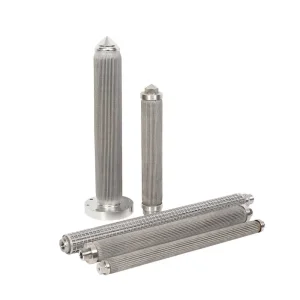
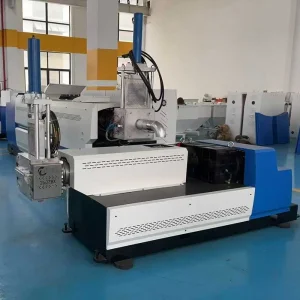
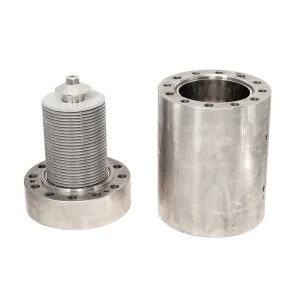
Browse additional custom-engineered filtration components, candle filter cartridges, and granulating equipment solutions manufactured directly by our factory team.
Whether you require custom CAD drawing validation, alloy material testing, or rapid prototyping for OEM screen changers, our metallurgical engineering team is ready to assist. Contact our engineering desk today for direct technical support and competitive factory quotation.
Contact Our Engineering Team