An operational white paper analyzing fluid dynamics, differential pressure mitigation, and multi-layer structural integrity in OEM/ODM stainless steel filter element manufacturing.
In high-throughput industrial polymer synthesis, chemical fiber spinning, and continuous plastic recycling, the mechanical integrity and thermal stability of the melt filtration media determine operational profitability. Modern continuous screen changers and high-pressure filter housings operate under extreme fluid conditions: melt temperatures frequently exceed 300°C, while differential pressures ($\Delta P$) routinely surge past 25 MPa. Under such stress, standard wire mesh filters suffer from media migration, pore deformation, and premature structural collapse—causing catastrophic downtime, nozzle clogging, and costly resin contamination.
As a specialized ODM wire mesh filters factory and global supplier, engineered solutions must provide measurable Information Gain and mechanical superiority. High-performance filtration is not merely a consumable wire weave; it is an optimized hydraulic barrier designed to maximize dirt-holding capacity (DHC), preserve viscoelastic melt flow, and maintain precise micron rating retention over extended operational cycles.
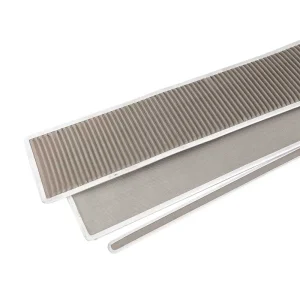
Diffusion-bonded wire mesh sheets combined via high-temperature vacuum sintering, eliminating wire displacement under high hydrodynamic shear forces.
Advanced computer-modeled weave structures (Dutch Weave, Twilled Dutch) engineered to lower initial pressure drop and extend operational filtration life by up to 35%.
Forged from verified SUS 304, 316L, and Hastelloy grades, resisting intergranular corrosion and thermal degradation up to 480°C.
How decarbonization, circular economy mandates, and micro-denier synthetic fiber requirements are transforming OEM/ODM engineering standards worldwide.
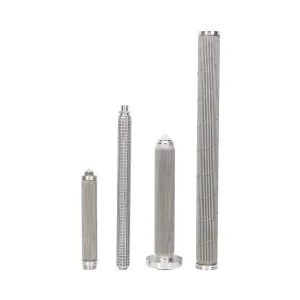
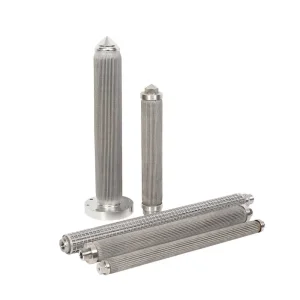
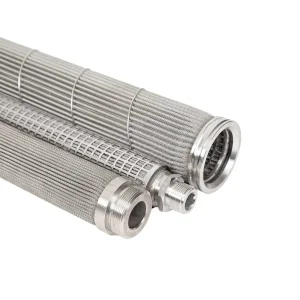
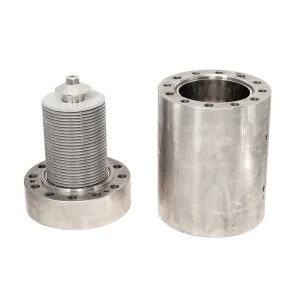
The global shift toward closed-loop plastic recycling has introduced highly contaminated melt streams containing aluminum flakes, paper pulp, and un-melted cross-linked polymers. Standard single-layer screen meshes fail rapidly under these heavy contaminant loads. Modern ODM factories must now supply multi-stage continuous belt filters and deep-bed sintered candle filter elements capable of holding heavy particulate mass without blinding the filtration pores.
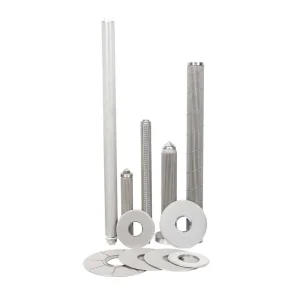
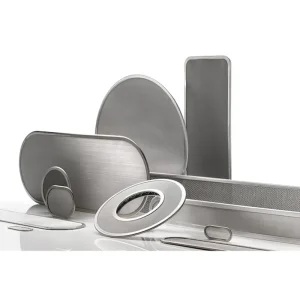
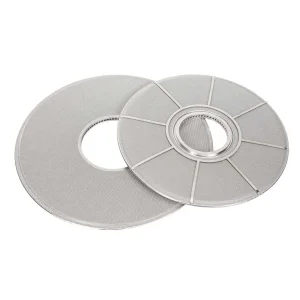
High-speed biaxially oriented polypropylene (BOPP) and polyester (BOPET) film lines operate at line speeds exceeding 500 m/min. At these velocities, a microscopic gels or sub-micron particulate contaminant will cause film web breakage, leading to hours of lost production. The industry is rapidly adopting high-area Leaf Disc Filters with absolute micron ratings down to 3–5μm, utilizing pleated sintered metal felt media.
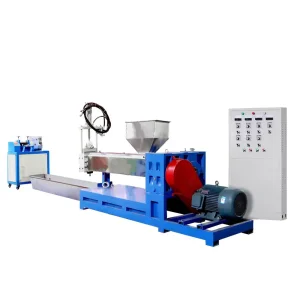
Extrusion facilities are replacing batch screen changers with fully automated continuous ribbon screen changers. This shift demands ODM wire mesh companies to produce high-precision, burr-free reverse Dutch woven mesh belts with exact edge-sealing technology to prevent polymer leakage and withstand continuous hydraulic indexing.
Processing biodegradable polymers such as PLA, PBAT, and PHA introduces severe thermal sensitivity. Bio-melts degrade rapidly if held at elevated temperatures in dead-zones within filter housings. Modern ODM filter geometries must incorporate streamlined melt-channel cores and zero-dead-space candle filter end-caps to ensure uniform residence time distribution.
Key criteria multinational polymer processors, chemical fiber plants, and OEM machine builders evaluate when contracting ODM wire mesh filter factories.
Procurement teams in tier-1 chemical manufacturing enterprises evaluate filter suppliers far beyond unit cost. The total cost of ownership (TCO) in polymer filtration is governed by operational reliability, batch consistency, and thermal cleanability. A single premature filter collapse can cause tens of thousands of dollars in lost polymer throughput, extrusion line contamination, and emergency maintenance overhead.
Global buyers require verified Positive Material Identification (PMI) and EN 10204 3.1 material certificates to ensure stainless steel alloys (SUS 316L, 304) strictly comply with nickel and chromium content specifications, preventing fluid embrittlement under continuous high-temperature service.
Consistency across production batches is critical. Leading ODM companies employ Bubble Point Testing (ISO 4003) and Micro-CT scanning to verify mean pore size uniformity, ensuring no rogue enlarged pores compromise downstream spinning nozzles or film slitters.
Industrial buyers demand reusable filter elements. High-end polymer candle filter cartridges and leaf disc elements must endure multiple pyrolysis (TEG oven) cleaning and ultrasonic washing cycles without suffering seam fatigue or mesh separation.
How automated wire drawing, precision laser welding, and integrated industrial clusters deliver unmatched quality and cost-competitiveness.
Modern Chinese ODM factories utilize heavy-duty CNC rapier looms for zero-defect wire mesh weaving, integrated with automated robotic laser seam welding for perfect cylindrical geometry.
From raw stainless steel wire drawing and precision annealing to final vacuum sintering and bubble point testing—all processes occur within centralized industrial clusters, reducing production lead times by over 40%.
Combining mass production efficiency for standard extruder screens with agile ODM production lines dedicated to low-volume, high-complexity custom candle filter assemblies.
Detailed technical breakdown of how custom wire mesh filter configurations perform across diverse industrial environments.
In synthetic fiber manufacturing, polymer melt is extruded through spinneret dies with thousands of micro-holes. Any particulate larger than 10μm will clog the spinneret hole, causing filament breakage ("spinning drop").
Ultra-thin optical and packaging film extrusion requires non-stop production runs lasting up to 6 months without filter element replacement.
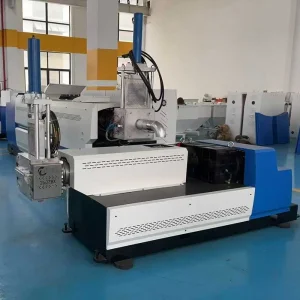
Pelletizing contaminated PP/PE agricultural film scrap and post-consumer bottles requires continuous melt filtration under high dirt loading.
High-temperature catalyst recovery and aggressive acid fluid filtration in petrochemical processing units.
Detailed technical answers to critical engineering, manufacturing, and procurement inquiries.