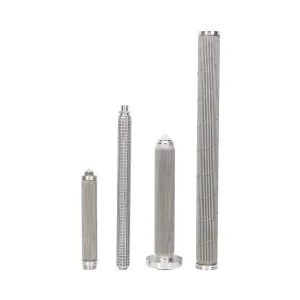
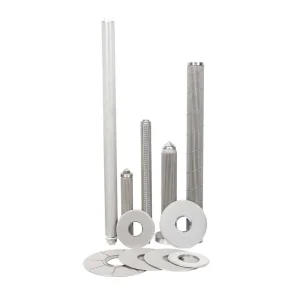
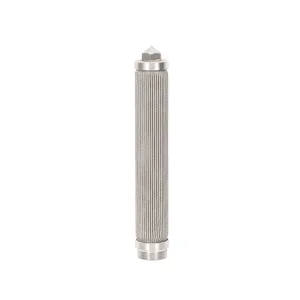
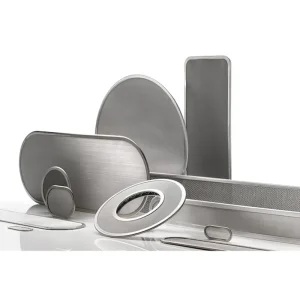
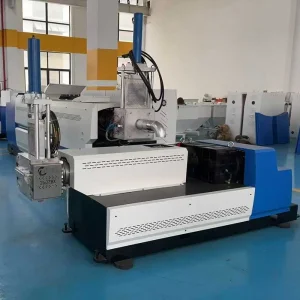
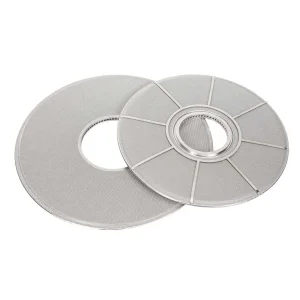
In modern continuous polymer polymerization, plastic extrusion, and synthetic fiber melt-spinning lines, disc filter elements (commonly referenced as leaf disc filters, spin pack screen discs, or hard disc filters) represent the primary defense mechanism against structural contamination. As processing speeds surpass 600 meters per minute in biaxially oriented film lines (BOPP, BOPET, BOPA) and spinneret capillary diameters shrink below 0.15 mm in ultra-fine filament spinning, the presence of microscopic cross-linked gels, carbonized degradation particles, and inorganic contaminants drastically compromises operational efficiency.
A single micro-defect in the polymer melt stream can induce film web ruptures, filament breakage, or optical distortion in high-value barrier packaging. Consequently, global enterprise procurement teams and plant engineering directors are moving away from commodity surface-mesh filters toward engineered OEM sintered metal fiber felt disc elements. These advanced multi-layer filtration structures deliver high dirt-holding capacity ($g/m^2$), minimal differential pressure drop ($\Delta P$), and absolute micron retention under operating temperatures up to 350°C and pressures exceeding 210 bar.
The evolution of polymer filtration media is driven by the physical limits of dynamic fluid mechanics under non-Newtonian flow conditions. High-viscosity polymer melts (ranging from 100 to 3,000 Pa·s) exhibit severe shear-thinning and thermal degradation risks when forced through constrained flow channels. Leading OEM exporters are re-engineering disc geometry to mitigate these shear stresses while extending total on-stream lifetime.
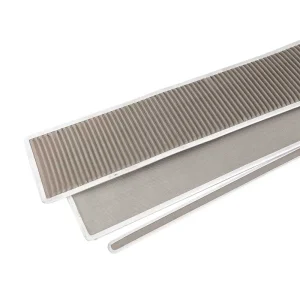
Unlike traditional 2D square wire mesh that captures particles exclusively on the surface, 3D non-woven sintered stainless steel fiber felt provides an open, interconnected pore matrix with up to 85% void volume. This gradient depth filtration structure distributes trapped gels across the depth of the medium, increasing dirt-holding capacity by 300% to 500% compared to equivalent mesh discs.
Corrosion resistance under high temperature is paramount. Standard applications utilize low-carbon Stainless Steel 316L (UNS S31603). However, for fluoropolymer processing (PVDF, PTFE) and aggressive PET polymerization catalysts, high-nickel alloys such as AISI 904L, Hastelloy C-276, and Inconel 625 are deployed to eliminate intergranular corrosion and metallic ion leaching.
Leaf disc filter elements must withstand extreme radial compressive forces when stacked inside continuous candle filter housings or disc stack vessels. Automated electron-beam perimeter welding guarantees zero polymer bypass around the outer hub, while precision machined aluminum, soft copper, or hard-faced metal-to-metal hub seals eliminate inter-disc leakage.
Selecting the optimal filter media configuration requires balancing absolute pore rating, hydraulic permeability, and structural collapse limits. The engineering data below highlights operational benchmarks across primary disc filter element formats manufactured by leading OEM facilities:
| Filter Media Type | Micron Rating ($\mu m$) | Porosity (% Volume) | Dirt Capacity ($g/m^2$) | Max $\Delta P$ Collapse | Primary Industrial Application |
|---|---|---|---|---|---|
| Sintered Metal Fiber Felt | 1.5 – 60 $\mu m$ | 75% – 85% | 180 – 320 $g/m^2$ | 210 Bar | BOPP/BOPET Film & PET Resin |
| Multi-Layer Sintered Wire Mesh | 5 – 150 $\mu m$ | 50% – 60% | 90 – 140 $g/m^2$ | 150 Bar | Spunbond & Meltblown Nonwovens |
| Dutch Weave Wire Mesh Disc | 20 – 250 $\mu m$ | 35% – 45% | 40 – 75 $g/m^2$ | 100 Bar | Standard Extrusion Screen Changers |
| Pleated Sintered Mesh Disc | 3 – 100 $\mu m$ | 65% – 75% | 220 – 400 $g/m^2$ | 180 Bar | High-Viscosity Monofilament |
| Powder Sintered Porous Disc | 0.5 – 20 $\mu m$ | 30% – 40% | 30 – 60 $g/m^2$ | 250 Bar | Ultra-Purity Gas & Chemical Fluids |
Global supply chain dynamics demand that filtration suppliers provide not only precision engineering but also unmatched manufacturing agility and cost competitiveness. The convergence of China’s Industry 4.0 automated production clusters with localized metallurgical stainless steel supply networks in Zhejiang has created a robust ecosystem for polymer melt filter manufacturing.
By utilizing computer-controlled high-vacuum sintering atmosphere furnaces operating above 1150°C, metallic bonds are formed between micro-fibers without distorting pore uniformity. This guarantees isotropic permeability across 100% of the active disc filtration surface area.
Robotic CNC laser-cutting and ultrasonic cleaning line integration ensure outer hub outer/inner diameter tolerances within $\pm 0.02 \text{ mm}$. This precise mechanical fit prevents stack misalignment and stress concentration when high torque is applied during filter assembly installation.
With fully integrated wire drawing, web laying, sintering, and machining under one roof, custom OEM drawings can be converted to physical samples within 7 business days. Mass production lead times are shortened by 40% compared to traditional European suppliers.
For technical buyers and procurement specialists in fortune 500 chemical companies, vendor selection hinges on strict adherence to quality verification standards and total cost of ownership (TCO) optimization. A premature filter element collapse can trigger catastrophic downtime costs exceeding tens of thousands of dollars per hour.
Our manufacturing verification protocol includes 100% initial bubble point pressure testing (per ASTM F316) to verify absolute maximum pore diameter before release. Furthermore, structural collapse integrity is validated under ISO 2941, while fluid compatibility and corrosion resistance undergo rigorous chemical testing according to EN 10204 3.1 material certification standard.
Disc filter elements operate in highly specialized environments where polymer rheology, temperature gradients, and mechanical forces vary widely. Below are key real-world application profiles engineered by our OEM technical unit:
In high-speed BOPP packaging film production lines running at line speeds above 500 m/min, tiny cross-linked gel particles cause severe pinholes and web breaks during transverse orientation (TDO stretching). By replacing woven screen packs with 12-micron multi-layer sintered metal fiber leaf disc filter stacks, plant operators extend operational cleaning cycles from 15 days to over 60 days, drastically improving plant overall equipment effectiveness (OEE).
Melt spinning processes require spin pack disc filters capable of filtering micro-impurities prior to capillary extrusion through spinneret plates. Our custom stainless steel 316L disc filters maintain strict shear rate control, eliminating polymer melt stagnancy, thermal degradation, and filament breaks in POY (Partially Oriented Yarn) and FDY (Fully Drawn Yarn) production lines.
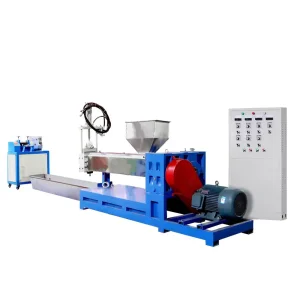
Recycling post-consumer PP/PE film or bottle flakes introduces harsh abrasive contaminants, paper fibers, and non-melting polymers. Heavy-duty hydraulic continuous screen changers equipped with OEM multi-layer Dutch weave wire mesh disc elements provide high dirt storage capacity and exceptional mechanical strength to resist burst pressures caused by rapid contaminant accumulation.
Processing hot melt adhesives (EVA, APAO) and specialty engineering resins requires continuous operation under temperatures exceeding 300°C. Sintered metal fiber felt disc elements constructed from corrosion-resistant SUS 316L ensure absolute rating retention without chemical oxidation, preserving resin clarity and viscosity index.
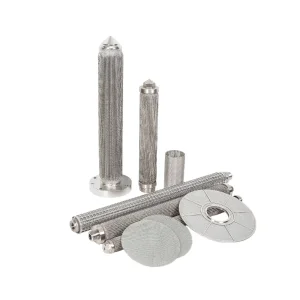
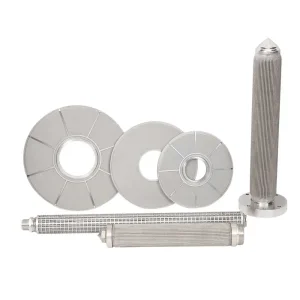
Expert answers to technical procurement queries, maintenance procedures, and performance validation standards for plant operations engineers and OEM sourcing managers.