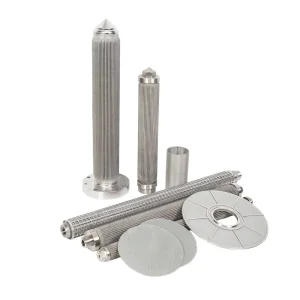
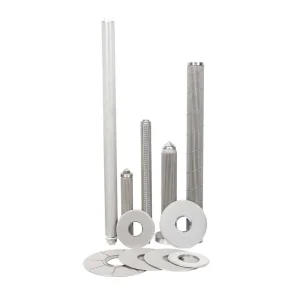
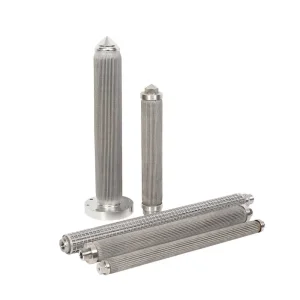
Created by vacuum sintering non-woven micro-metal fibers (down to 2 microns in diameter), providing a 3D labyrinthine porous structure. It offers up to 80% porosity, delivering high flow rates and 3x higher dirt-holding capacity compared to woven wire mesh.
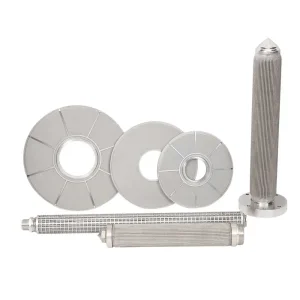
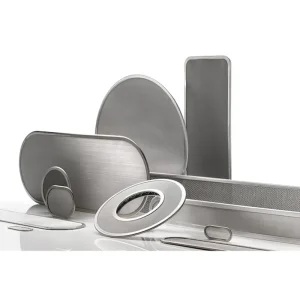
Engineered by bonding precision-woven wire cloth layers under high heat and vacuum. It provides rigid pore size control, exceptional structural resistance against pressure surges, and easy mechanical ultrasonic surface cleaning.
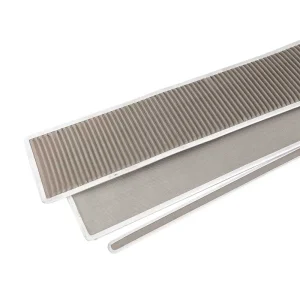
Utilizes thick warp wires and fine weft wires packed tightly to create a robust filter cloth. Ideal for continuous screen changers and high-pressure plastic granulating lines where mechanical abrasive resistance is critical.
| Performance Metric | Sintered Metal Fiber Felt Cartridge | Multi-Layer Sintered Wire Mesh | Woven Extruder Screen Mesh Pack |
|---|---|---|---|
| Porosity Range | 75% - 85% (Ultra-High) | 35% - 50% (Medium) | 30% - 45% (Standard) |
| Filtration Rating (Micron) | 3 µm - 60 µm absolute | 5 µm - 250 µm exact | 10 µm - 1000 µm nominal |
| Dirt Holding Capacity | Exceptional (Extended On-Stream Life) | Moderate to High | Low (Requires Frequent Change) |
| Collapse Pressure Limit | Up to 210 Bar (3,045 PSI) | Up to 250 Bar (3,625 PSI) | Dependent on Support Plate |
| Cleanability & Reuse | TEG / Pyrolysis Burnout / Ultrasonic | Backwashable / Chemical Cleanable | Disposable / Limited Manual Cleaning |
Leading Chinese OEM factories source premium grade SUS 304, 316L, and Hastelloy raw wires directly from top-tier mills with full ISO 10204 3.1 chemical & tensile material certificates.
State-of-the-art high-vacuum sintering furnaces ensure zero grain boundary oxidation, while robotic TIG/plasma seam welding eliminates bypass leaks and heat-affected zone cracking.
Automated pleating lines and scalable manufacturing allow China OEM factories to deliver precision filter cartridges at 30% to 50% lower TCO compared to European or North American suppliers.
In-house CAD/CAM engineering teams offer custom end-cap machining (threaded, bayonet, double open-end), specialized pleat heights, and rapid sample dispatch within 7–10 days.
Challenge: Micro-gel particles cause pinholes and optical haziness in ultra-thin biaxially oriented polypropylene films.
Solution: Pleated sintered fiber felt candle cartridges (5–10 µm rating) installed in continuous Continuous Polymer Filters (CPF). Provides maximum active surface area to prevent shear-induced degradation.
Challenge: Spinneret nozzle clogging causes filament breakage and non-uniform fabric density in hygiene/medical material lines.
Solution: Sintered mesh candle filters with high structural core strength, capable of sustaining 250 Bar differentials, guaranteeing uniform melt distribution to spin packs.
Challenge: High contamination levels (paper, aluminum, degraded polymers) in recycled rPET, rPE, and rPP streams.
Solution: Heavy-duty auto-backwashing disc filter packs and stainless steel wire mesh screen belts designed for hydraulic continuous screen changers.
Challenge: Filtration of high-viscosity Nylon 6, Nylon 66, and Polyester melt at extreme temperatures.
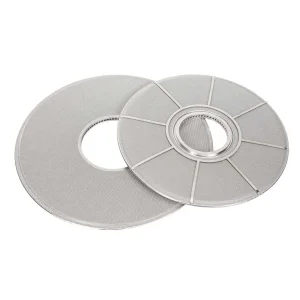
Solution: Precision leaf disc filter elements (smooth perimeter welded) using 316L sintered metal powder or fiber media to achieve zero particle bypass.
Verifies fabrication integrity and confirms the absolute micron rating by detecting the first bubble emergence pressure in alcohol/isopropanol test fluids.
Ensures the filter core and seam welds can withstand catastrophic differential pressure surges without structural deformation or pore collapsing.
Determines the absolute Beta Ratio (βx(c) ≥ 1000) and contaminant capacity under dynamic continuous circulation conditions.
Validates metallurgical resistance against chemical degradation, intergranular corrosion, and high-temperature polymer oxidation.
High-resolution machine vision systems inspect 100% of wire mesh weaves and welded seams, identifying micro-gaps, wire slippage, and weld porosity before final assembly.
Computer-controlled chevron and asymmetric pleating geometries increase effective filtration surface area by up to 40% within standard housing dimensions, drastically extending on-stream life.
Specialized electropolishing and CVD titanium-nitride coatings reduce polymer melt wall-friction, preventing thermal polymer degradation (black spot formation) inside filter housings.