Explore our premium selection of industrial recycling machines, high-viscosity melt candle filters, and precision wire mesh filter elements manufactured to international quality standards.
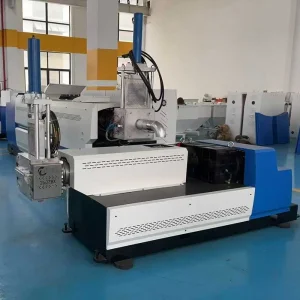
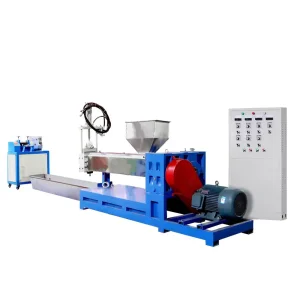
In the contemporary circular economy, Polypropylene (PP) and Polyethylene (PE) woven bags—including flexible intermediate bulk containers (FIBCs), agricultural raffia bags, cement packaging, and geo-textiles—represent one of the highest-volume yet technically challenging post-industrial and post-consumer waste streams. As global regulatory frameworks such as the European Union’s Packaging and Packaging Waste Regulation (PPWR) enforce higher mandates for recycled plastic content, international manufacturers are rapidly moving away from rudimentary mechanical downcycling toward high-purity polymer melt pelletization.
Achieving high-grade recycled pellets from woven bags requires overcoming significant physical and chemical obstacles. Woven fabrics possess high tensile strength, low bulk density, variable moisture content, heavy inorganic contamination (sand, calcium carbonate fillers), and thermal history degradation. A superior OEM Woven Bag Recycling And Granulator System integrates high-torque shredding, forced compaction, multi-stage vacuum degassing extruders, and micro-precision polymer melt filtration elements (such as candle filters and leaf discs) into a single continuous automated line.
A state-of-the-art OEM PP woven bag recycling line is not merely an extruder; it is a synchronized thermal-mechanical chemical process unit. Below is the technical breakdown of the end-to-end granulator engineering matrix designed by top-tier Chinese manufacturers:
Utilizes dynamic rotational blades to pre-cut, pre-heat, and densify low-density woven bag raffia strip scrap. The thermal friction removes surface moisture upfront while feeding the polymer melt uniformly into the extruder screw without bridging.
Equipped with specialized bimetallic screw profiles (L/D ratios up to 36:1 or 40:1). Dual atmospheric and high-vacuum degassing ports extract residual inks, moisture, print solvents, and low-molecular-weight volatiles to prevent void formation in pellets.
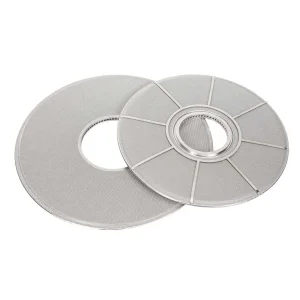
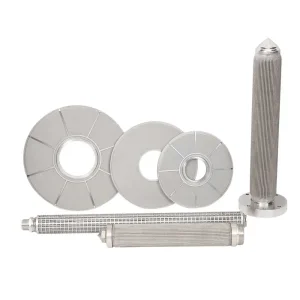
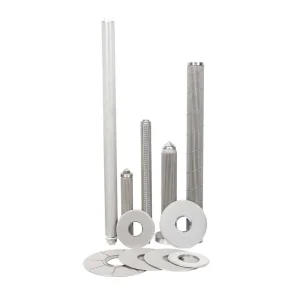
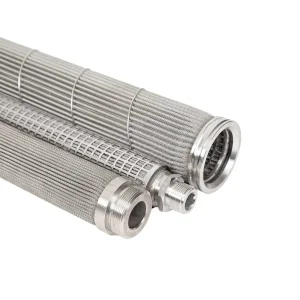
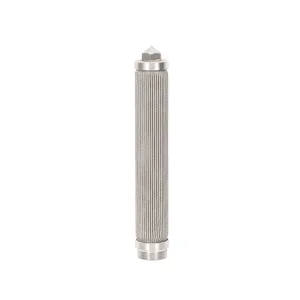
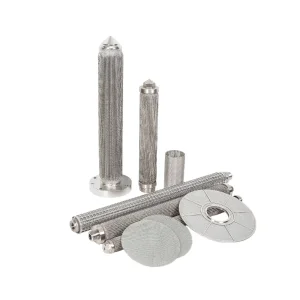
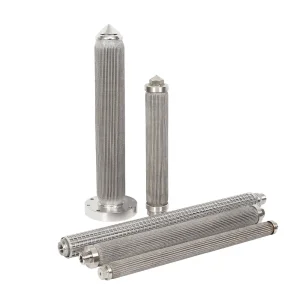
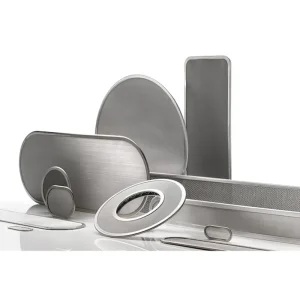
The heart of pellet purity. Integrates high-surface-area continuous hydraulic plate screen changers, polymer leaf disc filters, or SUS304/SUS316L pleated candle filter cartridges capable of handling melt pressures up to 30 MPa with auto-backwash capability.
In post-consumer PP woven bag recycling, non-melting impurities such as sand, metallic flakes, aluminum fragments, un-melted high-density gels, and paper fibers can cause severe screw wear and spinneret clogging in downstream applications. Selecting the appropriate filtration media is decisive for operational downtime and resin purity.
| Filter Element Type | Filtration Area Efficiency | Micron Rating Range | Pressure Resistance | Primary Application Scenario |
|---|---|---|---|---|
| Pleated SUS316L Candle Filters | Ultra-High (Up to 300% larger active area) | 5 µm – 100 µm | Up to 250 Bar (25 MPa) | High-purity filament spinning, non-woven fabrics, fine blown film upcycling |
| Polymer Leaf Disc Filters | High (Flat radial flow distribution) | 10 µm – 150 µm | Up to 200 Bar (20 MPa) | BOPP, BOPET, high-viscosity continuous extrusion granulators |
| Extruder Wire Mesh Screens (SUS 304/316) | Standard (Single to multi-layer mesh packs) | 40 µm – 500 µm | Up to 150 Bar (15 MPa) | Standard post-industrial raffia bag pelletizing, injection grade re-pelletization |
| Metal Sintered Fiber Felt Cartridges | Maximum (Depth filtration network) | 3 µm – 60 µm | Up to 300 Bar (30 MPa) | Ultra-viscous polymer melt purification, medical & food-grade recycled PP |
The practical application of woven bag granulating equipment varies across geographic markets depending on waste collection infrastructure, labor dynamics, and end-market resin specifications:
In agricultural regions across Vietnam, Indonesia, and Brazil, post-consumer woven fertilizer bags contain up to 8% sand and soil contaminants. OEM granulators deployed here feature heavy-duty wet pre-shredding washers paired with dual-piston continuous hydraulic screen changers utilizing robust 60-mesh to 100-mesh SUS 304 wire mesh packs for continuous operation without stopping the line.
European recyclers process heavy-duty FIBC big bags to produce high-MFI PP compounds for automotive battery housings and interior panels. The process demands twin-stage degassing combined with high-viscosity 20-micron stainless steel sintered candle filter cartridges to eliminate all microscopic contamination that compromises impact strength.
Large-scale woven bag factories generate 3% to 5% internal raffia edge trim and startup waste. Compacted edge-trim granulators connected directly to underwater pelletizing heads allow 100% of internal factory scrap to be re-extruded directly back into tape extrusion lines without loss of tensile properties.
As industry requirements shift toward zero-defect manufacturing and digitalized process management, OEM suppliers in China are pioneering next-generation technological advancements:
Integration of Industry 4.0 IoT sensors into polymer candle filter housings. Real-time differential pressure (ΔP) monitoring dynamically triggers backwashing sequences precisely before pressure spikes occur, reducing melt loss during purge cycles by up to 60%.
Transitioning from traditional cast-aluminum resistance heaters to high-efficiency electromagnetic induction barrel heating. This reduces extruder warmup times by 50% while lowering thermal power consumption by 25-35 kWh per ton of recycled output.
As the world’s leading hub for plastic machinery manufacturing, China’s industrial ecosystem—specifically across Zhejiang (Pujiang/Jinhua) and Jiangsu industrial hubs—offers unparalleled structural advantages for global B2B buyers:
From raw SUS304/SUS316L wire drawing and vacuum sintering furnace operations to precision CNC machining of bimetallic extruder barrels, complete internal supply chain ownership ensures rigorous quality control and fast turnaround times.
Customization is embedded into the manufacturing workflow. Whether tailoring custom candle filter lengths, specialized flange connection standards (DIN, ANSI, JIS), or specific motor power ratings (Siemens/WEG), custom designs are delivered without extreme lead-time penalties.
By leveraging mature supply chains and automated robotic welding setups for stainless steel filter elements, Chinese OEM suppliers deliver European-tier filtration efficiency at 40% to 60% lower total capital expenditure (CapEx).
To maintain long-term reliability and adhere to strict international engineering mandates, our OEM manufacturing facilities operate under comprehensive quality assurance protocols:
All granulating extruders and pressure filter vessels comply with European CE Directives (Machinery Directive 2006/42/EC and Pressure Equipment Directive PED 2014/68/EU) and ISO 9001:2015 quality management systems. Filter meshes comply with REACH and RoHS material purity standards.
We offer remote PLC diagnostic support, global on-site commissioning by experienced engineers, and guaranteed 48-hour dispatch for critical wear parts (including spare screen packs, filter cartridges, and pelletizer blades).
Browse our complete series of custom polymer leaf discs, non-woven melt filter cartridges, and commercial plastic recycling machinery.