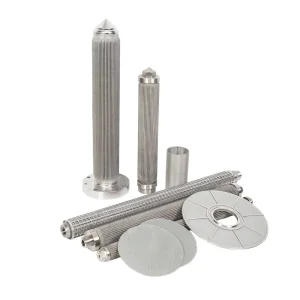
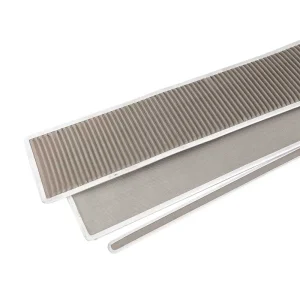
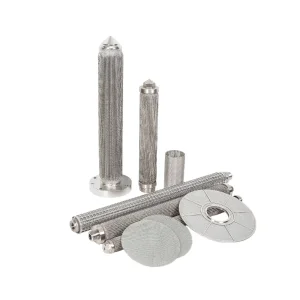
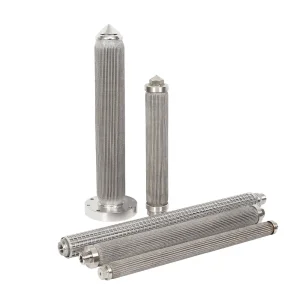
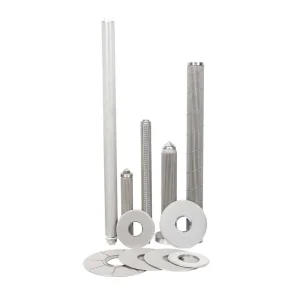
Explore high-performance OEM/ODM filter media engineered for extreme viscosity, elevated temperature, and high-pressure fluid applications.
In modern industrial processing, precision continuous filtration represents a primary technical pillar governing final product quality, operational safety, and overall process economics. As continuous polymer processing, chemical synthesis, petroleum refining, and advanced recycling machinery demand tighter tolerance windows under extreme operational conditions (high temperatures exceeding 350°C and differential pressures reaching up to 250 bar), traditional disposable media have been rapidly displaced by metallic filtration structures.
Sintered stainless steel mesh, woven wire cloth, and multi-layer laminate filter elements provide non-deformable pore geometries, exceptionally long service lives, superior corrosion resistance, and complete cleanability through backflushing, chemical stripping, or pyrolytic calcination. For enterprise procurement teams, process engineers, and plant operations leadership, sourcing from qualified wholesale filter steel mesh manufacturers & companies is no longer a simple transactional purchase—it is a critical strategic decision directly impacting plant uptime, scrap rates, and energy efficiency.
Unlike rigid inorganic particulate contamination, high-viscosity polymer melts carry soft gels that deform under pressure gradients. Standard single-layer wire cloth often permits gel extrusion through expanded wire gaps. High-gain multi-layer sintered web technology relies on depth filtration mechanics—combining physical straining with tortuous path capturing to permanently retain soft gels without causing catastrophic pressure drop surges.
Selecting the appropriate filter steel mesh architecture requires a thorough understanding of metallurgical properties, weave dynamics, structural pore sizing, and fluid dynamic resistance. Standard commercial offerings vary significantly based on alloy selection, wire drawing precision, and heat treatment methodologies.
Dominant material grades include AISI 304, 304L, 316, and 316L. For aggressive chemical or extreme thermal environments, advanced manufacturers utilize Hastelloy C-276, Inconel 600, or Monel alloys to eliminate intergranular corrosion and stress-corrosion cracking.
From Plain Weave (1:1 pattern for high open area) and Twill Weave (allowing heavier wire diameters) to Dutch Twill Weave (providing tight micron ratings down to 1–5μm), weave geometry directly governs pore distribution, permeability, and mechanical stiffness.
By subjecting layered woven wire screens to elevated temperatures in a vacuum sintering furnace below the metal melting point, molecular diffusion creates solid alloy joints across all wire contact points, preventing pore migration under shear stresses.
| Mesh Specification Category | Woven Wire Cloth (Single-Layer) | Multi-Layer Sintered Wire Laminate | Sintered Metal Fiber Felt |
|---|---|---|---|
| Micron Rating Range | 25 μm – 2000 μm | 1 μm – 100 μm | 3 μm – 60 μm |
| Porosity Percentage | 30% – 45% | 35% – 50% | up to 75% – 85% |
| Dirt Holding Capacity | Moderate (Surface Filtration) | High (Combined Surface & Depth) | Exceptional (High Depth Capacity) |
| Mechanical Burst Strength | Medium (Requires Support Basket) | Extremely High (Self-Supporting) | High (Supported by Mesh Laminate) |
| Cleanability & Longevity | Fair (Risk of Wire Displacement) | Excellent (Fixed Pore Structure) | Good (Requires Precise Ultrasonic Bath) |
The global industrial filtration market is experiencing rapid expansion, driven by stringent environmental mandates, rising demand for recycled polymers, and the global push toward circular economy compliance. Enterprise buyers navigating the landscape of Wholesale Filter Steel Mesh Manufacturer & Companies must evaluate manufacturing capabilities across key regional hubs.
Leading global manufacturers are increasingly integrating full vertical operations—from wire drawing and automated loom weaving to high-vacuum sintering, automated laser welding, and ISO-certified cleanroom assembly. China has solidified its position as a primary global manufacturing node, combining cost-efficient raw material chains with state-of-the-art European weaving looms and vacuum sintering facilities.
Direct manufacturer partnerships reduce reliance on intermediate distributors, granting direct access to mill test certificates (MTC 3.1/3.2), custom tooling modifications, and shortened production cycles for emergency line maintenance.
While initial acquisition cost is an important factor, experienced operations directors evaluate elements based on TCO—factoring in cycle life between cleanings, flow rate preservation, and energy consumption required to overcome differential pressure drops.
Top-tier suppliers offer rapid reverse-engineering services for legacy continuous polymer filtration equipment, providing exact drop-in replacements for European and Japanese OEM filter elements at reduced capital expenditure.
Filter steel mesh and candle filter elements are deployed across diverse, demanding industrial processing sectors. Custom engineering ensures that pore geometries and structural reinforcement align with specific fluid dynamics and mechanical stress vectors.
In sheet, film, and pipe extrusion lines, continuous screen changers use round or breaker plate mesh packs to intercept unmelted resin gels, degraded carbon specks, and foreign metallic debris, preserving die longevity and preventing film blow-outs.
Production of ultrafine polypropylene fibers for hygiene products and medical-grade masks requires candle filter elements rated at 10–25μm absolute. Zero tolerance for wire shedding or pinholes ensures uninterrupted fiber drawing.
Heavy-duty recycling extruders processing post-industrial film, agricultural waste, and bottle flakes demand high-strength, multi-layer reinforced filter meshes capable of handling high dirt loads without collapsing.
Biaxially oriented film lines require leaf disc filter bundles with large active surface areas to maintain minimal pressure differential across month-long continuous extrusion runs.
Used in catalyst recovery, amine scrubbing, and monomer clarification units where fluids exhibit extreme chemical aggressiveness, elevated temperatures, and volatile dynamic pressures.
Polycondensation reactors utilize large-scale CPF candle filter assemblies with custom pleated sintered metal felt to handle polymer melt viscosities exceeding 10,000 Poise.
Deploying specialized industrial filter steel mesh across global regional markets requires strict compliance with international manufacturing, safety, and material standards. A recognized wholesale filter steel mesh manufacturer provides full traceability, comprehensive documentation packages, and localized support.
Every step—from wire drawing and mesh weaving to vacuum sintering and plasma cutting—is monitored under ISO 9001:2015 guidelines. Bubble point testing (per ISO 4003) and pressure drop measurement (per ISO 3968) verify structural integrity.
Complete metallurgical composition compliance via PMI (Positive Material Identification) testing. Certified Mill Test Reports (EN 10204 3.1) guarantee chemical composition compliance for nickel, chromium, and molybdenum contents.
For applications involving food packaging films, pharmaceutical fluid separation, or medical plastics, filter meshes comply with FDA 21 CFR 177.2600 and EU Regulation (EC) No 1935/2004, eliminating leaching risks.
The industrial filtration landscape is evolving rapidly, driven by smart manufacturing integration, advanced material science, and sustainable closed-loop production goals. Forward-thinking enterprise buyers should consider key technical developments shaping the market over the next decade.
Utilizing computational fluid dynamics (CFD) and machine learning algorithms to model fluid flow at the pore level, next-generation mesh geometries achieve uniform velocity distribution, minimizing localized shear degradation in sensitive polymers.
Atomic layer deposition (ALD) of ultra-thin ceramic or hydrophobic coatings reduces thermal degradation adhesion on stainless steel surfaces, extending operational intervals between pyrolytic cleaning cycles.
Combining 3D-printed titanium or stainless steel fluid distribution cores with high-precision sintered outer mesh laminates optimizes internal volume and structural rigidity while maintaining maximum active filtration area.
Technical and procurement insights addressing key challenges in selecting, installing, and maintaining industrial filter steel mesh elements.
Discover our specialized continuous polymer filtration cartridges, screen mesh packs, and industrial plastic recycling equipment.