In modern thermoplastic processing, synthetic fiber spinning, film blowing, and chemical recycling industries, polymer melt filtration serves as the primary barrier ensuring melt purity, operational continuity, and end-product structural integrity. As global processing lines scale up to higher throughput rates—frequently exceeding 5,000 kg/hr—and process non-Newtonian polymer melts under extreme temperatures (up to 350°C) and operating pressures reaching 35 MPa (5,000 psi), the physical and fluid dynamic demands on filtration media have escalated dramatically.
Polymer melts such as Polyethylene Terephthalate (PET), Polyamide (PA6/PA66), Polypropylene (PP), Polycarbonate (PC), and Polyether Ether Ketone (PEEK) exhibit ultra-high viscosity ranging from 100 to over 10,000 Pa·s. Under these severe shear conditions, standard surface filters fail rapidly due to premature blinding, structural compaction, and gel extrusions. The global manufacturing paradigm has consequently shifted toward 3D depth-filtration metal fiber felts and multi-layered sintered stainless steel media.
Polymer melts are shear-thinning viscoelastic fluids. Non-uniform flow velocity profiles across the filter bed create stagnant zones, resulting in thermal degradation, polymer cracking, and carbonized black spot formation. Advanced filtration media must optimize channel tortuosity to minimize differential pressure (ΔP) build-up while maintaining shear rates that prevent degradation.
Polymer impurities are rarely rigid spheres; they comprise semi-solid deformable gels, cross-linked degraded polymers, inorganic catalyst residues (TiO2, Sb2O3), and particulate matter. Capture relies on three mechanisms: direct interception for rigid particles, depth entrapment within non-woven micro-fiber networks for soft gels, and cake filtration during extended cycles.
Selecting the optimal polymer filtration media requires matching alloy metallurgy, structural geometry, and pore distribution against specific process chemistry and temperature parameters. Sintered stainless steel fiber felts offer up to 85% void volume, delivering dramatically lower initial differential pressures and up to three times the dirt-holding capacity of traditional woven wire mesh screens.
| Filtration Media Type | Material Metallurgy | Porosity Range (%) | Absolute Micron Rating (µm) | Gel Deformation Capture | Cleanability & Reuse Life |
|---|---|---|---|---|---|
| Sintered Metal Fiber Felt | AISI 316L / Hastelloy C-276 | 75% - 85% | 1.5 - 60 µm | Exceptional (3D Depth) | High (TEG / Ultrasonic / Calcination) |
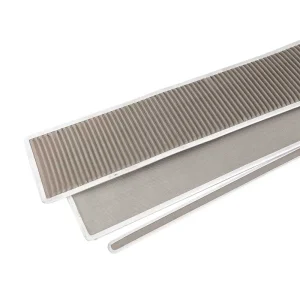
| Multi-Layer Sintered Wire Mesh | SUS 304 / 316L / Inconel | 35% - 50% | 5 - 250 µm | Moderate (Surface Matrix) | Very High (Backwash / Chemical) |
| Porous Metal Powder Sintered | 316L SS / Titanium Grade 2 | 40% - 55% | 0.5 - 20 µm | High (Tortuous Pore structure) | Moderate (Acid Pickling / Solvent) |
| Woven Wire Extruder Screens | SUS 304 / Brass / Low Carbon | 30% - 45% | 20 - 500 µm | Low (Surface Only) | Single-use to Low Reusability |
During vacuum diffusion bonding (sintering) at temperatures exceeding 1,100°C, micro-metallic fibers form solid-state atomic bonds at points of contact without melting. This maintains high media permeability while completely eliminating wire migration or fiber shedding into high-purity polymer streams—a critical reliability parameter for BOPET optical film and ultra-fine fiber spinning lines.
As a primary manufacturing center for global industrial filtration components, Chinese specialized production facilities, such as Pujiang HG Plastic Machinery Co., Ltd., combine full vertical supply chain integration with advanced automation. From micro-wire drawing and non-woven fiber laying to computer-controlled vacuum sintering and precision laser welding, local efficiency translates directly into reduced lead times, strict quality compliance, and optimal total cost of ownership (TCO).
By sourcing raw alloy wires directly from certified domestic metal refineries and utilizing dedicated micro-drawing machinery, Chinese manufacturers maintain strict control over chemical composition (nickel and molybdenum content in 316L), grain size, and mechanical tensile strength prior to media weaving or felt bundling.
Equipped with 6-axis robotic laser welding cells and optical sensor alignment systems, factories achieve seam-free joins on leaf disc hubs, candle end-caps, and screen borders. Precision engineering guarantees seamless integration into standard European, American, and Asian filter housing vessels.
Quality assurance follows strict international testing benchmarks: First Bubble Point Testing according to ISO 4003, Dirt Holding Capacity and Filtration Efficiency evaluation under ISO 16889, and Structural Collapse Pressure testing per ISO 2941. Every product batch is validated in cleanroom conditions prior to sealing.
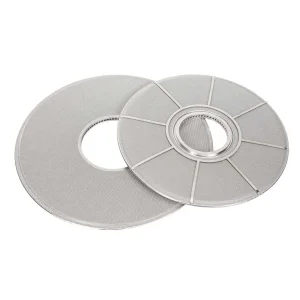
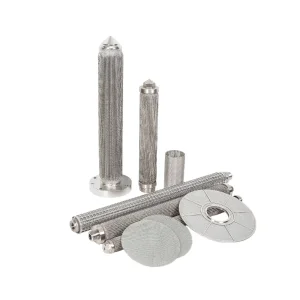
Biaxially Oriented PET and PP film lines demand ultra-clean polymer melts to prevent film blow-outs, pinholes, and optical distortion. Hard-disk and win-disc style leaf filters (outer diameter 12 inches / 7 inches) using gradient 3D fiber felt media capture sub-micron gels without causing flow stagnation. Long continuous run-times (often exceeding 60 days per cycle) directly increase line productivity.
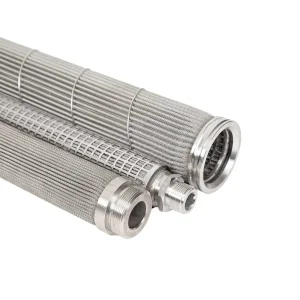
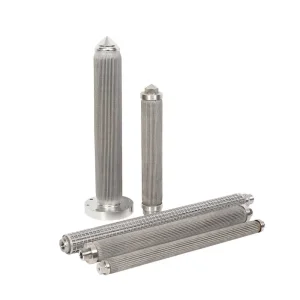
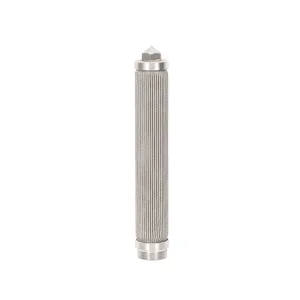
In synthetic fiber spinning (Polyester, Nylon, Polypropylene), spinneret orifice diameters can be as small as 150 to 300 microns. A single particle or micro-gel blocking a hole causes filament breakage. High-surface-area pleated candle filter cartridges (SUS 316L) placed in spin packs eliminate contaminants, standardizing pressure across the spin head and ensuring uniform thread denier.
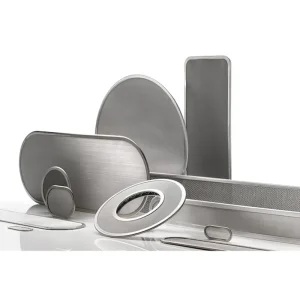
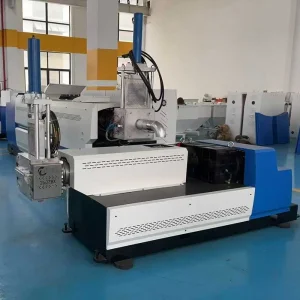
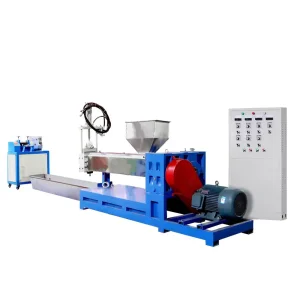
Recycling post-consumer PET bottles, PE films, or PP agricultural bags introduces heavy contamination (sand, paper fibers, incompatible polymers). Continuous screen changers utilizing robust multi-layer continuous mesh belts or heavy-duty round screen disks enable automated contaminant evacuation while maintaining stable extrusion output pressures.
For global procurement managers, technical directors, and plant engineers, evaluating polymer filtration media solely on initial unit purchase price leads to higher operational costs over time. A comprehensive evaluation requires analyzing the Total Cost of Ownership (TCO), calculated by evaluating initial media expenditure, cycle life duration, energy consumption driven by differential pressure (ΔP), and media cleanability/reusability.
Sintered metal fiber felt media may carry a 25-35% price premium over basic woven wire mesh, but it provides up to 300% longer on-stream operating life due to its 85% void volume. This reduces shutdown frequencies, labor overhead, and lost production capacity.
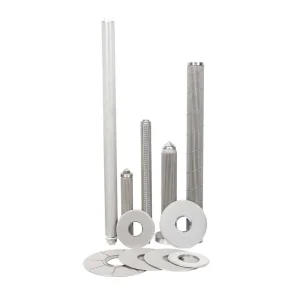
High-grade SUS 316L leaf discs and candle elements can undergo 10 to 20 chemical and thermal cleaning cycles (such as Triethylene Glycol - TEG hydrolysis, vacuum pyrolysis furnaces, and ultrasonic bath treatments) before structural degradation occurs, drastically lowering annual replacement costs.
Media with lower flow resistance maintains a low initial ΔP. Extruder drive motors require significantly less electrical power to push high-viscosity melt through highly porous sintered media, yielding measurable energy savings over continuous annual runs.
Next-generation media designs feature multi-stage density gradients within a single sintered layer. Coarser fibers on the upstream side capture bulk contaminants, while sub-micron downstream fibers trap fine gels. This design extends dirt holding capacity by more than 40% compared to uniform pore media.
With global circular economy directives targeting higher recycled resin content (rPET, rPE, rPP) in food-contact packaging and automotive parts, melt filtration media must achieve 10-20 micron absolute ratings under extremely high dirt loads without blinding rapidly.
Innovations in nano-scale chemical vapor deposition (CVD) and inert ceramic surface coatings prevent thermal degradation of sticky polymer melts on metal wire surfaces, reducing carbonization and extending cleanability cycles.