Explore OEM/ODM stainless mesh filter elements engineered with ISO 9001 quality controls, optimized porosity distribution, and ultra-high dynamic strain tolerance.
An authoritative analysis of metallurgical advances, fluid rheology optimization, and high-temperature polymer melt filtration technology.
In the modern industrial manufacturing landscape, the strategic role of a reliable Wholesale Stainless Mesh Filter Supplier has transitioned from simple consumable procurement to critical process engineering. As global polymer production scales up for high-speed biaxially oriented polypropylene (BOPP), polyester (BOPET), and micro-denier spunbond nonwoven textiles, the tolerance for particulate contamination has approached near-zero thresholds.
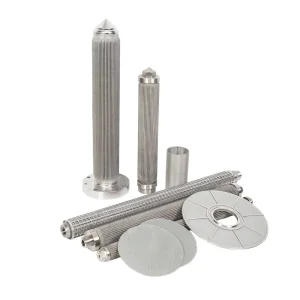
Traditional single-layer woven wire screens are rapidly being superseded by engineered multi-layer sintered mesh structures, micro-porous metallic fiber felts, and complex pleated candle elements. Modern extrusion lines operate under severe dynamic stress—temperatures exceeding 350°C, pressures scaling up to 300 bar (4,350 psi), and fluid viscosities ranging from molten PET to ultra-high-molecular-weight polyethylene (UHMWPE). Under these extreme operating envelopes, non-conforming mesh filters suffer from wire displacement, media fatigue, media migration, and catastrophic differential pressure drops ($\Delta P$), directly resulting in costly production shutdowns and compromised end-product tensile strength.
Furthermore, the worldwide legislative push toward circular plastics economies—mandating increased ratios of Post-Consumer Recycled (PCR) and Post-Industrial Recycled (PIR) resin input—has introduced unprecedented contamination profiles into extruder melt streams. Recycled resins frequently harbor microscopic cross-linked gels, metallic fragments, rubber particles, and degradation char. To address these heterogeneous waste streams, advanced stainless mesh filter manufacturers are leveraging 316L metallurgy, vacuum-sintering technology, and asymmetric multi-stage depth filtration, enabling continuous extrusion operations with vastly extended on-stream element life.
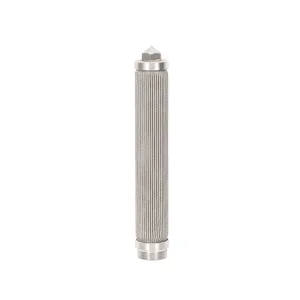
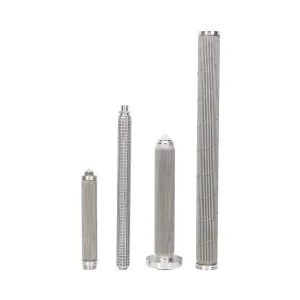
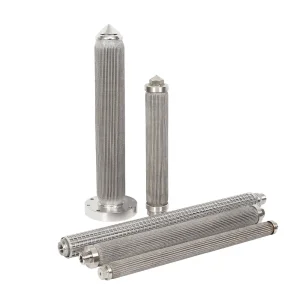
Maximizes active filtration area up to 400% compared to smooth cylinders, significantly lowering flux rate per unit area and extending dirt holding capacity (DHC).
Diffusion-bonded non-woven stainless steel micro-fibers provide three-dimensional depth filtration with up to 85% void volume for high porosity.
Engineered to endure repeated ultrasonic, pyrolysis (TEG/calcination), and chemical wash cycles without structural pore distortion or fiber degradation.
How Tier-1 industrial buyers, OEM equipment builders, and plant managers evaluate wholesale stainless mesh filter partners based on key engineering metrics.
When enterprise procurement heads evaluate a Wholesale Stainless Mesh Filter Supplier, purchasing decisions extend far beyond per-unit pricing. Operational reliability, total cost of ownership (TCO), material traceability, and metallurgical stability take precedent. A single premature filter collapse can result in tens of thousands of dollars in lost polymer throughput, damaged gear pumps, and contaminated downstream spinnerets or extrusion dies.
| Stainless Steel Alloy | Standard Grade Equivalent | Max Operating Temp (°C) | Corrosion & Acid Resistance | Primary Application Environment |
|---|---|---|---|---|
| AISI 304 / SUS 304 | 1.4301 / W.Nr. | 400°C | Moderate (Standard Organic Solvents) | Standard polyolefin pelletizing, basic screen mesh packs. |
| AISI 316L / SUS 316L | 1.4404 / W.Nr. | 550°C | Superior (Molybdenum-Enhanced) | BOPP/BOPET films, CPF candle filters, polyester spinning. |
| Sintered 316L Metal Fiber | Fiber Felt Matrix | 600°C | Exceptional (High Pore Volume) | Micro-denier nonwoven spunbond lines, gel retention. |
| Hastelloy C-276 / Alloy 600 | UNS N10276 | 800°C+ | Ultra-High (Severe Acid/Chlorine Environment) | Fluoropolymer (PVDF/PTFE) extrusion, aggressive chemical fluids. |
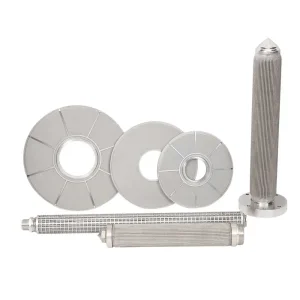
Custom filtration architectures tailored to heavy industrial extrusion, polymer refining, and chemical processing plants.
High-speed PP/PET nonwoven lines require continuous, ultra-fine filtration (10μm–40μm absolute) to prevent nozzle blockages in spin packs. Our pleated candle filter elements deliver low pressure differential and maximum online time, ensuring consistent filament uniform denier.
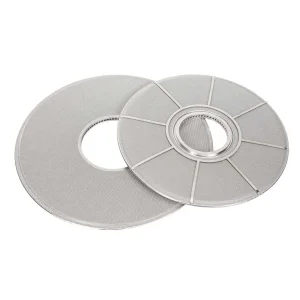
Biaxially oriented film lines utilize large-area continuous polymer leaf disc filter systems (CPF). Our precision-ground leaf discs eliminate optical pinholes, gel specks, and tear lines during high-tension transverse direction orientation (TDO).
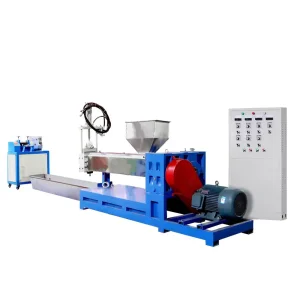
Automated continuous screen changers and recycling granulators process highly contaminated PCR waste. Our heavy-duty stainless steel extruder screen mesh packs withstand severe mechanical impact and abrasive particle loads.
Ensuring seamless international supply chain integration through rigorous quality certifications, localized engineering consultations, and compliance audits.
100% full-process traceability from raw wire rod drawing to vacuum sintering, bubble-point testing, and dimension verification.
Sanitary grade stainless steel element finishing suitable for food-contact polymer packaging, medical devices, and pharmaceutical fluids.
Strict elimination of hazardous heavy metal contaminants, SVHC compounds, and unverified chemical lubricants during manufacturing.
We provide localized engineering support across North America, Europe, Southeast Asia, and the Middle East. Our rapid-response engineering team performs CAD design verification within 24 hours, sample prototyping within 5 business days, and emergency inventory buffer stock management for contract enterprise buyers.
How continuous metallurgical advancements and smart manufacturing integrations are reshaping industrial fluid filtration.
Integration of low-surface-energy fluoropolymer and ceramic vapor deposition coatings onto stainless mesh fibers to reduce melt adhesion, prevent thermal degradation carbonization, and enable 30% faster ultrasonic cleaning cycles.
Implementation of smart sensor arrays and predictive AI algorithms that analyze $\Delta P$ pressure growth rate and rheological shear variations to optimize screen changer index timing automatically.
Combining 3D metal printing (SLM) with traditional vacuum sintering to create custom gradient pore structures that achieve unprecedented dirt holding capacity for recycled plastic melt flows.
Technical answers to critical procurement, engineering, and maintenance inquiries regarding stainless mesh filter systems.
Woven wire mesh consists of individual wires woven in square or dutch weaves. While flexible and cost-effective, wires can shift under high pressure gradients. Sintered wire mesh bonds multi-layer woven wire mesh through high-temperature vacuum sintering, fusing wire contact points into a rigid, non-deformable structure with fixed pore sizes and far superior pressure resistance.
Micron selection depends on the downstream product tolerance. For spunbond nonwovens or thin BOPP films (10–20μm thickness), filtration ratings of 10μm–25μm absolute are recommended. For standard sheet extrusion or pelletizing, 40μm–150μm ratings suffice. Our engineering team conducts melt sample analysis to recommend optimal micron sizing.
Standard cleaning protocols involve a 3-step process: 1) Thermal pyrolysis or TEG (triethylene glycol) boiling to melt out residual polymer resin; 2) Controlled chemical solvent neutralization/ultrasonic cleaning bath; and 3) High-pressure reverse liquid flush followed by ISO 4003 bubble point integrity testing.
AISI 316L contains 2–3% Molybdenum and lower carbon content than 304. This provides superior resistance to intergranular corrosion, high-temperature oxidation, and organic acid attack during prolonged polymer processing at elevated temperatures (>280°C).
Yes. As a custom OEM/ODM manufacturer, we produce candle filters in custom lengths (up to 1500mm), diameters, and end-cap connections (including 222/226 O-rings, NPT threads, hex bolts, tie-rod mounts, and custom flange interfaces).
Pleating increases the total active filtration surface area by 3 to 5 times within the same outer dimensional footprint. This lowers the localized fluid flux rate, reduces initial differential pressure drop ($\Delta P_0$), and exponentially increases the contaminant mass the filter can retain before reaching critical pressure limits.
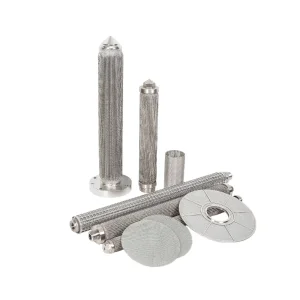
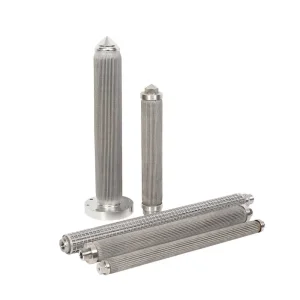
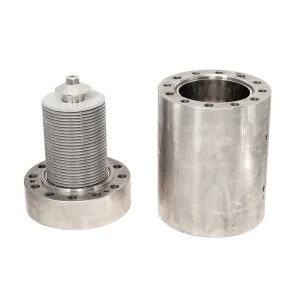
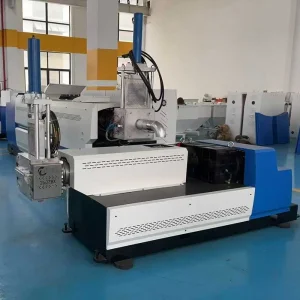
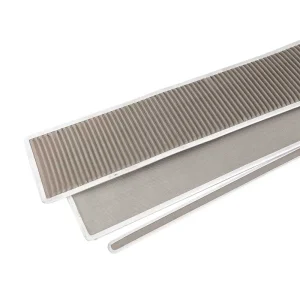
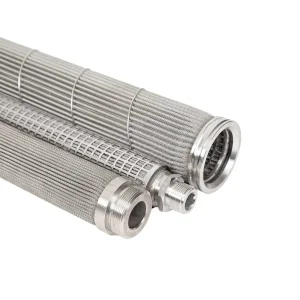
Browse our complete lineup of custom pleated candle cartridges, screen mesh packs, leaf disc elements, and plastic pelletizing machinery.
Partner directly with a certified Wholesale Stainless Mesh Filter Supplier. Send your technical CAD drawings, micron specifications, or existing sample details for an immediate engineering assessment and bulk factory pricing.
Contact Our Senior Engineering Team