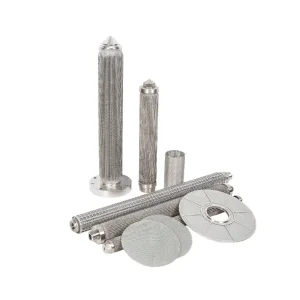
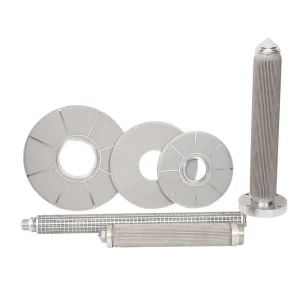
Precision-manufactured sintered stainless steel wire mesh and fiber felt candle cartridges optimized for high differential pressure, high dirt-holding capacity, and continuous thermal cycling.
Dudelange, historically renowned as a cornerstone of the European coal and steel boom in southern Luxembourg's Red Lands (Terres Rouges), has undergone an ambitious, multifaceted technological renaissance. While maintaining deep logistical strength via the Eurohub Sud rail-road terminal, the regional manufacturing corridor extending across Esch-sur-Alzette, Bettembourg, and Dudelange has strategically pivoted toward high-value technical sectors: precision automotive plastics, high-barrier circular packaging films, chemical engineering polymers, and high-performance technical textiles.
In modern extrusion and polymerizing plants operating within Dudelange, process continuity is paramount. The operational paradigm relies upon continuous, zero-defect processing where raw polymer melts—including Polyethylene Terephthalate (PET), Polyamide (PA6, PA66), Polypropylene (PP), and specialty copolyesters—are processed at operational temperatures between 260°C and 340°C under hydraulic pressures upwards of 250 bar. Contamination in these lines, such as cross-linked gels, carbonized micro-fines, and catalyst residues, triggers frequent breaker plate clogging, die lip deposits, and high web defect rates.
Our direct supply lines and customized candle filter engineering serve Dudelange's production engineers by deploying multi-layer sintered metallic filtration topologies. These architectures drastically extend uninterrupted on-stream cycle times, minimize differential pressure ($\Delta P$) escalation, and guarantee drop-in dimensional compliance for both classic European filter housings and bespoke compounding lines.
| Operational Pressure | Up to 350 bar (5,076 psi) |
| Melt Operating Range | 220°C – 340°C |
| Alloy Grades | AISI 316L, 304, Alloy 22 |
| Absolute Rating Threshold | 3 µm – 250 µm |
| Regeneration Lifespan | 12 - 20 thermal cycles |
Navigating technical risk, supply chain resilience, and lifecycle total cost of ownership (TCO) in precision melt filtration procurement.
Global procurement teams demand full 3.1 material test certificates according to EN 10204. Our manufacturing strictly verifies austenitic composition (316L with low carbon content ≤0.03% to prevent sensitization during vacuum pyrolysis cleaning), with micro-spectrometry reports furnished with every production lot.
Premature $\Delta P$ spikes waste extruder torque and raise melt temperatures, accelerating polymer thermal breakdown. Our computer-modeled flow channels, perforated high-strength inner core tubes, and outer wire protective layers optimize initial resistance while maintaining high burst resistance (over 100 bar collapse $\Delta P$).
Serving continuous-run polymer manufacturing plants across Dudelange requires guaranteed logistical predictability. Leveraging regional hub partnerships through Luxembourg's freight networks, we structure rolling buffer stock agreements, minimizing warehouse carrying overhead while mitigating unexpected downtime risk.
| Cartridge Configuration | Filtration Medium Architecture | Micron Absolute Rating | Effective Filtration Area | Burst / Collapse $\Delta P$ | Primary Industrial Applications |
|---|---|---|---|---|---|
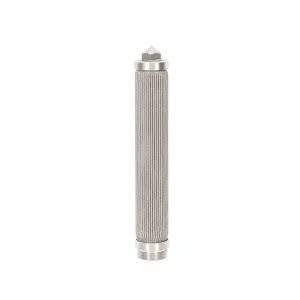
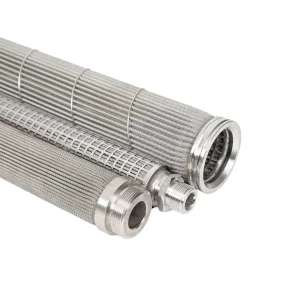
| Pleated Micro-Felt Candle | Graded sintered AISI 316L metal fiber felt + support mesh | 3 µm – 40 µm | 0.25 – 0.65 m² per 500mm length | ≥ 120 bar | BOPET, BOPA optical films, Spunbond nonwovens, microfibers |
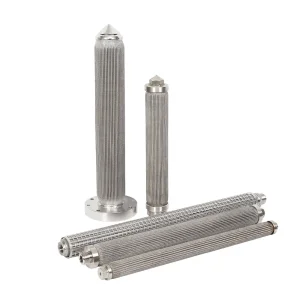
| Cylindrical Multi-Layer Mesh | 5-layer or 7-layer sintered square/Dutch woven wire cloth | 20 µm – 150 µm | 0.08 – 0.15 m² per 500mm length | ≥ 210 bar | Masterbatch compounding, recycled pelletizing, pipe extrusion |
| High-Dirt Pleated Mesh Cartridge | Multi-layer stainless steel square weave pleated pack | 40 µm – 300 µm | 0.20 – 0.45 m² per 500mm length | ≥ 150 bar | Engineering resin recovery, post-consumer PET recycling (PCR) |
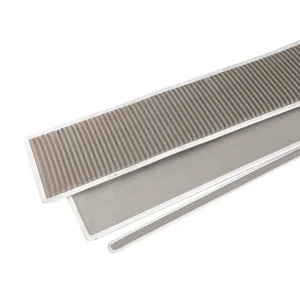
| Extreme-Viscosity Wedge Wire Element | Heavy-duty V-profile continuous slot stainless wire wound | 75 µm – 500 µm | 0.06 – 0.12 m² per 500mm length | ≥ 250 bar | Adhesive resins, elastomers, high molecular weight polymers |
Melt filtration is governed by non-Newtonian polymer rheology under intense thermal and shear forces. Unlike aqueous or gas filtration where fluid velocity is elevated and shear is negligible, molten polymers exhibit pseudoplastic shear-thinning characteristics. When forced through narrow pore channels, excessive shear rates can cause polymer degradation, chain scission, and molecular weight reduction.
Our candle filter designs address these hydrodynamic issues through three critical engineering concepts:
A key cost driver in Dudelange's circular manufacturing plants is the total number of thermal cleaning and regeneration cycles an element can survive before pore enlargement or fatigue cracks occur.
Pioneering filtration materials to overcome the operational challenges posed by high-ratio Post-Consumer Recycled (PCR) feedstocks and smart manufacturing.
With EU circular economy packaging mandates requiring higher PCR percentages, melt contamination has surged by up to 400%. We are formulating hybrid depth-filtration candle designs combining graded sintered fibers with high-rigidity external wire pre-strainers to process recycled flake feeds without premature clogging.
For aggressive melt environments, including fluoropolymer compounding, engineering halogenated polymers, and high-temperature bioplastics (such as PLA and PHA with volatile organic acid byproducts), our engineering roadmap delivers fully certified Hastelloy and Inconel candle cartridges resisting stress-corrosion cracking.
Supporting smart factory initiatives within Luxembourg's Industry 4.0 ecosystem, our elements can be tagged with high-temperature laser matrix IDs or embedded tracking caps. This facilitates automated logging of element run hours, washing cycle counts, and bubble-point integrity test curves across their operational life.
Deploying critical filtration hardware into production facilities in Dudelange demands strict alignment with EU statutory frameworks and cross-border industrial standards. HG Plastic Machinery backs every supply contract with exhaustive metallurgical, technical, and regulatory documentation:
Each candle filter manufactured for our Dudelange clients undergoes strict four-point qualification before export clearance:
In-depth technical answers addressing polymer filtration geometry, maintenance protocols, media selection, and operational safety.
A pleated candle filter provides between 2.5x to 4.5x greater effective surface area within the exact same outer diameter and length envelope. Under Darcy’s law of fluid flow through porous media, doubling the surface area decreases the local face velocity by 50%, which reduces initial differential pressure ($\Delta P$) by roughly 50% to 75% for non-Newtonian polymer melts. As a result, the time required to reach terminal differential pressure is prolonged by 300% to 500%, drastically extending filter on-stream life between changeovers.
Sintered metal fiber felt is constructed from non-woven micro-fibers, creating a three-dimensional depth matrix with a high porosity of up to 75%–85% (compared to 30%–45% for wire mesh). It is the optimal medium for capturing compressible, deformable soft contaminants such as gels, crosslinked polymer clusters, and optical defects in critical applications like BOPET/BOPP films, spunbond nonwovens, and high-speed fiber spinning. Multi-layer wire mesh, conversely, features rigid geometric pore structures and superior mechanical shear strength, making it ideal for masterbatch pelletizing, abrasive inorganic filler slurries, and high-contaminant PCR plastic recycling lines.
Yes. A large share of our production serves as custom, direct drop-in replacements for legacy or high-cost OEM elements (including systems from Maag, Nordson, Kreyenborg, Gneuss, and BKG). Plants in the Dudelange and Greater Luxembourg area simply need to supply an original element code, physical sample, or housing engineering print. We verify thread parameters (metric, imperial, or acme), flange seals, pleat depth, outer protective cage dimensions, and collapse ratings, delivering identical or improved performance with 100% mechanical fit compatibility.
An effective regeneration program follows a three-stage regime: 1) Thermal decomposition via vacuum pyrolysis or fluid bed calcination at controlled ramp rates not exceeding 480°C to burn out trapped resins without oxidizing 316L alloy; 2) TEG or chemical solvent rinsing to eliminate residual ash and inorganic salts; 3) Counter-flow ultrasonic cleaning in high-frequency baths to shake free particulate matter. Prior to re-installation, elements must pass an ISO 4003 bubble-point integrity test to verify no localized pleat tears exist, alongside dry weight checks to confirm total contaminant clearance.
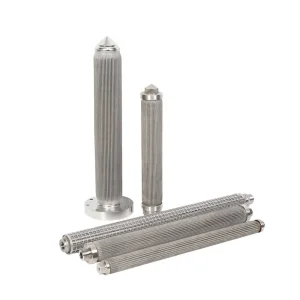
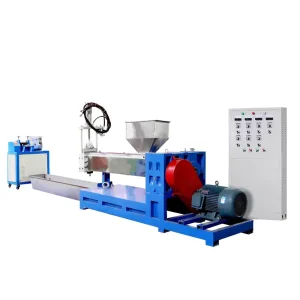
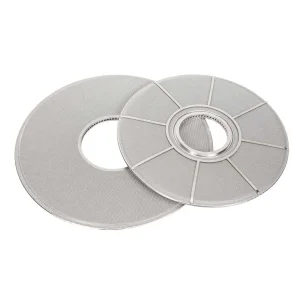
Explore our full line of industrial candle elements, polymer leaf discs, screen mesh packs, and turnkey recycling pelletizing lines engineered to European standards.
Send us your housing drawing, operating parameters, or used element part number. Receive a detailed technical proposal, dimensional CAD drawings, and free sample arrangements within 48 hours.
Send Inquiry Now