Top-tier filtration components tailored for Portuguese plastics extrusion, technical yarn, and recycling facilities requiring certified micron accuracy.
Understanding the specific operational challenges, regional industrial concentrations, and quality standards across Portuguese manufacturing hubs.
Portugal stands as one of Western Europe’s premier centers for polymer transformation, mold engineering, and flexible packaging manufacturing. Concentrated heavily in key industrial corridors—such as Leiria, Marinha Grande, Aveiro, Porto, and the greater Lisbon area—the Portuguese plastics industry generates billions in annual output, supplying automotive OEMs, agricultural film distributors, food packaging giants, and medical device fabricators across the European Union.
As the European Union intensifies its enforcement of the Packaging and Packaging Waste Regulation (PPWR) and Portugal’s national circular economy directives, local converters face an urgent dual imperative: maximize the incorporation of Post-Consumer Recycled (PCR) and Post-Industrial Recycled (PIR) resins while maintaining zero-defect melt purity.
This technical transition introduces unprecedented filtration challenges. Recycled polymers contain variable melt flow indices (MFI), cross-contaminated gel particles, elastomer specks, and inorganic micro-contaminants that quickly clog standard filtration systems. High-performance continuous melt filtration systems and precision-engineered stainless steel candle filter elements are no longer optional—they are critical operational assets for maintaining plant uptime and preventing costly die damage.
How Portuguese plastics processors are upgrading melt filtration hardware to thrive amid rising polymer raw material costs and stringent sustainability mandates.
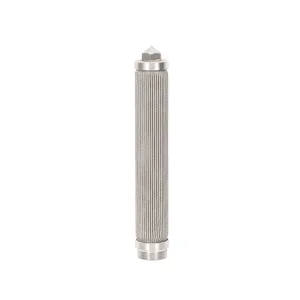
Portuguese converters are aggressively incorporating post-consumer polyolefins (rHDPE, rPP, rPET) into premium packaging. Our pleated stainless steel filter elements provide multi-layer depth filtration, trapping gelatinous degradation products and carbonized flecks without creating premature pressure spikes ($\Delta P$).
To eliminate costly machine downtime during screen changes, Portuguese high-speed BOPP and film lines utilize dual-bolt continuous polymer filter housings. Our precision-machined SUS 316L candle cartridges feature uniform hydraulic flow paths that prevent polymer stagnation and thermal degradation.
Modern high-viscosity engineering polymers processed in Portuguese industrial facilities operate at pressures up to 250 bar and temperatures exceeding 300°C. HG’s sintered metal fiber mesh construction guarantees structural integrity, preventing media migration and pore collapse under peak mechanical stress.
Comparative analysis of filtration media architecture designed for high-viscosity polymer melts, film extrusion, and recycled pelletizing lines.
| Filtration Technology | Primary Material Grade | Micron Rating ($\mu$m) | Max Operating Pressure | Best Suited Portuguese Application |
|---|---|---|---|---|
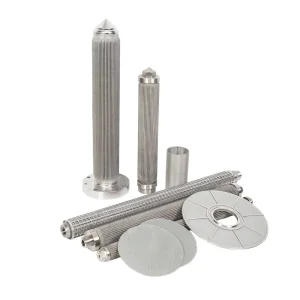
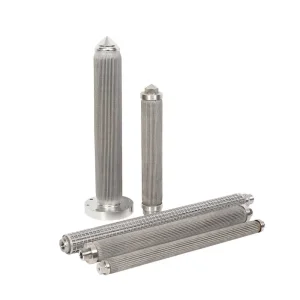
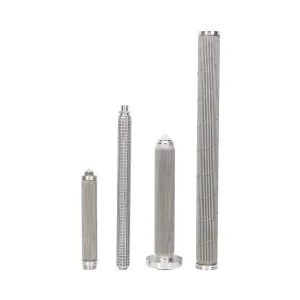
| Pleated Sintered Metal Fiber Candle Filter | Stainless Steel 316L / 304 | 3 $\mu$m – 60 $\mu$m | Up to 320 Bar | BOPP/BOPET Film Lines, Spunbond Nonwovens, PET Resin Refineries |
| Woven Stainless Wire Mesh Discs (Leaf Disc) | SUS 304 / SUS 316 | 10 $\mu$m – 250 $\mu$m | Up to 200 Bar | Continuous Extruder Screen Changers, Blown Film, Masterbatch Compounding |
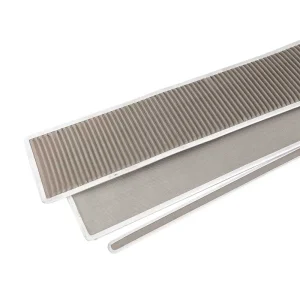
| Multi-Layer Sintered Wire Mesh Elements | 316L Stainless Steel | 5 $\mu$m – 100 $\mu$m | Up to 250 Bar | High-Viscosity Chemical Fiber Spinning (PA6, PA66, Polyester Yarns) |
| Heavy-Duty Extruder Screen Mesh Packs | Galvanized / SUS 304 Mesh | 40 $\mu$m – 500 $\mu$m | Up to 150 Bar | PP/PE Post-Consumer Plastic Recycling & Pelletizing Machinery |
Compared to conventional cylindrical elements, HG’s pleated candle filter design increases effective filtration surface area by up to 300% to 450% inside the same filter housing footprint. For Portuguese extrusion plants, this translates to significantly reduced fluid velocity through the mesh, lower initial pressure drop ($\Delta P$), extended operational on-stream life, and reduced energy consumption of extruder drives.
All HG stainless steel filter elements engineered for the Iberian market are 100% cleanable and reusable. Utilizing vacuum pyrolysis, TEG (triethylene glycol) boiling, or ultrasonic solvent bath cleaning, Portuguese plant operators can regenerate filter cartridges up to 15–20 cycles, drastically slashing consumable component costs and supporting localized circular waste reduction goals.
Direct manufacturer sourcing strategies designed to shorten lead times, lower landed unit costs, and guarantee technical alignment with European machinery.
By partnering directly with Pujiang HG Plastic Machinery, Portuguese buyers bypass European distributor markups—saving between 30% to 50% on OEM replacement filter candles and leaf discs without compromising on material metallurgy or ISO-certified pore accuracy.
We maintain established logistics routes directly into key Portuguese maritime ports, including Port of Leixões (Porto) and Port of Sines, alongside rapid air freight dispatch to Lisbon (LIS) or Porto (OPO) airports for emergency production line maintenance.
Our engineering design office can reverse-engineer or cross-reference standard European filter cartridge part numbers (including Maag, Kreyenborg, Nordson, Erema, and Starlinger compatible dimensions), supplying identical mechanical fitments backed by CAD drawings.
Ensuring full compliance for food-contact plastics, pharmaceutical packaging, and industrial safety across the Portuguese Republic.
For Portuguese manufacturers producing food-grade PET preforms, flexible barrier films, and dairy packaging, our stainless steel melt filter elements are fabricated exclusively from certified high-purity SUS 304 and 316L alloys. They undergo rigorous degreasing and ultrasonic passivation to guarantee zero chemical migration or trace metallic contamination in end-use food contact applications.
Every production lot destined for Portugal undergoes strict quality control protocols, including 100% ISO 2942 Bubble Point Testing to verify maximum pore size integrity and absolute micron rating consistency. Full material test certificates (EN 10204 3.1) are delivered with every export batch for complete supply chain traceability.
Next-generation innovations engineered to power Industry 4.0 smart extrusion lines across the Iberian Peninsula.
Integration of smart micro-sensors within CPF filter housings to monitor real-time pressure curves ($\Delta P$) and fluid temperature, predicting element saturation levels and alerting Portuguese plant operators prior to polymer breakthrough.
Development of multi-tier gradient sintered stainless steel fibers capable of retaining sub-micron gel structures down to 1 $\mu$m without inducing melt shear degradation, ideal for ultra-thin optical films and technical medical nonwovens.
Closed-loop buyback and re-sintering programs designed for high-volume Portuguese clients, enabling spent stainless steel filter elements to be remelted and repurposed, aligning directly with Portugal's National Strategy for Waste & Materials.
Direct technical insights resolving common procurement, operational, and maintenance inquiries from Portuguese plastics fabricators.
SUS 304 offers exceptional mechanical strength and cost-efficiency for standard polyolefin (PP, PE) extrusion. However, for corrosive polymers (such as PVC or halogenated flame-retardant blends), high-temperature polyester (PET/BOPET) processing, or food-contact certified packaging lines operating in Portugal, we strongly recommend SUS 316L due to its superior molybdenum content, which provides enhanced resistance to pitting and chemical degradation.
Standard OEM filter element production takes 10 to 15 business days. Express air freight to Lisbon (LIS) or Porto (OPO) typically delivers within 4 to 6 business days for critical emergency maintenance. Sea freight bulk shipments targeting the Port of Leixões or Port of Sines take approximately 24 to 28 days.
Yes. Our engineering division specializes in custom OEM/ODM manufacturing. We can manufacture exact dimensional replacements for legacy machinery manufactured by European brands (including Maag, Nordson, Kreyenborg, BKG, and Starlinger). You simply provide technical drawings or sample physical units for reverse engineering.
PCR resin contains flexible gel particles that easily deform and squeeze through single-layer wire screens under high pressure. For Portuguese recycling plants handling PCR feedstocks, we recommend multi-layer sintered metal fiber felt candle elements. The depth filtration structure traps deformable gels throughout its porous thickness rather than solely on the outer surface, drastically expanding dirt-holding capacity.
We recommend a two-stage regeneration procedure: First, thermal cleaning via controlled vacuum pyrolysis or TEG solvent bath to burn off or dissolve residual polymer chains; Second, high-frequency ultrasonic bath cleaning with dilute citric acid or alkaline detergent to flush out inorganic ash residues from internal pore networks.
Absolute clarity and quality assurance are core to our service. We offer sample evaluation units to qualified industrial buyers in Portugal, allowing your technical plant team to verify mechanical tolerance, weld quality, and pressure drop performance prior to placing full-scale production orders.
Explore our full line of specialized candle cartridges, leaf discs, extruded screen mesh packs, and plastic pelletizing equipment.
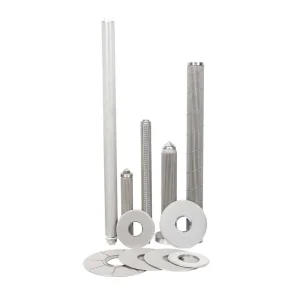
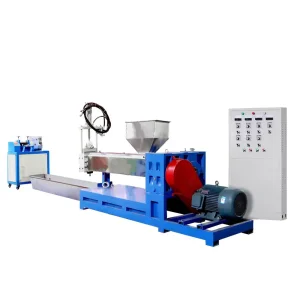
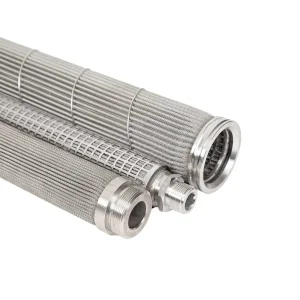
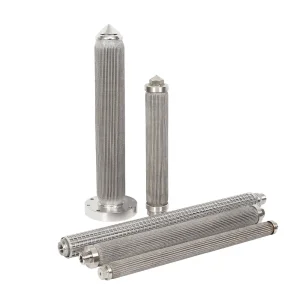
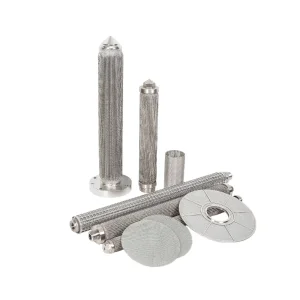
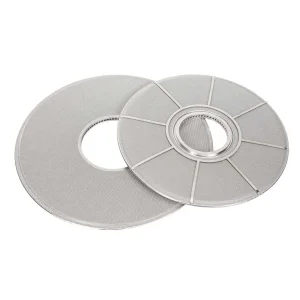
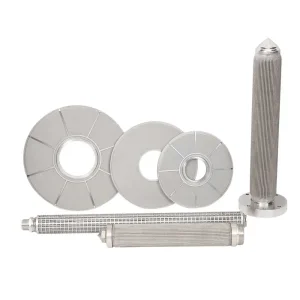
Partner with a certified specialist manufacturer. Request customized engineering drawings, material test certificates, or competitive OEM quotation packages for your Portuguese manufacturing plant.
Send Inquiry Now