Engineered for high differential pressure tolerance, zero-leak sealing, and prolonged continuous cycle times across demanding extrusion conditions.
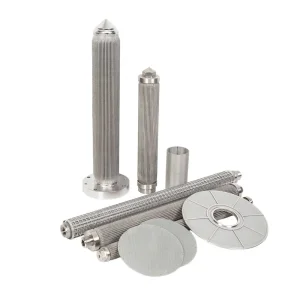
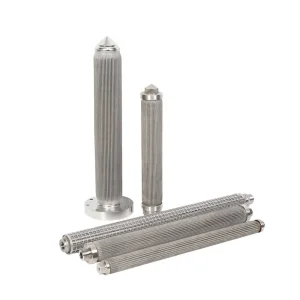
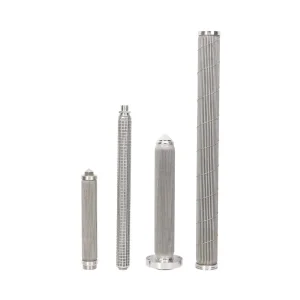
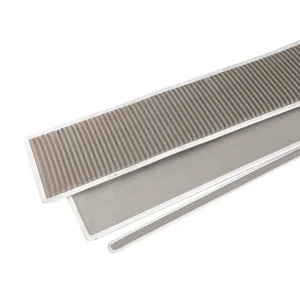
Addressing the shifting paradigm from localized logistics to resilient, circular manufacturing in Saint Anne Sandy Point and the broader Leeward Caribbean corridor.
Sandy Point Town, historically anchored by maritime navigation, commercial fishing, and local trade, is undergoing an industrial transition. As part of Saint Kitts' economic diversification agenda, light manufacturing, agro-packaging, and cold-chain distribution have emerged near transport corridors. Sustaining these facilities requires dependable polymer components that survive aggressive tropical and marine coastal atmospheres without premature structural fatigue.
Island-based operations face acute vulnerabilities to supply disruption. Plant engineers in Sandy Point Town cannot afford unscheduled shutdowns caused by screen blowouts or poor filter seals. Procuring high-dirt-capacity candle filters and regenerable leaf discs directly offsets the high logistics costs of emergency airfreight, keeping local blow-molding and extrusion lines running continuously.
Positioned along the Caribbean coastline, industrial hardware operating in Sandy Point Town is subjected to high ambient humidity and airborne chloride salts. Standard carbon or low-chromium alloys undergo accelerated stress-corrosion cracking (SCC). Our solutions leverage precision SUS 304, 316L, and specialized stainless alloys, delivering superior Pitting Resistance Equivalent Numbers (PREN) for humid marine manufacturing.
A rigorous examination of fluid mechanics, differential pressure curves, and micro-contaminant capture mechanisms in high-viscosity continuous processing.
In polymer processing plants, molten polymers such as PET, Polypropylene (PP), Polyamide (PA6/PA66), and high-density polyethylene (HDPE) behave as non-Newtonian, shear-thinning fluids. Under continuous operational conditions (temperatures exceeding 260°C to 310°C and pressures of 150 to 250 bar), minor variations in filter media pore geometry create localized stagnation zones, inducing polymer thermal degradation, carbon speck formation, and cross-linking gels.
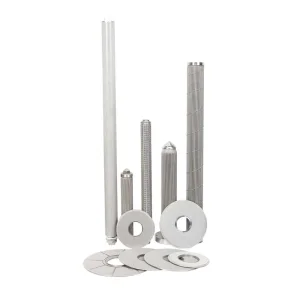
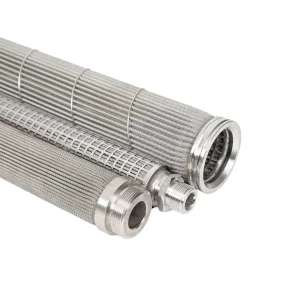
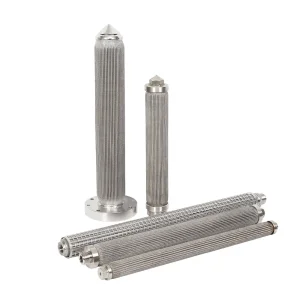
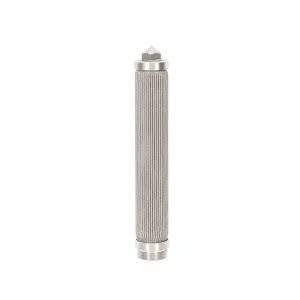
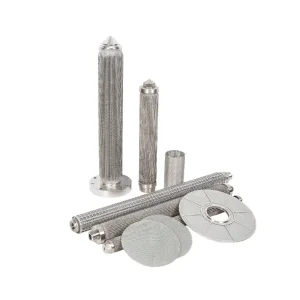
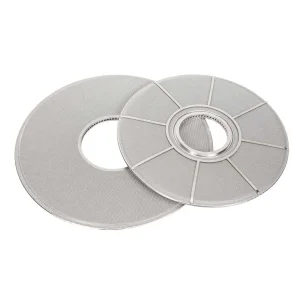
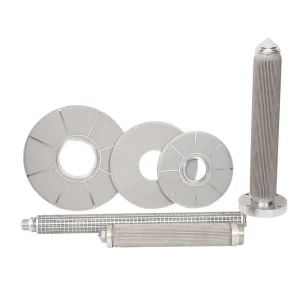
HG solves these thermodynamic and rheological dilemmas through graded-density multi-layer sintered metal fiber felt matrices. Rather than relying on simple surface sieving, our candle cartridges and leaf discs utilize true depth filtration. Coarser outer fiber strata intercept high-mass agglomerates and degraded carbon gels, while the inner sintered micron matrix achieves sharp, absolute particulate retention without triggering catastrophic differential pressure (ΔP) spikes across the breaker plate.
By dampening pressure drops through increased active flow surface area, Sandy Point Town converters experience stabilized pump speeds, elimination of gauge fluctuations in down-web film casting, and a drastic reduction in yarn or filament breakages during spunbond nonwoven fabrication.
| Filtration Media Type | Gel Trapping Capacity | Flow Area Multiplier | Ideal Sandy Point Town Processing Duty |
|---|---|---|---|
| Pleated SUS 316L Candle | Extreme (Depth Media) | 3.5x to 5.0x | Continuous CPF, POY/FDY Synthetic Fiber, High-Output BOPET |
| Sintered Leaf Disc (Hard Mesh) | High (Rigid Boundary) | 2.0x to 3.0x | BOPP Optical Film, Sheet Extrusion, High-Purity Compounding |
| Multi-Layer Spot Screen Pack | Moderate (Surface Boundary) | 1.0x (Standard) | Breaker Plate Converters, Post-Consumer Recycling, Masterbatch |
| Continuous Belt Filter Mesh | High Dirt Loading | 1.2x (Dynamic) | High-Contaminant Agricultural Film Reprocessing & Pelletizing |
Bridging global circular economy directives with operational constraints in island manufacturing ecosystems.
Worldwide, regulatory frameworks (such as the EU Packaging and Packaging Waste Directive and global EPR mandates) mandate the incorporation of 30% to 50% Post-Consumer Recyclate (PCR) into consumer goods. Integrating PCR introduces cross-contamination: printing ink residue, aluminum flecks, paper fibers, and immiscible polymer gels, instantly overloading conventional filtration barriers.
For Sandy Point Town and Caribbean municipal facilities, isolated landfill sites make local recycling an urgent environmental and economic necessity. However, island facilities often operate smaller, flexible processing runs where feedstock composition varies wildy. Our customized CPF candle systems accommodate contaminated feeds without frequent manual line tears.
Rather than treating filter mesh as a consumable waste item discarded after every shift, our sintered multi-layer elements are engineered for 15 to 20 thermal-pyrolysis and ultrasonic wash cycles. This circular filter lifecycle slashes total operating expenses (OpEx) for Sandy Point Town manufacturing enterprises by up to 68% over two operating years.
Real-world integration points where advanced polymer filtration elevates yield, eliminates reject rates, and safeguards downstream tooling.
Local beverage bottling, consumer packaging, and agro-chemical container production require high-speed blow-molding machines. Unmelted polymer inclusions or micro-voids cause pinholes, neck flash, and structural bursting during carbonated bottling. Our 15–25 μm candle filters trap all un-plasticized gels, ensuring immaculate container structural integrity.
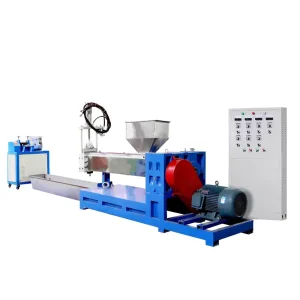
Processing discarded polypropylene fishing nets, marine cordage, and ocean-bound plastics collected along coastal Saint Kitts requires high dirt-holding capacity. Our heavy-duty ODM recycling pelletizing extruders equipped with automatic continuous screen changers process highly loaded feeds without dropping die face pelletizing throughput.
Agricultural crop protection fabrics and hurricane-resistant shading nets require spunbond polypropylene filaments free of internal defects. A single 40 μm contaminant can break an extruded filament at high attenuation speeds. Our sintered fiber felt candle elements maintain long spin pack run-times without strand breakage.
Ensuring regulatory conformity, chemical stability, and drop-in dimensional accuracy for existing processing infrastructure.
All filter elements destined for Caribbean deployment undergo strict quality gate reviews. We verify raw wire mesh alloys using optical emission spectrometry. Every candle filter cartridge is fabricated from certified AISI 304, 316L, or 310S high-temperature austenitic stainless steel.
Sintering takes place in high-vacuum ovens, bonding every wire contact point molecularly without adding flux or filler metals. This guarantees zero media migration—meaning loose wires never shed into the melt stream to damage gear pumps, melt blown dies, or film extrusion lip orifices.
Many processing plants in the Caribbean run legacy extrusion and CPF machinery sourced from North America, Europe, or East Asia. When original replacement elements become discontinued or excessively expensive, HG provides complete reverse-engineering support.
Simply provide dimensional parameters (outer diameter, core length, threading pitch, or end-cap flange geometries such as 222, 226, or flat gasket styles), and our engineering workshop manufactures 100% drop-in replacements with bubble-point validation curves per ISO 4003 standards.
Anticipating next-generation filtration architectures: sensor-integrated smart CPF systems, nano-sintering, and decarbonized thermal cleaning protocols.
By pairing precision piezoresistive melt pressure transducers with edge AI algorithms, upcoming filtration housings forecast element fouling rates in real time. Rather than relying on static time intervals, Sandy Point Town operators receive predictive alerts that optimize backflush timing and protect gear pumps from cavitation.
Advancements in metal powder metallurgy and sub-micron wire drawing enable hybrid filter structures. These combine a coarse sintered structural lattice with an ultra-thin metal nanofiber surface layer, reducing clean differential pressure drops by 35% while capturing gels down to 3 μm for optical-grade medical packaging films.
Next-generation vacuum pyrolysis cleaning chambers incorporate closed-loop catalytic thermal oxidizers. This allows plants in coastal ecosystems like Sandy Point Town to eliminate polymer residues from clogged candle filters cleanly without generating smoke, odor, or chemical wastewater effluent.
In-depth technical answers addressing operational variables, mechanical tolerances, cleaning chemistries, and custom sourcing parameters.
Surface filtration (such as single-layer square wire mesh) retains particulates purely by mechanical sieving at a two-dimensional boundary. When contaminants bridge the pores, pressure spikes quickly. In contrast, pleated CPF candle filters made from sintered metal fiber felt feature a tortuous three-dimensional matrix. Particulates and compressible polymer gels are captured throughout the depth of the media, multiplying dirt-holding capacity (DHC) by up to 400% compared to equivalent-area flat screens.
A multi-stage cleaning protocol delivers optimal element recovery: 1) Initial thermal depolymerization via vacuum pyrolysis or fluidised bed cleaning at 450°C–480°C to decompose organic polymers into gas and inert carbon; 2) High-frequency ultrasonic bath immersion using alkaline or citric acid cleaning solutions to loosen trapped inorganic ash; 3) High-pressure counter-flow demineralized water backflushing; 4) Absolute bubble-point testing per ISO 4003 to confirm pore integrity before re-installation.
For standard polyolefins (PP, PE), SUS 304 stainless steel offers adequate mechanical resistance. However, for corrosive polymers, fluoropolymers, recycled feedstocks with acid-generating residues, or humid marine processing conditions near Sandy Point Town, we strongly recommend AISI 316L (with 2–3% molybdenum content) or AISI 310S for continuous operation above 320°C. For extreme halogenated service, Hastelloy C-276 configurations are available on request.
We work from physical samples, technical schematics, or element part numbers. We verify all critical tolerances with CMM optical measuring machines, including gasket seating bevels, hub threading, and outer diametric clearances. Elements fit straight into existing manifolds without requiring mechanical alterations, flange re-machining, or extended changeout downtime.
Standard candle filters feature heavy-gauge perforated SUS 316L inner support cores designed to withstand differential collapse pressures (ΔP) of 150 to 210 bar (2,175 to 3,045 psi). For critical high-viscosity elastomer or polycarbonate extrusion, heavy-duty reinforced cores rated up to 250 bar are available to eliminate element buckling risks under sudden line blockages.
Every shipment comes complete with a full Quality Documentation Pack: Mill Test Certificates (MTC) to EN 10204 3.1 verifying chemical composition, bubble-point pore opening validation reports, dimensional inspection protocols, and export-compliant treated-wood fumigation or pallet declarations for Caribbean customs clearance.
Explore our complete line of candle cartridges, leaf discs, screen packs, and turnkey recycling equipment engineered for high throughput and clean melt streams.