Direct from factory OEM/ODM engineering solutions verified for Canadian thermal and chemical processing conditions.
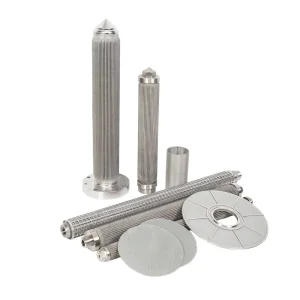
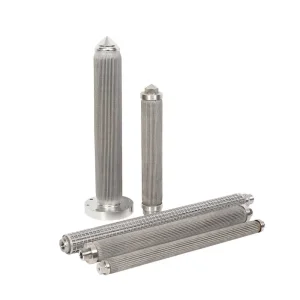
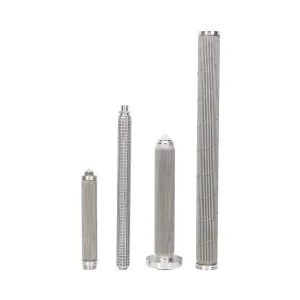
Canada’s advanced manufacturing and material transformation sectors operate under rigorous thermal, physical, and environmental parameters. From the industrial plastics corridor in Southern Ontario (Mississauga, Brampton, and Hamilton) to the heavy petrochemical and resin synthesis centers in Alberta (Edmonton and Fort Saskatchewan) and the technical fiber facilities in Quebec, the operational demands placed on polymer melt filtration systems are exceptionally stringent.
As Canadian processors transition toward higher fractions of Post-Consumer Recycled (PCR) resins, bio-based polymers (such as PLA and PHA), and continuous high-speed melt-spinning, traditional single-layer screens and standard filtration media no longer deliver acceptable operational lifecycles. High shear stress, gel particle formation, and particulate contaminants derived from recycled streams can lead to frequent filter disc blinding, excessive differential pressure ($\Delta P$) spikes, spinneret degradation, and costly line downtime.
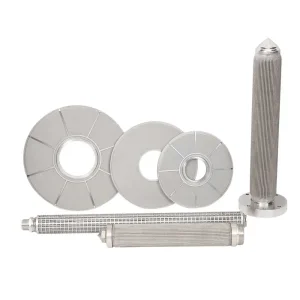
Canadian processing plants face localized challenges related to ambient plant temperature shifts between extreme winter regimes and summer conditions. Maintaining a uniform thermal gradient throughout the filter housing block is vital. Rheological variations in high-viscosity polymer melts (such as Polypropylene, HDPE, Nylon 6,6, and Polyethylene Terephthalate) demand candle filter elements and leaf discs designed with optimized fluid dynamics.
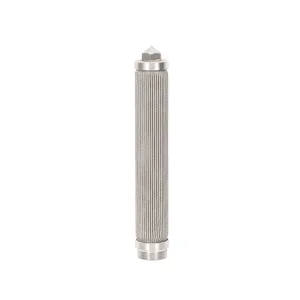
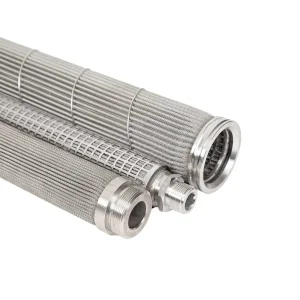
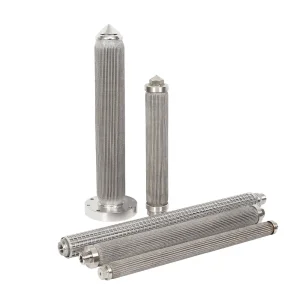
Our ODM (Original Design Manufacturing) solutions engineered specifically for Canadian clients incorporate precise pleat geometry, uniform pore size distribution via vacuum sintering, and robust internal support cores capable of withstanding differential pressures up to 250 Bar (3,625 PSI) without structural deformation or bypass leakage.
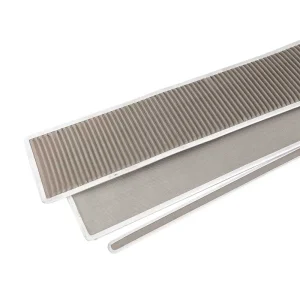
Selecting the ideal filter medium for Canadian polymer extrusion equipment depends heavily on the contaminant profile, viscosity spectrum, and target fluid velocity. Pujiang HG Plastic Machinery Co., Ltd. provides specialized multi-layered wire mesh structures, sintered powder elements, and non-woven 316L stainless steel fiber felts.
Composed of non-woven 316L micro-fibers sintered at ultra-high temperatures. Offers up to 85% void volume, delivering exceptionally low initial pressure drop, high dirt holding capacity, and extended stream life. Ideal for spunbond nonwovens and high-purity packaging film.
Combines precise control layers with thick protective cover meshes. Diffusion-bonded to eliminate wire migration. Provides precise aperture geometry and robust physical stability under severe reverse flow impulse cleaning cycles.
For processing corrosive fluoropolymers (PTFE/PVDF) or flame-retardant additive masterbatches common in Canadian cable coating lines, we offer custom fabrications in Hastelloy C-276, Inconel 600, and 904L stainless steel.
Compare filtration characteristics across our standard ODM series for Canadian procurement specification teams:
| Filter Media Type | Micron Rating Range | Porosity (%) | Dirt Holding Capacity | Cleaning Capability | Primary Canadian Application |
|---|---|---|---|---|---|
| 316L Sintered Fiber Felt | 3μm - 60μm | 75% - 85% | Very High (3x vs Mesh) | Pyrolysis / Ultrasonic / Chemical | BOPP, PET Film & Fiber Spinning |
| Square Woven Wire Mesh | 20μm - 500μm | 30% - 50% | Moderate | Ultrasonic / Solvent Wash | Masterbatch & Sheet Extrusion |
| Dutch Weave Sintered Mesh | 10μm - 150μm | 40% - 60% | High | Backwashing / Solvent | Recycled Plastic Pelletizing |
| Sintered Metal Powder | 0.5μm - 20μm | 35% - 50% | Moderate | Chemical Acid/Alkali Dip | Melt Polymer Fine Chemical Purification |
Canadian plastics compounders, resin producers, and recycling facilities operate in a highly competitive North American trade market governed by USMCA frameworks. Cost containment without compromising quality is paramount. Direct sourcing of custom polymer candle filter cartridges, leaf discs, and extruder screens from established Chinese specialized manufacturers delivers profound economic and operational advantages.
Procuring replacement candle filter elements or leaf disc assemblies directly from North American or European OEMs often carries markup margins exceeding 300%. By partnering with Pujiang HG Plastic Machinery Co., Ltd., Canadian facilities achieve direct factory-gate pricing with up to 45%-65% operational savings, while matching or exceeding original equipment metallurgy and tolerance specifications.
Whether your line utilizes European (e.g., Maag, Nordson BKG, Kreyenborg) or American (e.g., Davis-Standard, Parkland) filter housings, our technical team custom-engineers adapter fittings, flange connections, and pleat configurations based on your CAD models or physical sample reverse-engineering.
We manage end-to-end logistics solutions tailored for Canadian importers. Products are vacuum-sealed with desiccant packaging, encased in reinforced export wooden crates, and shipped directly to major Canadian transport hubs:
Industrial quality oversight in Canada is highly regulated. Pujiang HG Plastic Machinery Co., Ltd. implements a multi-stage Quality Management System (QMS) certified to ISO 9001:2015 standards, ensuring complete material traceability and mechanical integrity.
Every batch of stainless steel (304, 316L, 904L) is accompanied by EN 10204 3.1 Material Test Reports, verifying exact chemical composition, nickel-chromium ratios, and mechanical yield strength.
Strict adherence to ISO 4003 (Permeable sintered metal materials — Determination of bubble test pore size) ensures zero pinhole leaks or mesh misalignment prior to packaging.
Filter elements undergo hydrostatic pressure collapse testing according to ISO 2941, guaranteeing resistance against high-viscosity pressure surges common in resin recycling lines.
Challenge: A tier-1 automotive seal extruder in Windsor experienced continuous surface blemishes due to degraded gels in engineered TPE/TPU compounds.
Solution: Implemented HG Custom ODM Pleated Candle Filter cartridges (20μm 316L sintered fiber felt).
Result: Extended filter changeover intervals from 72 hours to 28 days, boosting monthly yield by 14.2%.
Challenge: Excessive sand and abrasive dirt in recycled agricultural film caused rapid blinding of standard mesh screens in a Calgary pelletizing facility.
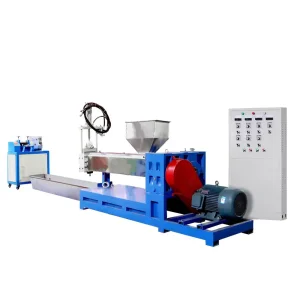
Solution: Installed HG ODM Continuous Plastic Pelletizing & Auto-Backwash Filtration Assembly.
Result: Filter life quadrupled, reducing screen consumable expenditure by $48,000 CAD annually.
Challenge: Filament breakage in high-speed Polypropylene spunbond beam line resulting in web defects.
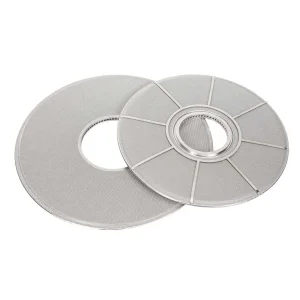
Solution: Retrofitted main melt line with HG Win Series 5μm Leaf Disc Filter packs featuring uniform hydraulic distribution.
Result: Achieved zero filament breakages during continuous 60-day operational runs.
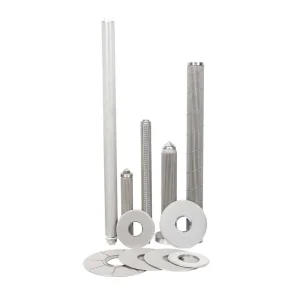
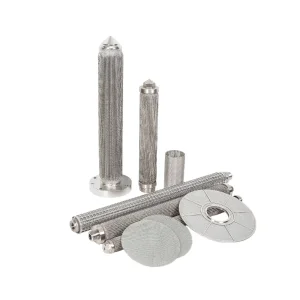
Explore our full line of candle elements, disc screens, and pelletizing systems configured for Canadian industrial plants.
The landscape of Canadian plastics processing is undergoing a structural shift driven by federal environmental legislation, changing consumer expectations, and circular economy mandates.
Under Environment and Climate Change Canada (ECCC) guidelines, packaging producers face escalating minimum recycled content targets (aiming for 50% recycled content in rigid and flexible packaging by 2030). Processing PCR (Post-Consumer Recyclate) introduces volatile contaminant loads, paper fibers, and non-meltable polymers. This trend requires Canadian plants to retrofit legacy extruders with high-capacity continuous dual-bolt screen changers and high-surface-area pleated candle filters.
To cut resin raw material costs, converters across Ontario and Quebec are producing ultra-thin blown and cast films. Down-gauging to sub-10 micron film thickness means even microscopic gel impurities cause film tears or pinholes. Absolute filtration down to 5μm–10μm via vacuum-sintered metal felt candle filters is becoming standard across Canadian film extruders.
Rising industrial electricity tariffs in provinces like Ontario and Alberta make extruder motor load optimization a key KPI. High-porosity sintered metal felt elements reduce initial pressure drop by up to 40% compared to traditional wire mesh packs, lowering drive motor wattage and overall energy consumption per kilogram of processed polymer melt.