High-performance continuous melt filters, stainless steel candle cartridges, and granulating recycling equipment designed for zero-defect polymer manufacturing.
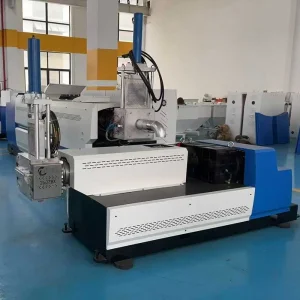
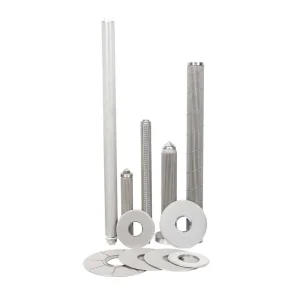
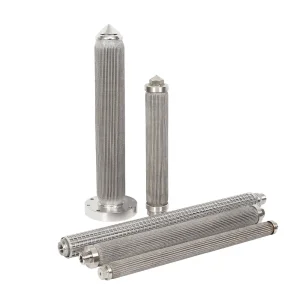
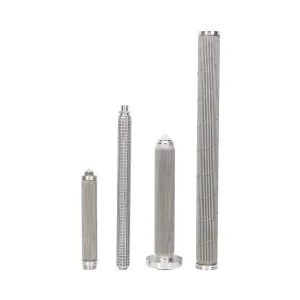
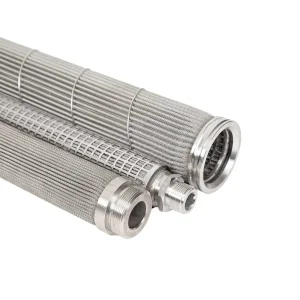
In modern polymer processing—ranging from high-speed film extrusion (BOPET, BOPP, BOPA) and synthetic chemical fiber spinning (POY, FDY, Spunbond nonwovens) to post-consumer recycled (PCR) resin pelletizing—plastic melting filters serve as the ultimate line of defense against physical contaminants, gels, and cross-linked degradation products. As global plastic manufacturing shifts toward higher line speeds, thinner film gauges, and increased recycled content, the technical demand on polymer filtration media has reached an unprecedented peak.
Polymer melts operate under extreme physical environments: temperatures exceeding 300°C (572°F), dynamic fluid pressures reaching up to 300 bar (4,350 psi), and viscosities ranging from 50 Pa·s to over 5,000 Pa·s. Under these harsh rheological conditions, standard commercial filter media fail due to structural deformation, media migration, or rapid pressure differential ($\Delta P$) buildup. Consequently, manufacturing operations rely heavily on specialized Chinese factories specializing in high-grade stainless steel (SUS316L, SUS304) metal fiber felts, multi-layer sintered wire mesh, leaf discs, and candle filter cartridges.
Over the past two decades, China has evolved from a bulk producer of standard wire mesh into the global hub for advanced polymer filtration engineering. Through massive capital investment in high-vacuum sintering furnaces, automated laser-welding robotics, and cleanroom assembly infrastructure, leading China plastic melting filter factories and companies now supply OEM filtration components to top-tier machine builders and petrochemical refiners across Europe, North America, Southeast Asia, and the Middle East.
How technological advances, sustainability mandates, and automation are reshaping polymer melt filtration requirements globally.
The global push for Circular Economy compliance requires extruders to process Post-Consumer Recycled (PCR) plastics. Recycled feedstocks contain high levels of solid particulate matter, paper fibers, aluminum flakes, and cross-linked gels. Modern plastic melting filters must incorporate high-capacity multi-layer sintered mesh and continuous automated screen changers capable of handling dirt loadings up to 10x higher than virgin resin.
Applications such as ultra-thin battery separator films (lithium-ion PE/PP membranes), optical-grade BOPET films, and ultra-fine denier spunbond microfibers demand absolute filtration ratings down to 3–5 microns. Achieving this without causing premature filter blinding requires non-woven sintered stainless steel metal fiber felts, which provide a 3D depth-filtration structure with void volumes up to 85%.
Unscheduled production downtime during filter changes costs high-volume film and fiber plants tens of thousands of dollars per hour. Trend-setting China factories are engineering advanced continuous hydraulic screen changers and backflush melt filters. These systems auto-clean filter media via reverse polymer melt flow when differential pressure reaches pre-set thresholds, extending operational filter life by 300% to 500%.
When international procurement managers evaluate China plastic melting filter suppliers, the primary decision drivers extend far beyond upfront price advantages. Modern buyers look for long-term supply chain resilience, raw material traceability, advanced metallurgical precision, and rapid custom prototyping. China’s filtration manufacturing ecosystem in regions such as Zhejiang, Jiangsu, and Guangdong has undergone a massive Industry 4.0 transformation.
Maximizing operational profitability by analyzing Total Cost of Ownership (TCO), pressure loss, and reusability profiles of polymer filter elements.
Filter element geometry directly influences extruder energy consumption. High-porosity pleated candle filters and leaf discs reduce differential pressure drop ($\Delta P$), allowing melt pumps to operate at lower torque and reducing drive motor power consumption by up to 12%.
Unlike disposable fiberglass or paper filter cartridges, high-grade stainless steel polymer melt filters can undergo multiple thermal and chemical cleaning cycles (pyrolysis burnout, TEG solvent hydrolysis, ultrasonic bath cleaning, and acid passivating), achieving up to 20 reuse cycles per element.
Global procurement teams require tailor-made dimensions to retrofit existing continuous polymer filter housings (CPF housings) from major European and Japanese OEMs. Top Chinese suppliers provide exact CAD reverse-engineering, custom adapter threading, and specialized flange gaskets.
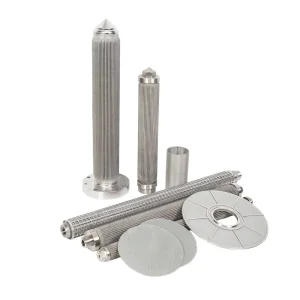
Selecting the optimal filter structure depends on polymer rheology, thermal sensitivity, gel concentration, and system pressure limits. Below is an engineering comparison of the primary plastic melting filter architectures produced by leading Chinese manufacturers:
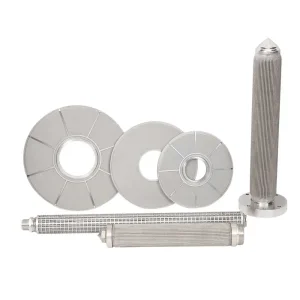
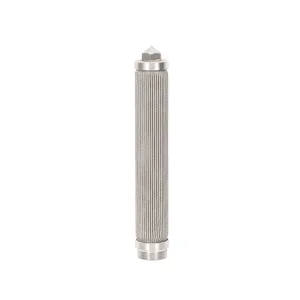
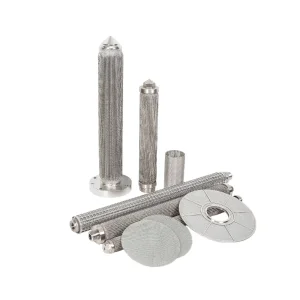
Pleated candle filters feature a cylindrical geometry with longitudinally pleated filter media wrapped around a heavy-duty perforated inner core. By pleating the media, the effective surface area is increased by 300% to 500% compared to smooth cylindrical elements of equal outer dimensions.
Leaf disc filters consist of circular filter discs assembled vertically on a central collector shaft inside a pressure vessel. Available in hard-edge and soft-edge configurations, leaf discs maximize filtration area in a compact footprint.
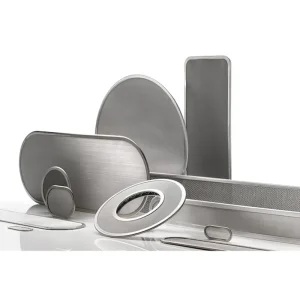
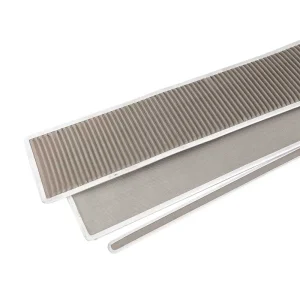
Extruder screen packs are manufactured from high-tensile woven stainless steel wire cloth (SUS304 / SUS316). Available as single discs, spot-welded multi-layer packs, rimmed copper/aluminum edge discs, and continuous woven screen belts for automatic ribbon screen changers.
Practical implementation of plastic melting filters across diverse polymer manufacturing operating environments.
Operating Challenge: High-speed biaxially oriented PET film lines require continuous, pinhole-free extrusion. Unfiltered gel particles cause film breakages during longitudinal and transverse stretching.
Filter Solution: High-surface-area CPF pleated candle filter assemblies with 10µm 316L sintered metal fiber felt. Ensures continuous run times exceeding 60 days without filter changeovers.
Operating Challenge: Micro-spinneret holes (0.15mm – 0.3mm diameter) on PP nonwoven lines clog easily from carbonized polymer particulates, causing filament breakage and non-uniform fabric weight.
Filter Solution: Cylindrical candle filter cartridges with 15µm–25µm multi-layer sintered wire mesh, providing high mechanical strength and uniform pressure to spinneret beam packs.
Operating Challenge: Heavily contaminated agricultural film scrap (PE/PP) rapidly blinds standard screen changers, causing extreme pressure spikes and extruder shutdown.
Filter Solution: Dual-bolt continuous hydraulic screen changers paired with reinforced multi-layer heavy-duty wire mesh screen packs (80/150/40 mesh combo) engineered for high contaminant loads.
Explore our complete catalog of industrial polymer candle elements, extruder screen meshes, and recycling melt filter cartridges.
Expert technical answers addressing pressure drop calculations, alloy selection, cleaning protocols, and sourcing strategies.