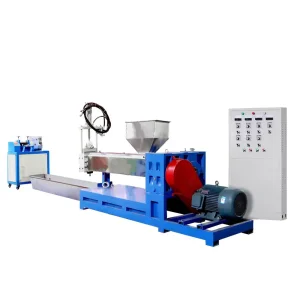
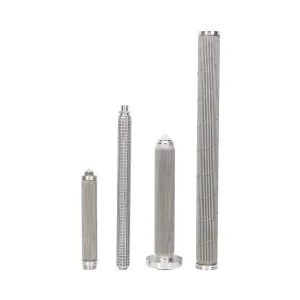
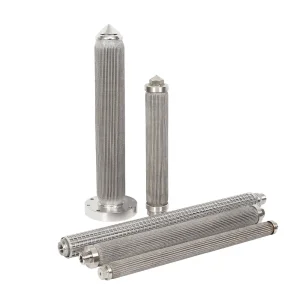
High-precision stainless steel filter elements, candle filter cartridges, and leaf disc assemblies engineered for zero-defect polymer extrusion and plastic recycling applications.
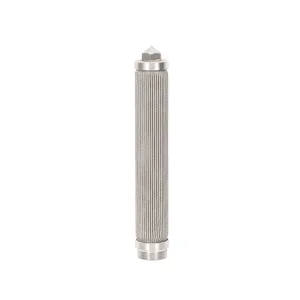
The vital role of high-precision stainless steel wire woven media in continuous melt processing, plastic recycling circularity, and advanced chemical engineering.
In modern industrial processing, Stainless Steel Mesh Screens serve as the indispensable mechanical backbone for solid-liquid separation, melt purification, and particulate containment. As global manufacturing transitions toward circular economic models and higher quality control thresholds, the demand for precision-woven metal filter media has expanded rapidly. Global market evaluations indicate that the industrial wire mesh market is accelerating at a compound annual growth rate (CAGR) exceeding 6.2%, driven primarily by the rapid scaling of post-consumer plastic recycling, ultra-thin polymer film extrusion (BOPP/BOPET), and high-purity petrochemical refinement.
China has established itself as the undisputed manufacturing apex for stainless steel wire mesh screen exporting. By integrating ultra-high-speed shuttleless weaving technology, heavy-duty CNC wire drawing, and automated optical inspection (AOI) lines, Chinese exporters deliver exceptional cost-to-performance advantages without compromising micro-micron tolerances. International plant operators, OEMs, and process engineers increasingly rely on Chinese manufacturers to supply engineered filter discs, spot-welded multi-layer screen packs, sintered wire mesh panels, and high-capacity candle filter assemblies.
Capable of sustaining operational temperatures up to 800°C and hydraulic differential pressures exceeding 30 MPa (300 Bar) without structural deformation or pore migration.
Micron-accurate aperture rating ranging from 2μm to 500μm, ensuring strict containment of degraded gel particles, carbonized specs, and metal particulates.
Constructed from corrosion-resistant austenitic alloys (SUS 304, 316L, 904L) compatible with TEG thermal cleaning, ultrasonic baths, and solvent wash protocols.
A detailed comparative analysis of alloy selection, wire geometry, and structural weave patterns for demanding fluid power and melt filtration applications.
| Alloy Grade | Chemical Composition Key Elements | Corrosion Resistance Level | Max Temp (°C) | Primary Industrial Application Scenarios |
|---|---|---|---|---|
| SUS 304 (UNS S30400) | 18% Cr / 8% Ni | Standard Oxidation Resistance | 650 °C | Standard PP/PE extrusion screen packs, virgin plastic pelletizing, general sieving. |
| SUS 316L (UNS S31603) | 16% Cr / 10% Ni / 2.5% Mo (Low C) | Superior Pitting & Acid Resistance | 800 °C | PET polycondensation, chemical fiber melt spinning, acidic recycled wash lines, BOPP film. |
| SUS 904L (UNS N08904) | 20% Cr / 25% Ni / 4.5% Mo / 1.5% Cu | Extreme Sulfuric & Chloride Protection | 450 °C | Aggressive chemical synthesis, high-halogen plastic recycling, fluoropolymer processing. |
| Inconel 625 / Hastelloy C-276 | Ni-Cr-Mo High-Nickel Superalloys | Maximum Corrosive Slurry & Acid Immunity | 1000 °C | Corrosive chemical reactors, aerospace fluid systems, continuous thermal pyrolytic recycling. |
Selecting the optimal weave structure determines both particulate retention efficiency and hydraulic pressure drop ($\Delta P$). Chinese exporters specialize in five core structural weaves:
How Chinese mesh exporters leverage complete raw material integration, automated manufacturing, and agile logistics to deliver unmatched global value.
From stainless steel rod drawing and wire micro-spinning to shuttleless weaving and spot-welding fabrication, China's industrial clusters eliminate intermediate markup costs and minimize production lead times.
Deployment of modern heavy-duty computer-controlled looms ensures consistent weave tension, uniform pore size distribution, and flawless rim sealing on multi-layer screen packs.
In-house tooling centers allow custom leaf disc dimensions, specialty candle filter caps, and complex laser-cut screen shapes to move from CAD drawing to mass export within days.
Leading Chinese exporters maintain strict quality assurance protocols matching European and North American standards. Raw material stainless steel wire heats are verified via X-ray fluorescence (XRF) spectroscopy to ensure true 304/316L chemical compliance. Finished filter screens undergo bubble point testing (ASTM F316-03) to verify maximum pore size integrity and absolute micron rating. Combined with ISO 9001:2015 certified production lines, Chinese suppliers deliver consistent batch-to-batch quality demanded by multinational resin manufacturers and compounding specialists.
Engineered mesh implementation across critical industrial processing environments worldwide.
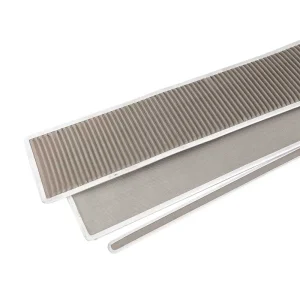
Utilized inside continuous screen changers to capture un-melted resin gels, cross-linked polymers, and degradation specs. Spot-welded multi-layer mesh packs (combining coarse support mesh with fine filtering mesh) prevent extrusion die blockage and safeguard pressure stability.
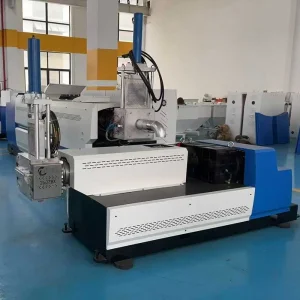
Heavy-duty reverse dutch weave screen belts and reinforced extruder screen discs operate continuously inside granulating and pelletizing lines, filtering high contamination loads (paper, aluminum, sand) from recycled PE, PP, PS, and PET streams.
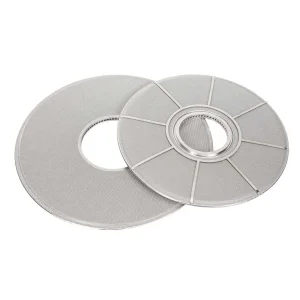
Precision leaf disc filters featuring hard-rim metal construction and sintered wire media installed in large filter housings to protect high-speed orientation film lines from pinholes and tear defects.
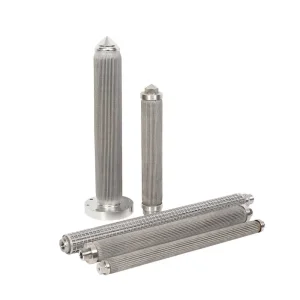
Pleated sintered candle filter elements provide large surface areas inside melt spinning pumps, protecting spinneret nozzles from micro-particulates during spunbond, meltblown, and filament yarn production.
High-temperature sintered mesh cylinder filters deployed in fluid catalytic cracking (FCC) units, gas purification towers, and amine scrubbing circuits to strain catalyst fines under high pressures.
Electropolished 316L wire mesh elements compliant with FDA 21 CFR 177 standards, used for sifting active pharmaceutical ingredients (APIs), sanitary fluid processing, and food-grade oil filtration.
Meeting international environmental mandates while pushing the boundaries of sub-micron filtration technology.
Industrial buyers sourcing stainless steel mesh from China require absolute transparency regarding material chemistry and international standard compliance. Tier-1 Chinese exporters provide full material traceability, including EN 10204 3.1 Inspection Certificates with detailed chemical heat analysis and mechanical test data.
The next generation of stainless steel filter media focuses on sub-micron particulate capture, smart pressure monitoring, and nano-surface modification:
Transitioning from traditional woven wire to non-woven sintered stainless steel micro-fibers (down to 1μm) providing up to 80% void volume for low pressure drop.
Application of TiN (Titanium Nitride) and DLC (Diamond-Like Carbon) thin films onto mesh surfaces to prevent polymer carbonization and extend thermal cleaning cycles.
Embedding differential pressure ($\Delta P$) micro-sensors within multi-layer mesh borders for real-time predictive screen index monitoring.
Expert answers to common engineering, procurement, and selection queries regarding Chinese filter screen exporters.
SUS 304 offers good mechanical strength and oxidation resistance for standard virgin PP, PE, and PS extrusion. However, SUS 316L contains 2-3% Molybdenum and lower carbon content, providing superior resistance to pitting, organic acids, and elevated temperatures (up to 800°C). SUS 316L is strongly recommended for PET processing, chemical fiber spinning, and recycled plastics containing corrosive impurities.
Single fine-mesh screens can easily rupture or flex under high melt pressure ($\Delta P$). Multi-layer screen packs combine a fine filtration mesh (e.g., 100 mesh) sandwiched between coarse support meshes (e.g., 20 mesh and 40 mesh). This provides structural rigidity, prevents wire displacement, increases contaminant retention capacity, and protects downstream die heads.
Yes. Unlike disposable fiberglass or paper cartridges, high-grade stainless steel filter elements can be refurbished multiple times. Cleaning methods include TEG (Triethylene Glycol) vapor baths to dissolve polymers, high-temperature calcination pyrolysis ovens, solvent baths, and ultrasonic agitation. Proper cleaning restores clean pressure drop to over 95% of original factory specs.
Plain weave is best for high flow rates and simple sieving (down to 75μm). Twill weave allows thicker wire diameters for enhanced strength. Plain Dutch Weave provides high-density liquid separation. Reverse Dutch Weave is optimized for continuous automatic screen changers requiring extreme longitudinal tensile strength.
Reputable Chinese exporters will provide EN 10204 3.1 Material Test Reports (MTR) confirming chemical composition via PMI testing, Certificate of Analysis (CoA) for wire diameter and aperture uniformity, ISO 9001 quality certificates, and bubble point test data for absolute micron ratings.
Explore our full exporter inventory of polymer screen mesh filters, granulating equipment filters, and leaf disc assemblies.