Explore high-precision stainless steel filtration components engineered for severe-duty polymer processing, extrusion granulating, and chemical fiber spinning operations.
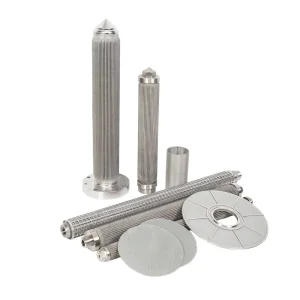
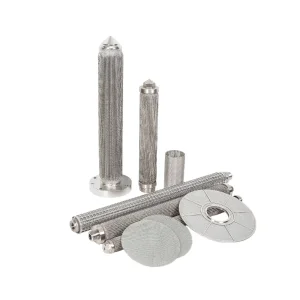
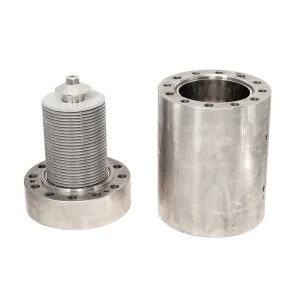
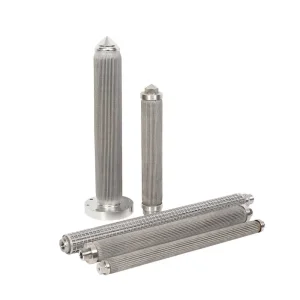
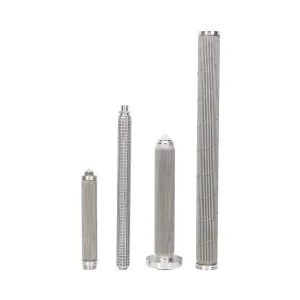
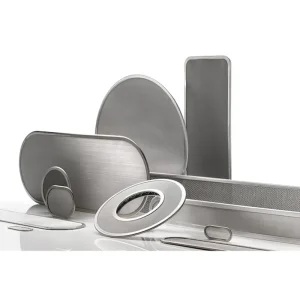
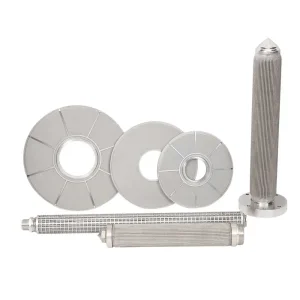
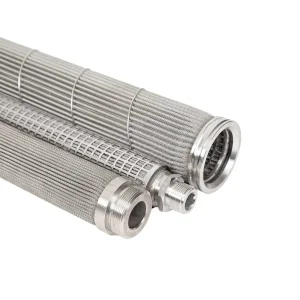
Modern polymer engineering, petrochemistry, and chemical fiber production demand uncompromising operational stability under extreme thermal stress (up to 350°C) and severe hydraulic pressures (exceeding 30 MPa). At the epicenter of this process chain lies the steel mesh filter media.
As global manufacturing transitions toward high-speed, continuous extrusion and circular economy plastic recycling, the worldwide demand for precision metal filtration elements has witnessed exponential growth. Industry statistics estimate the global industrial metal filtration market to expand at a CAGR of 6.8% through 2030, driven heavily by expanding BOPP/BOPET packaging film capacity, melt-blown nonwoven expansion, and post-consumer resin (PCR) purification.
Historically, European and North American OEMs dominated high-end polymer melt filtration. However, over the past two decades, China steel mesh filter manufacturers have undertaken massive technological overhauls. By merging advanced German multi-layer vacuum sintering technology with domestic metallurgical supply chains, Chinese manufacturers now produce filter elements that match or exceed international standards (ISO 16889, ASTM E11) while offering unprecedented cost-efficiency and delivery agility.
Why are global engineering groups, plastic extruding plant operators, and plant procurement managers shifting their supply chain roots toward top-tier China mesh filter companies? The competitive advantage stems from three fundamental pillars:
China houses the world’s most integrated stainless steel manufacturing ecosystem. Direct access to raw high-grade wire rod (AISI 304, 316L, 904L, Hastelloy C-276) guarantees strict control over alloy purity, wire drawing tolerances (±0.001mm), and surface cleanliness before weaving even begins.
Leading Chinese facilities utilize high-vacuum diffusion bonding furnaces operating at pressures below 10-3 Pa. This process welds wire crossing points at atomic levels without melting, maintaining pore size accuracy, maximizing flow permeability, and preventing media migration under high differential pressures.
With robotic laser welding, automatic pleating equipment, and automated bubble point testing, Chinese factories deliver volume orders (e.g., 50,000 leaf discs or candle elements) with shortened lead times, offering OEM/ODM customizations at a fraction of Western manufacturing overhead.
Choosing the correct steel mesh filter geometry requires a deep understanding of fluid dynamics, shear rates, contamination loads, and allowable pressure drops (ΔP). Below is an engineering analysis of the primary filtration architectures supplied by Chinese factories:
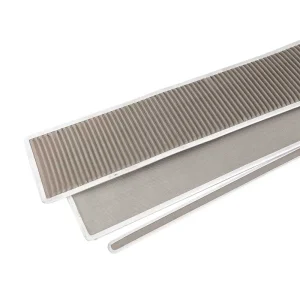
Composed of 5 to 7 layers of stainless steel woven wire cloth (protective layer, control layer, dispersion layer, and support layers) diffusion-bonded together.
Manufactured from non-woven micro-scale stainless steel fibers (down to 2 μm in diameter) sintered into a random, highly porous 3D structure.
Corrugated cylindrical designs crafted from woven wire mesh or sintered fiber felt, constructed with inner perforated support cores and outer protective sleeves.
To assist system design engineers and procurement executives, the following matrix compares the core physical parameters of China-manufactured industrial steel mesh filter media:
| Filter Media Type | Material Grade | Porosity Range | Permeability (L/dm²·min) | Max Temp (°C) | Primary Industrial Intent |
|---|---|---|---|---|---|
| 5-Layer Sintered Wire Mesh | AISI 316L / 304 | 35% - 50% | 150 - 600 | 480°C | Extruder Screen Packs, Recycled Plastic Granulation |
| Sintered Metal Fiber Felt | AISI 316L / Fecralloy | 70% - 85% | 800 - 2500 | 600°C | Polymer Melt CPF Candles, BOPP/BOPET Thin Film |
| Square Woven Wire Cloth | AISI 304 / 316 | 30% - 45% | 300 - 1200 | 400°C | Coarse Pre-filtration, Pelletizing Water Debris Mesh |
| Dutch Weave Mesh (Plain/Twill) | AISI 316L / Hastelloy | 25% - 40% | 100 - 450 | 550°C | High-Pressure Fluid Filtration, Hydraulic Systems |
| Sintered Metal Powder Media | 316L Titanium Alloy | 30% - 45% | 50 - 200 | 800°C | Corrosive Chemical Gas/Liquid Catalyst Recovery |
Every polymer processing facility experiences unique rheological conditions. Understanding how steel mesh filters operate in real-world environments is crucial for selecting the optimal filter configuration:
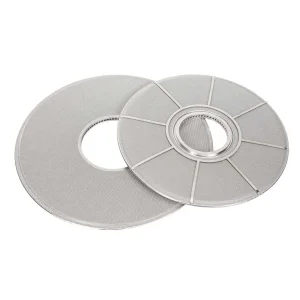
In biaxially oriented polypropylene (BOPP) and polyester (BOPET) extrusion, any sub-micron impurity or gel particle can cause film tear-offs during transverse orientation. Chinese manufacturers produce high-precision Leaf Disc Filters (12-inch and 7-inch "Hard Disk" designs) featuring smooth polished outer rims and multi-layer sintered metal fiber felt. This architecture prevents gel breakdown under high shear stress and ensures up to 60 days of uninterrupted extrusion.
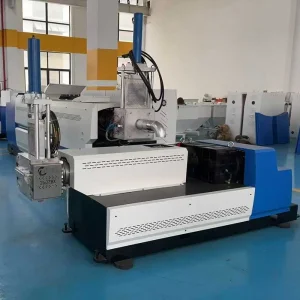
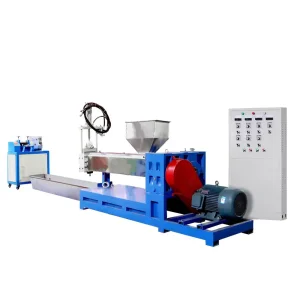
Plastic recycling extruders (PP, PE, PET pelletizers) face intense contamination loads from aluminum foil residue, paper fibers, and degraded black dots. Auto-cleaning continuous belt screen changers utilizing high-density Dutch woven steel mesh allow continuous filtration without machine shutdown, reducing melt loss by over 85%.
For spunbond nonwoven fabrics (hygiene and medical grades), spin-pack candle filters require exact pore distributions to eliminate filament breakage. Chinese factories provide SUS 316L Pleated Candle Filter Cartridges with specialized argon arc welding protocols that prevent micro-leakage around end caps.
In high-pressure monomer purification and catalyst recovery, filter elements must resist aggressive acidic media and hydrogen embrittlement. Hastelloy C-276 and 904L sintered steel wire mesh tubes supply superior pitting resistance and long-term chemical durability.
A primary advantage of high-grade stainless steel mesh filters over disposable glass fiber media is their reusability through specialized cleaning procedures. When sourcing from qualified China manufacturers, plant managers achieve a significantly lower Total Cost of Ownership (TCO) over the lifecycle of the filter element.
Thermal decomposition of polymer residues inside a vacuum pyrolysis oven at temperatures between 420°C and 480°C. Hydrocarbons are gasified without oxygen oxidation, preserving the wire mesh's metallurgical structural integrity.
Immersion in boiling Triethylene Glycol (TEG) at 240°C to dissolve residual polyester (PET) or nylon (PA) polymers inside tight sintered mesh pores.
Cavitation cleaning using targeted alkaline solutions to dislodge micro-ash particles from deep within multi-layer mesh structures, followed by high-pressure reverse water flushing and bubble point verification.
The industrial filtration sector is undergoing rapid evolution driven by stringent global environmental regulations and Industry 4.0 automation:
China steel mesh filter factories are integrating IoT differential pressure sensors and digital twin simulations directly into screen changer assemblies. This enables real-time monitoring of filter cake buildup, predicting precise cleaning cycles and eliminating unplanned plant downtime.
With the global mandate for ESG compliance, leading Chinese manufacturers utilize 100% recyclable alloy scrap, green hydrogen sintering furnaces, and optimized lightweight disc geometries—reducing the carbon footprint of filter manufacturing by up to 35%.
Expert responses to critical procurement, engineering, and quality control queries regarding China steel mesh filter manufacturers:
Browse additional specialized polymer processing machinery, leaf disc elements, and pelletizing screen mesh filters engineered for maximum yield and operating efficiency.