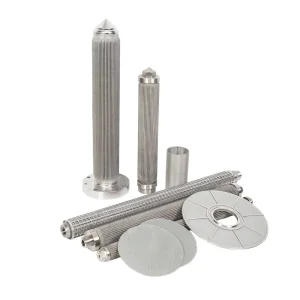
Select high-performance filter cartridges and recycling equipment custom manufactured for continuous polymer melt processing.
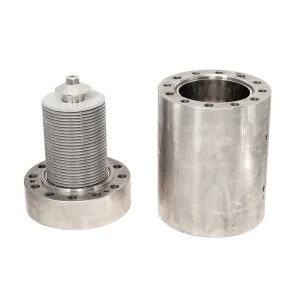
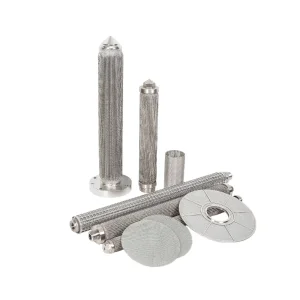
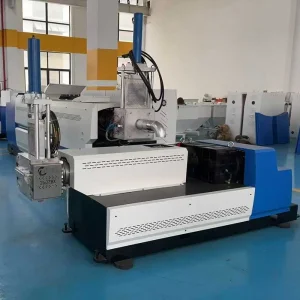
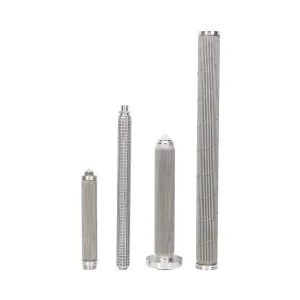
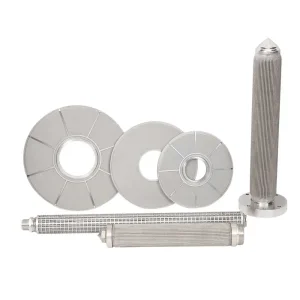
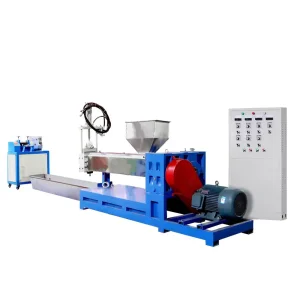
In modern industrial extrusion, synthetic fiber spinning, and chemical purification processes, continuous fluid purity directly dictates final tensile strength, optical clarity, and operational profitability. Standard single-layer wire cloth frequently suffers from structural fatigue, mesh migration, and localized pore expansion under intense pressure differentials (ΔP). Partnering with a specialized custom multiple layers filter supplier provides processing plants with precision diffusion-bonded mesh assemblies and engineered depth matrices capable of operating reliably under hydraulic pressures exceeding 250 bar (25 MPa) and temperatures up to 360°C.
How evolving melt purity demands and circular economy policies are driving advanced multi-layer filtration architecture.
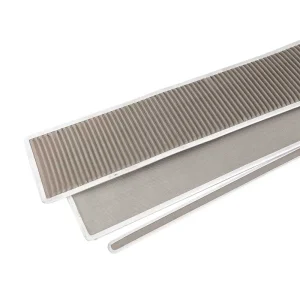
Conventional spot-welded multi-layer screen packs are rapidly being replaced by vacuum-sintered wire mesh. Through solid-state atomic diffusion, individual wire intersections fuse together permanently, preventing wire shifting, pore distortion, and layer delamination during aggressive backwashing cycles.
With global regulations mandating higher Post-Consumer Recycled (PCR) resin percentages in flexible packaging, melt filters must handle massive surges in paper fiber, micro-gels, and aluminum specks without premature blinding. Gradient density 5-layer and 7-layer layouts isolate coarse solids on the outer layers while retaining micro-gels deeper in the web.
Leading multi-layer filter companies now utilize CFD modeling to calculate shear rates and pressure gradients across each layer. By matching the permeability ratio of the protective, filtration, distribution, and support layers, stagnant zones (dead spots) are completely eliminated, preventing thermal degradation of heat-sensitive polymers like PET, PA66, and EVOH.
Procurement teams and plant engineering leads searching for a reliable custom multiple layers filter supplier look beyond standard component pricing. Enterprise procurement strategies center on total operational lifespan, maintenance turnaround speed, non-standard dimensional customization, and rigorous metallurgical compliance documentation.
The volumetric flow rate ($Q$) through a multi-layer filter matrix is governed by Darcy's Law: $Q = \frac{K \cdot A \cdot \Delta P}{\mu \cdot L}$. Engineered multi-layer sintered elements optimize the structural permeability constant ($K$) across distinct wire mesh layers to maintain high throughput even as cake buildup occurs.
To assist technical buyers in identifying the appropriate multi-layer configuration, the matrix below outlines performance parameters across industrial application classes:
| Filter Structural Media Type | Standard Layer Stack | Filtration Precision (μm) | Max Pressure Delta (ΔP) | Primary Industrial Use Case |
|---|---|---|---|---|
| 5-Layer Sintered Wire Mesh | Protective + Control + 2x Support + Cushion Layer | 1.0 μm – 200 μm | 300 Bar (30 MPa) | Polymer Melt Candle Filters, Film Extrusion |
| Sintered Metal Fiber Felt Matrix | Random Non-Woven SS Fiber + Layered Backing Mesh | 3.0 μm – 60 μm | 250 Bar (25 MPa) | BOPET / BOPP Thin Film & Spunbond Nonwovens |
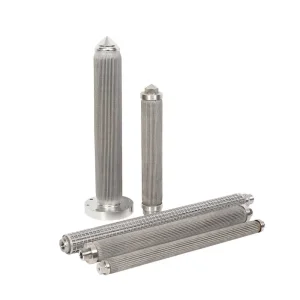
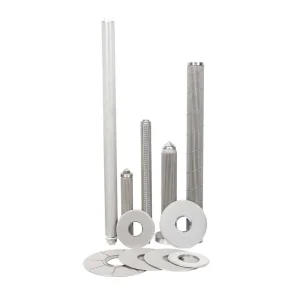
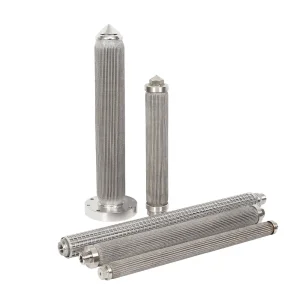
| Multi-Layer Pleated Stainless Candle | Inner Core Mesh + Filter Layer + Outer Protective Mesh | 5.0 μm – 100 μm | 210 Bar (21 MPa) | Continuous Polymer Filtration (CPF) Systems |
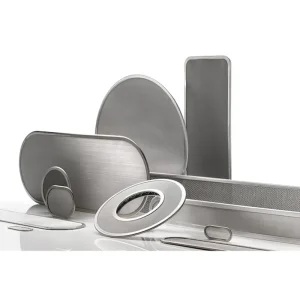
| Laminated Extruder Screen Disc | Dutch Weave + Square Mesh Rim-Bound Laminate | 20 μm – 500 μm | 150 Bar (15 MPa) | Plastic Recycling Granulation & Screen Changers |
From chemical synthetic fibers to heavy-duty post-industrial plastic granulating lines, our multi-layer filter elements resolve complex flow and contamination challenges.
Ultra-thin optical packaging films require zero gel bypass. Custom 5-layer sintered metal fiber candle elements capture microscopic cross-linked gels without inducing high shear stress that could hydrolyze the melt stream.
Continuous web uniformity in hygiene and medical fabrics relies on steady pressure at the spinneret die. Our high-surface-area pleated multi-layer candle elements minimize changeover downtime by offering up to 300% more filtration area relative to cylindrical geometries.
Highly contaminated post-consumer plastic scrap places severe mechanical demands on screen changers. Heavy-duty aluminum-rimmed multi-layer wire mesh disccs withstand structural bending while maintaining clean filtration edges.
Ensuring seamless international compliance, zero-defect manufacturing traceability, and rapid global supply chain execution.
Every production batch undergoes Positive Material Identification (PMI) testing. Material Test Reports (MTR) are supplied according to EN 10204 3.1 standards, certifying authentic AISI 316L or AISI 304 alloy purity with precise Nickel and Chromium concentration profiles.
To verify absolute micron rating consistency, completed multi-layer filter cartridges undergo non-destructive bubble point verification pursuant to ISO 4003, ensuring no micro-fissures, pinholes, or improper weld seams exist before packaging.
Multi-layer metal filter elements are sensitive to ambient atmospheric humidity. All items are sealed in vacuum-packed Volatile Corrosion Inhibitor (VCI) bags and reinforced within custom export wooden cases for safe air and ocean transit worldwide.
As polymer processing equipment scales toward higher volumetric outputs and zero-defect specifications, filter element design must innovate across material science, precision bonding, and smart sensor integration.
A major cause of pressure drop build-up in high-viscosity PET melt systems is the thermal degradation and stagnation of polymer molecules along metal wire surfaces. Advanced atomic layer deposition (ALD) techniques apply sub-micron ceramic or fluoropolymer nano-coatings directly onto inner multi-layer wire mesh surfaces, reducing drag friction and prohibiting gel adhesion.
Combining additive manufacturing (3D metal printing) with traditional woven wire mesh layers allows engineers to build customized fluid distribution cores directly integrated with outer sintered mesh skins. This hybrid structure eliminates internal bypass risk and optimizes flow vectoring across the entire candle element surface.
To reduce operational expenditure, enterprise buyers prioritize elements that withstand multiple cleaning cycles. High-tensile stainless steel 316L wire matrix construction allows filter elements to undergo thermal vacuum pyrolysis, TEG vapor cleaning, and high-frequency ultrasonic agitation up to 15 to 20 times without loss of dimensional tolerance or pore rating accuracy.
Detailed insights into multi-layer filter selection, maintenance protocols, and custom manufacturing workflows.
A standard single-layer wire cloth lacks structural rigidity and is susceptible to wire displacement under high pressure differentials (ΔP), causing pore enlargement and particle bypass. A 5-layer sintered mesh element combines a protective outer layer, a precision filtration control layer, a dispersion layer, and two heavy support layers. Vacuum diffusion bonding permanently fuses all wire intersections, ensuring rigid pore geometry, exceptional mechanical strength up to 300 bar, and predictable filtration accuracy.
Stainless Steel 304 is cost-effective and suitable for standard non-corrosive polymers such as Polypropylene (PP) and Polyethylene (PE) under dry operating conditions. Stainless Steel 316L contains Molybdenum (2-3%), providing significantly superior resistance to intergranular corrosion, organic acids, and elevated temperatures. SS 316L is strongly recommended for PET, PA66, BOPET film lines, and processes involving halogenated additives or aggressive cleaning chemicals.
Yes, high-quality stainless steel multi-layer filter cartridges are designed for repeated cleaning and reuse. The standard industrial reconditioning sequence includes: 1) Thermal Pyrolysis / Vacuum Calcination Furnace to burn off residual polymer melt; 2) Triethylene Glycol (TEG) solvent bath to dissolve chemical residues; 3) High-frequency ultrasonic bath with mild alkaline detergent; 4) High-pressure reverse liquid backwashing; and 5) Final drying and ISO 4003 bubble point integrity testing.
To provide an accurate technical quote and engineering blueprint, suppliers require: 1) Target polymer type and melt flow index (MFI) / viscosity; 2) Operating temperature and maximum differential pressure limit; 3) Required absolute or nominal micron rating (μm); 4) Physical dimensions (Outer Diameter, Inner Diameter, Overall Length, and End Cap Connector geometry such as 222, 226, NPT, or flanged); and 5) Expected flow rate (kg/hr or L/min).
Pleating a multi-layer filter mesh increases the active filtration surface area by 200% to 400% within the exact same housing footprint. This dramatically lowers the flux rate per unit area, reduces initial differential pressure drop, increases total contaminant holding capacity, and extends overall continuous run time before filter changeout is required.
Enterprise buyers should request ISO 9001:2015 Quality System certification, EN 10204 3.1 Material Test Reports (verifying chemical composition via PMI), ISO 4003 Bubble Point Test Reports (verifying pore size integrity), and pressure burst test certificates where high-pressure operating environments are involved.
Explore additional precision-engineered filter elements, screen mesh components, and recycling machinery.