Explore our ISO-certified portfolio of custom SUS304/SUS316L pleated candle filter elements, melt filter packs, and extrusion screen mesh systems designed for zero-defect polymer processing.
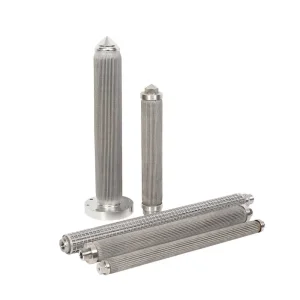
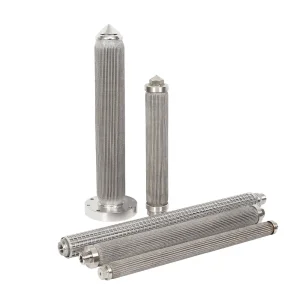
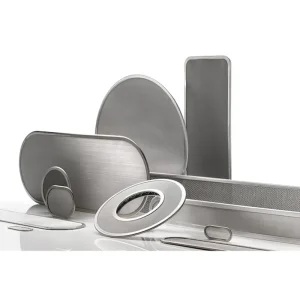
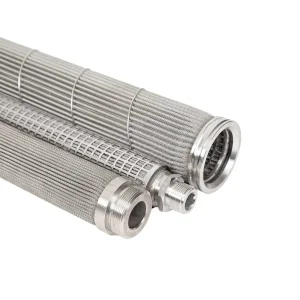
In modern continuous polymer extrusion, melt spinning, and plastic recycling operations, non-Newtonian polymer fluids exhibit complex viscoelastic behavior under elevated operating temperatures (up to 350°C) and severe hydraulic pressure dynamics (up to 250 bar).
High shear rates inside filter media cause non-crosslinked polymer gels to elongate and pass through micron openings. Pleated filter geometry minimizes fluid velocity across the wire mesh, preserving physical gel capture efficiency.
By quadrupling filtration area, initial differential pressure is dramatically lowered. This allows polymer processing lines to operate longer before reaching maximum allowable terminal pressure limits (typically 150-200 bar).
Layered multi-depth sintered mesh structures accommodate particulate buildup within internal pore voids, avoiding sudden face-blindness and enabling predictable, extended production runs without melt starvation.
Constructed via high-vacuum solid-state sintering of austenitic stainless steel (SUS304, SUS316L, or Hastelloy), elements withstand extreme thermal cycles during pyrolysis or TEG solvent cleaning procedures.
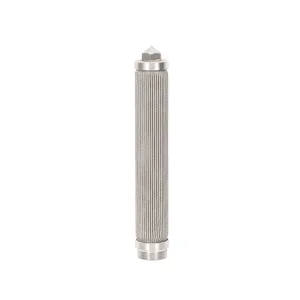
Understanding the multi-layer structural synergy: How perforated core tubes, protective drainage layers, primary sintered felt media, and external protective sleeves engineered by custom candle filter suppliers work together.
| Structural Layer | Material Configuration | Primary Technical Function | Key Performance Parameter |
|---|---|---|---|
| 1. Heavy-Duty Core Tube | SUS304 / SUS316L Perforated or Slotted Tube | Provides structural rigidity against high collapsing pressures (up to 210 bar). | Radial Collapse Resistance > 20 MPa |
| 2. Inner Support & Drainage Mesh | Square Woven Wire Mesh (20-40 Mesh) | Ensures unobstructed filtrate flow path from media interior into core perforations. | Hydraulic Friction Coefficient < 0.05 |
| 3. Primary Filter Media | 316L Sintered Metal Fiber Felt or Multi-layer Wire Cloth | Captures organic gels, carbonized degradates, and inorganic micro-particulates. | Rating: 3μm to 200μm Absolute (ISO 4003) |
| 4. Outer Protective Shroud | Sintered Stainless Steel Mesh Screen Cover | Shields delicate pleats during installation and acts as pre-filter for gross debris. | Mechanical Impact Resistance |
| 5. Precision End Caps & Fittings | CNC Machined SUS316L (DOE, SOE, Threaded M42/M60) | Ensures zero-bypass metallic sealing via metal-to-metal contact or O-ring grooves. | Leakage Rate < $10^{-7}$ mbar·l/s |
From stringent circular economy regulations in Europe to rapid industrial capacity expansions across Asia-Pacific and North America, polymer melt filtration technology is undergoing a paradigm shift.
Post-consumer resin feeds introduce severe particulate variations, paper fibers, and aluminum micro-flakes. Custom pleated candle filters with multi-layered depth felt are essential to prevent rapid filter blinding in rPET pelletizing.
Modern BOPP and capacitor film lines operate at line speeds exceeding 500 m/min with thicknesses below 3 microns. Any particulate larger than the film thickness causes immediate web breaks and expensive plant downtime.
Hygiene spunbond/meltblown producers demand non-stop filtration stability. Filter pack failure leads to spinneret hole clogging, fiber denier inconsistency, and unacceptable fabric defect rates.
How tailored pleated candle filters and screen mesh assemblies perform across specific industrial extrusion and chemical synthesis lines.
Deployed inside continuous duplex candle filter changers. Fine sintered metal felt (10-20μm absolute) traps crosslinked polymer gels and catalyst residues, ensuring optical transparency and defect-free biaxial stretching.
Installed prior to spin pumps in PP polypropylene melt spinning systems. Filters prevent spinneret die face buildup, reducing needle breaks and extending spin-pack service intervals from days to months.
Operated continuously at 290°C under high vacuum or high pressure in continuous polymerization reactors (CP lines), filtering prepolymer and final melt streams to maintain uniform intrinsic viscosity (IV).
Working in conjunction with automatic backwash screen changers to process post-industrial and post-consumer PE/PP films, removing sand, aluminum particulates, and non-melting polymer contaminants.
As smart manufacturing and advanced material science converge, custom candle filter suppliers are driving breakthrough technological innovations to meet zero-defect production goals.
Deposition of ultrathin atomic layers (ALD) and fluoropolymer-like ceramic coatings to minimize polymer melt adhesion, facilitate rapid backwash purging, and prevent localized thermal degradation during long campaigns.
Utilizing 3D Computational Fluid Dynamics (CFD) algorithms to customize pleat geometry, variable pleat density, and pitch angles, achieving perfect uniform flow distribution across the entire vertical filter length.
Development of Hastelloy C-276, Inconel 625, and Monel metal sintered fiber felts to handle high-acid bio-plastics (PLA, PHA) and corrosive fluoropolymer melts (PVDF, PTFE) without chromium depletion.
Partnering directly with a premier Chinese custom pleated candle filter manufacturer provides distinct technical, operational, and financial advantages for global OEMs and end-users.
From stainless steel wire drawing and precision weaving to high-vacuum sintering and CNC end-cap machining, complete in-house manufacturing guarantees total quality control and rapid 15-day production cycles.
Direct factory procurement eliminates intermediary markups while maintaining 100% compliance with DIN, ISO, and ASTM manufacturing standards, delivering superior Total Cost of Ownership (TCO).
Every manufactured batch undergoes 100% first-bubble-point pressure testing (ISO 4003) and non-destructive flow porosity verification before vacuum packaging and export dispatch.
Our engineering team works hand-in-hand with international processing plants, providing full compliance documentations and rapid reverse-engineering services for custom filter retrofits.
Certified production management ensuring complete material traceability from raw stainless steel wire coils to finished elements, backed by mill test certificates (MTC EN 10204 3.1).
All raw materials and surface treatments comply fully with US FDA Title 21 CFR and EU Regulation 1935/2004 for polymers used in food packaging film extrusion.
Provide existing filter samples or dimensional drawings; our technical team generates detailed CAD manufacturing blueprints to guarantee seamless retrofit into European and American filter changers.
As a recognized specialist manufacturer based in Zhejiang, China, Pujiang HG Plastic Machinery Co., Ltd. delivers high-precision polymer filtration systems, leaf disc filters, screen mesh elements, and complete plastic recycling machinery to customers across 80+ countries worldwide.
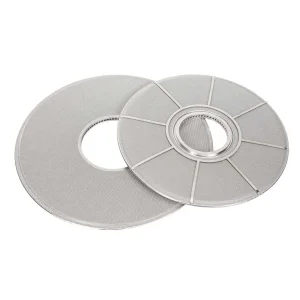
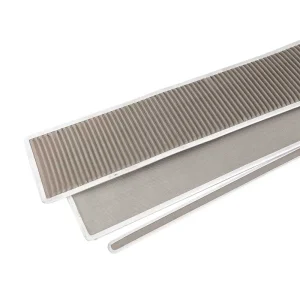
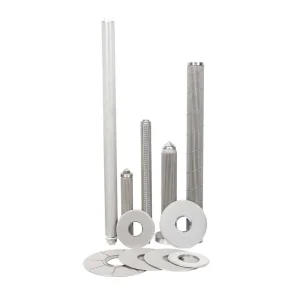
Our operational domain spans Polymer Candle Filters, Stainless Steel Screen Mesh Filters, High-Surface Leaf Disc Filters, Candle Filter Cartridges, and Waste Plastic Recycling & Granulating Production Lines.
Explore our latest technical publications covering topics such as "Filtration Advantages of Melt Filter Cartridges in Spunbond Nonwoven Production Lines" and "A Comprehensive Guide to Purchasing Polymer Candle Filter Cartridges".
With 1000+ completed OEM projects, we offer customizable micron ratings, structural reinforcement choices, specialized alloy grades, and custom private-label packaging for international machinery distributors.
Direct technical answers from our senior filtration engineering team regarding selection, differential pressure management, bubble point testing, and cleaning procedures.
Select from our extended inventory of polymer leaf disc filters, wire mesh screens, and candle filter cartridges engineered for demanding operational environments.
Contact our senior filtration application engineers directly to review your melt rheology, working pressure, temperature, and micron rating requirements.