Explore our premium engineered candle filters, leaf discs, and screen mesh elements optimized for severe temperature and pressure environments.
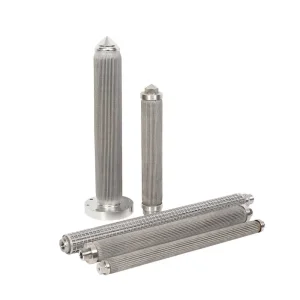
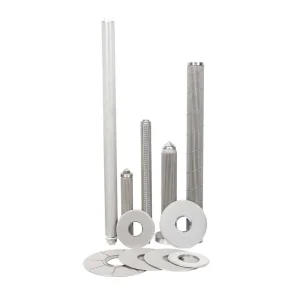
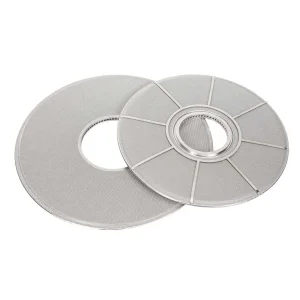
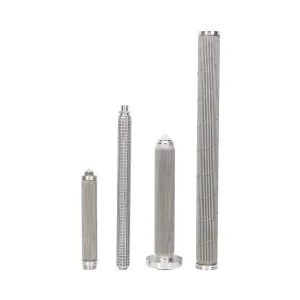
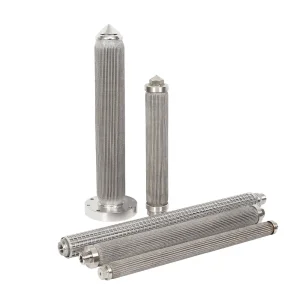
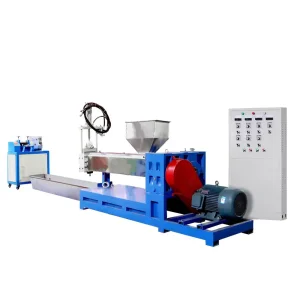
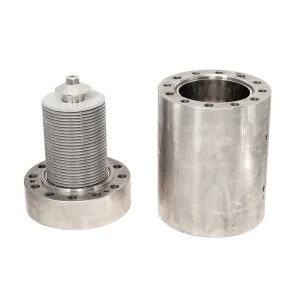
In high-viscosity polymer processing, melt filtration is no longer merely a preventive maintenance step—it is a critical determinant of product tensile strength, optical clarity, and continuous line velocity. As global petrochemical processors transition toward thinner gauge films (such as 12-micron BOPET and 15-micron BOPP) and ultra-fine denier synthetic yarns, conventional flat wire screens and non-pleated cylindrical filters quickly meet operational bottlenecks.
Traditional cylindrical elements suffer from limited active surface area, forcing high fluid velocity through small spatial windows. This creates immense shear stress within polymer melts (PET, PA66, PP, PE), leading to thermal polymer degradation, gel formation, and rapid differential pressure ($\Delta P$) spikes. The continuous elevation of differential pressure accelerates downtime cycles, requiring frequent screen changes and drastically eroding Total Cost of Ownership (TCO).
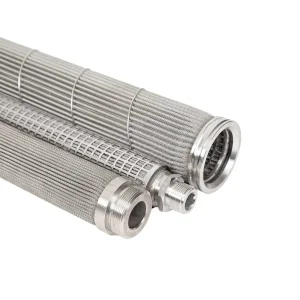
By forming longitudinal pleats along a stainless steel mesh cylinder, the effective filtration area is magnified by 300% to 500% within the exact same housing footprint. Lower flux rates ($m^3/m^2\cdot h$) translate to minimal shear degradation and up to 4x longer stream life.
Pleated filter candle elements disperse the hydrodynamic drag of non-Newtonian polymer liquids over a substantially broader surface. This minimizes localized stream turbulence and gel shearing, ensuring that soft gels are captured by depth-sintered stainless steel fiber fleece rather than extruded through the media under extreme differential pressure.
Strategic sourcing managers in North America, Europe, and Asia-Pacific prioritize key performance indicators (KPIs) beyond initial unit purchasing cost. Modern filtration procurement centers on long-term operational resilience.
Global buyer audits mandate certified AISI 304, 316L, or specialized super-alloys (Hastelloy C-22, Inconel 600). Raw wire meshes must undergo X-ray fluorescence (XRF) spectral testing to guarantee resistance against intergranular corrosion under high-temperature organic acid degradation.
Industrial recyclers handling highly contaminated post-consumer resins (PCR) require pleated elements engineered for repeated thermal pyrolization, TEG (Triethylene Glycol) boiling, and ultrasonic bath cleaning. High-tier elements sustain 20+ cleaning cycles without pleat collapse or bubble-point shift.
Procurement specifications strictly enforce ISO 16889 multi-pass hydraulic testing. Buyers demand documented absolute filtration efficiency ($\beta_x = 1000$), guaranteeing that 99.9% of particulate contaminants matching or exceeding the micron threshold are captured during initial pass fluid circulation.
| Filter Media Type | Structural Composition | Porosity Range | Dirt Holding Capacity | Typical Applications |
|---|---|---|---|---|
| Sintered Stainless Steel Fiber Felt | Non-woven 316L metallic micro-fibers, vacuum sintered | 75% - 85% | Extremely High (3.8x vs Wire Mesh) | High-viscosity PET/PA melt spinning, critical BOPET film |
| Multi-Layer Woven Wire Cloth | Square/Dutch weave stainless mesh layered with support wire | 35% - 50% | Moderate / Standard | Plastic recycling pelletizing, masterbatch extrusion |
| Sintered Wire Mesh Laminate | Diffusion-bonded multi-layer woven mesh sheets | 40% - 55% | High Structural Rigidity | High pressure hydraulic filtration, continuous screen changers |
| Metal Powder Sintered Elements | Spherical or irregular SS 316L powder compacted & sintered | 30% - 45% | Medium (High surface capture) | Aggressive gas filtration, high temperature chemical catalyst recovery |
As a leading China Custom Pleated Filter Supplier & Exporter, our advanced manufacturing ecosystem in Zhejiang combines automated micro-pleating machinery, automated TIG longitudinal seam welding, and high-vacuum sintering furnaces.
By digitizing quality control through dynamic bubble-point pore size testing (ISO 4003) and non-destructive ultrasonic weld integrity scans, we guarantee 100% batch consistency across tens of thousands of custom candle filter units annually.
From high-speed thin film extrusion lines in Europe to heavy-duty PCR recycling systems in North America, our pleated filter elements provide reliable particulate retention under extreme mechanical stress.
Film stretching lines require sub-micron level gel retention to prevent optical defects and film breaks during high-speed transverse orientation (TDO). Our pleated candle filter elements deliver ultra-low initial pressure drop, stabilizing melt flow to flat dies.
Continuous synthetic filament extrusion (PET, PP nonwovens) demands strict melt uniformity to prevent spinneret hole clogging. Custom pleated candle filter elements prevent polymer cross-linking buildup while ensuring uninterrupted continuous spinning runs.
PCR plastic granulators process high levels of paper fibers, aluminum speckles, and degraded cross-linked polymers. Engineered robust pleated packs handle hydraulic shock loads up to 210 bar during continuous screen changers backwashing.
A major Bavarian BOPP packaging film manufacturer experienced excessive filter replacement frequency (every 14 days) using standard non-pleated cylindrical candle elements, incurring €85,000 annually in lost production downtime and manual cleaning labor.
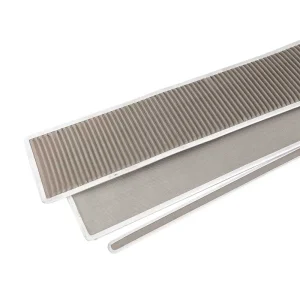
Our engineering team redesigned the filter cartridge internal core using a 4.5x pleated 316L sintered fleece media matrix featuring gradient pore structure (outer coarse capture layer, inner absolute fine filtration layer).
On-stream operational life expanded from 14 days to 62 continuous days. Differential pressure growth rate declined by 68%, saving over €110,000 in operational overhead within the first 10 months of implementation.
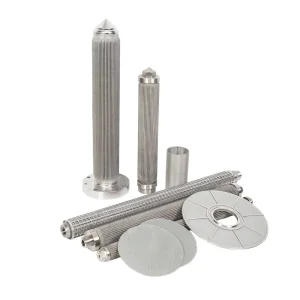
Comprehensive OEM filter elements and plastic recycling machinery components built to exact international technical specifications.
Expert answers regarding custom sizing, alloy selection, cleaning procedures, and international shipping protocols.
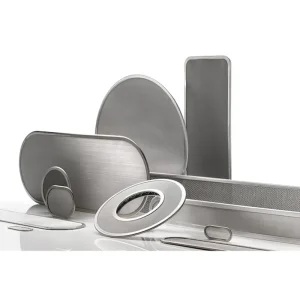
While leaf discs excel in narrow housing arrangements, pleated candle filter elements offer a substantially higher surface area ratio within cylindrical vessels. This results in significantly lower melt velocity across the media, reduced shear stress on sensitive polymers, and a much longer operational lifespan before requiring cleaning or backwash cycles.
SUS 304 is suitable for standard, non-corrosive plastic extrusion processes such as pristine PP and PE pelletizing. However, for PET melt processing, fluoropolymers, or chemical fiber spinning where organic acids or high thermal oxidation occurs at temperatures exceeding 280°C, SUS 316L (or molybdenum-bearing alloys) is mandatory due to its superior resistance to pitting and intergranular corrosion.
Yes. As a direct custom supplier and exporter, we specialize in OEM/ODM reverse engineering. Our technical department uses precision coordinate measuring machines (CMM) and spectral alloy analyzers to duplicate exact dimensions, thread connections, hex fittings, and micron ratings of major European and North American brand housings.
Polymer-laden metallic elements can be cleaned and reused up to 20 times. Standard cleaning protocols include: (1) Vacuum calcination/pyrolysis furnaces to thermally decompose polymer residue, (2) Triethylene Glycol (TEG) solvent bath boiling for polyester removal, and (3) Ultrasonic acid/alkaline bath flushing followed by high-pressure reverse water jetting.
Every production batch undergoes dynamic bubble point testing according to ISO 4003 standards to identify the maximum pore diameter. Additionally, sample elements are subjected to ISO 16889 multi-pass hydraulic testing to measure dirt holding capacity and verify differential pressure collapse limits under simulated full-load flow.
For custom engineered sample prototypes, our lead time is 7 to 10 days. Full commercial production orders typically ship within 15 to 20 days via express air cargo or ocean freight. We offer flexible MOQs for specialized industrial trials, starting from as few as 5 to 10 units for custom candle filter designs.