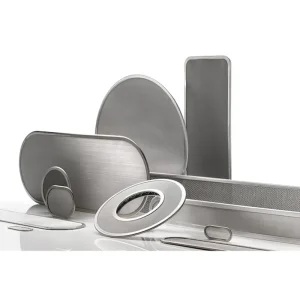
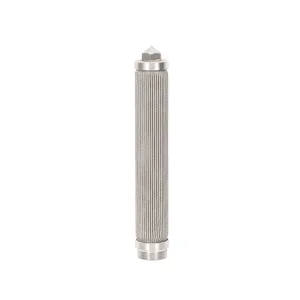
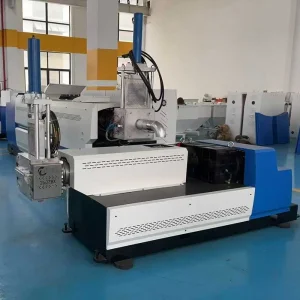
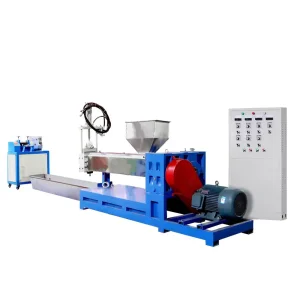
Explore our primary engineered filtration elements designed for high-viscosity polymer melts, spunbond nonwoven manufacturing, continuous recycling extruders, and micro-porous liquid processing.
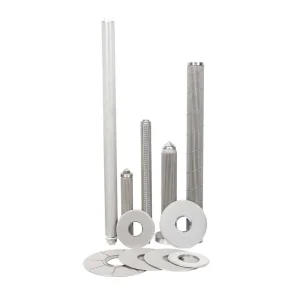
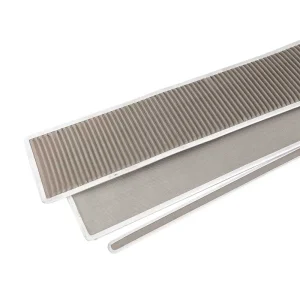
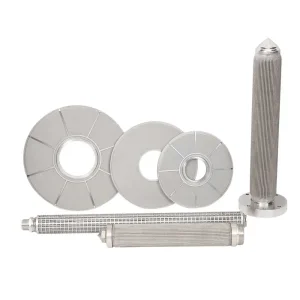
Understanding the metallurgical dynamics, structural mechanics, and fluid rheology of multi-layer stainless steel candle filter cartridges in high-temperature, high-pressure polymer processing.
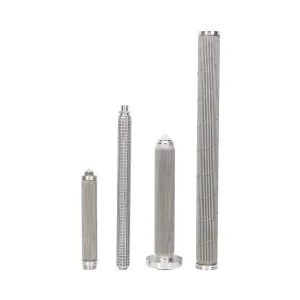
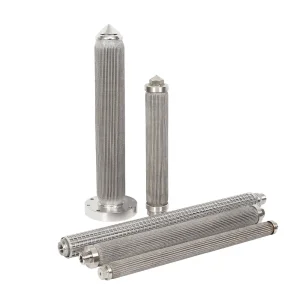
In modern industrial polymer filtration, a Custom Stainless Steel Candle Filter represents the apex of mechanical endurance and filtration precision. Unlike throwaway synthetic media, candle filter cartridges consist of a central perforated support tube engineered to withstand collapse pressures exceeding 210 bar (3045 PSI). Wrapped around this core are multiple layers of micro-porous stainless steel media—ranging from fine woven wire cloth to 3D sintered metal fiber felts (AISI 316L or AISI 304).
The cylindrical geometric profile maximizes the effective filtration area per vessel volume. In high-viscosity polymer melt systems (viscosities ranging from 10 to 10,000 Pa·s), maximizing surface area is essential to minimize shear degradation, reduce pressure drop (ΔP), and extend operational on-stream life prior to cleaning or replacement cycles.
Selecting the optimal media structure is a critical engineering decision for enterprise buyers. Sintered multi-layer wire mesh offers exceptional pore geometry stability, precise rating retention from 3 μm up to 250 μm, and extreme mechanical resistance against back-pressure shocks during automated backwash cycles.
Conversely, Sintered Stainless Steel Metal Fiber Felt provides a high porosity rate (up to 80-85%), delivering significantly higher contaminant holding capacity and lower initial differential pressure. This structural distinction makes metal fiber felt ideal for high-capacity BOPP film extrusion and chemical fiber melt spinning lines where extended filtration cycles directly translate into reduced operational downtime.
| Engineering Property | Woven Wire Mesh (SUS 304/316) | Multi-Layer Sintered Mesh | Metal Fiber Sintered Felt (316L) |
|---|---|---|---|
| Filtration Rating Range (μm) | 10 μm – 500 μm | 5 μm – 200 μm | 1.5 μm – 100 μm |
| Porosity (%) | 35% – 45% | 40% – 50% | 75% – 85% |
| Dirt Holding Capacity | Standard | Moderate / High | Exceptional (> 2.5x Mesh) |
| Differential Pressure Resistance | Up to 100 Bar | Up to 210 Bar | Up to 150 Bar |
| Ultrasonic / Thermal Cleanability | Excellent | Superior (Repeated Cycles) | Excellent (Requires strict protocol) |
Why tier-1 global chemical, plastic extrusion, and engineering procurement corporations prioritize sourcing custom stainless steel filter elements from specialized OEM/ODM manufacturing hubs in Zhejiang, China.
Chinese filtration clusters like Pujiang HG Plastic Machinery Co., Ltd. leverage proximity to premier stainless steel raw material suppliers (SUS 304, 316, 316L, 904L, and Hastelloy C-276). This complete integration ensures consistent alloy purity, verified chemical composition certificates (MTC), and complete control over wire drawing, mesh weaving, and vacuum sintering processes without intermediary supplier markups.
Modern Chinese manufacturing plants utilize high-vacuum sintering furnaces capable of achieving temperatures over 1200°C under micro-controlled protective hydrogen atmospheres. Combined with automated multi-axis TIG and micro-laser seam welding, Chinese factories deliver candle filters with flawless structural welds that prevent bypass leaks even under extreme hydraulic pressure spikes.
Unlike Western manufacturers bound by rigid standardized sizing catalogs, leading Chinese suppliers specialize in high-speed, custom-engineered production. Whether a client requires unique hexagonal end-caps, specialized internal bayonet connectors, or custom length-to-diameter ratios for legacy filter vessels, Chinese engineering teams can turn CAD drawings into verified physical prototypes within 7 to 10 days.
Leading Chinese export factories operate under strict ISO 9001:2015 Quality Management Systems. Every batch of custom stainless steel candle filters undergoes rigorous testing protocols including Bubble Point Testing (ISO 4003) to verify absolute micron rating, Pressure Collapse Resistance Testing (ISO 2941), and Ultrasonic Cleanliness Inspections prior to global export packaging.
By offering premium-grade materials (such as SUS 316L sintered felt) at highly competitive factory-direct prices, Chinese suppliers enable global plants to reduce capital expenditures (CapEx) by 30% to 50% while achieving identical or superior operational lifespans compared to OEM replacement parts from original machine builders.
Equipped with specialized overseas trade divisions, major Chinese filter companies provide multi-language technical consulting, rapid air freight dispatch for urgent plant maintenance emergencies, and customized sea-freight export packaging guaranteed to protect micro-porous filter surfaces from marine corrosion during transport.
Key technological shifts reshaping the design, manufacturing, and deployment of stainless steel candle filter elements across modern process industries.
As high-tech sectors such as lithium-battery separator film, optical-grade BOPET film, and ultra-fine chemical fiber spinning push quality bounds, filter demand is rapidly shifting toward sub-micron absolute ratings (down to 1 μm or 0.5 μm). Modern candle filters utilize asymmetrical multi-stage gradient pore structures—coarser outer pre-filtration layers capturing larger gel blobs, backed by fine inner sintered felt layers capturing microscopic particulate matter. This design drastically prevents depth clogging and extends run time.
Driven by global ESG goals, enterprise operators are eliminating single-use filter media in favor of 100% cleanable, reusable stainless steel candle filter cartridges. Advanced cleaning protocols combining TEG (triethylene glycol) fluid baths, high-temperature calcination ovens (up to 450°C), controlled chemical passivation, and multi-frequency ultrasonic washing allow quality stainless steel candle filter elements to be regenerated up to 20–30 times without losing structural integrity or filtration efficiency.
The widespread adoption of PCR (Post-Consumer Recycled) and PIR (Post-Industrial Recycled) plastics (such as rPET, rPP, and rPE) has introduced heavy contaminant loads into extruder melt streams. Next-generation candle filter designs feature enhanced dirt holding capacities, specialized anti-friction surface coatings, and enlarged internal drainage channels to manage continuous high particulate loads without suffering premature pressure lockup.
Leading-edge candle filter OEMs now employ CFD simulation software to model polymer flow fields inside the candle filter housing prior to manufacturing. By optimizing fluid entry velocities, core tube perforation patterns, and internal annulus gaps, CFD-guided designs eliminate dead zones where polymer melt might stagnate, degrade, or form black spots, ensuring pristine melt quality for optical applications.
Detailed engineering breakdown of how stainless steel candle filter elements perform in critical industrial production environments.
In biaxially oriented film production lines, even a sub-10-micron foreign particle or gel fraction can cause catastrophic web breaks at high line speeds (> 500 m/min). Multi-candle filter vessels equipped with SUS 316L sintered metal felt candle cartridges (rated 5 μm to 20 μm absolute) are installed directly upstream of the T-die.
Key Function: Removes un-melted polymer gels, cross-linked degradants, and metallic micro-particles, maintaining unbroken film continuity and perfect optical clarity.
Continuous PP (polypropylene) or PET spunbond nonwoven lines rely on candle filter cartridges inside large melt filter housings prior to spinneret distribution. Spinneret capillaries are extremely fine (often 0.15 mm to 0.6 mm in diameter); clogging a single capillary results in uneven fabric density and costly line stops.
Key Function: Ensures uniform polymer melt viscosity, prevents spinneret hole blockage, and extends continuous production runs up to several months.
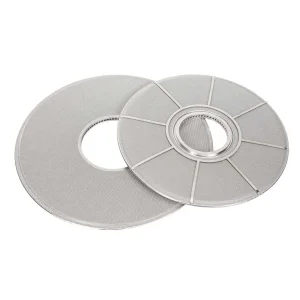
Heavy-duty plastic granulating and pelletizing systems handling post-consumer ABS, PE, PP, PS, and PET waste utilize robust wire mesh candle filters within hydraulic continuous screen changers. The candle configuration dramatically increases filtration area compared to flat screen discs, allowing heavy dirt loading without stopping the extruder screw.
Key Function: Filters out residual paper fibers, aluminum foils, sand, and non-melting polymers, yielding high-purity recycled pellets suitable for premium injection molding.
Beyond polymer melts, stainless steel candle filters serve as critical liquid-solid separation elements in corrosive chemical reactions, high-temperature solvent recovery, catalyst recovery systems, and oil refining operations operating under extreme temperatures up to 400°C.
Key Function: Superior corrosion resistance against aggressive acids, alkalis, and organic solvents where synthetic filter cartridges fail instantly.
Turnkey engineering architectures integrating candle filter elements into zero-downtime, continuous industrial process plants.
For 24/7 continuous extrusion lines, single-housing filter assemblies force plant shutdowns during filter changes. Macro filtration solutions utilize Duplex Candle Filter Systems featuring dual pressure vessels connected via a 2-way or 4-way synchronized diverter valve. When operating vessel A reaches its differential pressure limit, flow is seamlessly switched to pre-heated vessel B without disrupting downstream melt pressure or flow rate.
In liquid processing and low-viscosity polymer streams, automatic backwash systems leverage system pressure or pneumatic assistance to send a controlled burst of clean filtrate backward through the candle filter bundle. This reverse pressure wave instantly dislodges surface filter cake into a drain manifold, restoring low differential pressure automatically without manual intervention.
Leading suppliers provide fully integrated, pre-tested skid systems comprising candle filter vessels, thermal oil heating jackets, high-precision pressure transducers, safety burst discs, and centralized PLC control cabinets. Pre-jacketed designs prevent cold spots and polymer solidifying during startup, ensuring smooth thermal transitions.
A systematic evaluation framework for procurement managers, process engineers, and supply chain directors sourcing custom candle filters globally.
Procurement teams must demand complete Material Test Reports (MTR) according to EN 10204 3.1. Standard applications utilize SUS 304, while polymer melts containing acidic additives, flame retardants, or PVC require chemical-grade AISI 316L or nickel-chromium alloys (Hastelloy C-276, Inconel 600) to resist pitting and stress corrosion cracking.
A nominal micron rating is insufficient for critical applications. Buyers should specify Absolute Micron Ratings verified by Bubble Point Testing per ISO 4003. This test measures the exact pressure required to force air bubbles through a liquid-saturated filter, pinpointing the largest pore diameter and guaranteeing 99.9% retention efficiency at the specified micron level.
High-viscosity polymer melts create extreme pressure drops across candle filter elements as contaminants accumulate. Procurement specifications must mandate collapse pressure ratings exceeding the maximum system pump pressure (e.g., 150 bar or 210 bar differential) to prevent core tube deformation or catastrophic mesh tearing into the melt stream.
Verify exact end-cap connection geometry to ensure zero bypass in existing housings. Common connection styles include NPT threaded ends, NPT double-threaded, bayonet quick-locking lugs, flat gasket seats, and 222/226 O-ring adapters with metal compression caps suitable for high-temperature copper or metal-graphite gaskets.
Expert answers to common engineering, maintenance, and sourcing questions regarding custom stainless steel candle filter elements.
While SUS 304 provides good corrosion resistance and excellent mechanical strength for standard polyolefin (PP, PE) extrusion, SUS 316L contains 2-3% Molybdenum (Mo) and significantly lower carbon content (<0.03%). This chemical composition renders SUS 316L far superior in resisting pitting corrosion, intergranular corrosion, and harsh chemical attack from additives, acidic polyesters (PET), or high-temperature solvents. SUS 316L is the industry standard for high-end film, chemical fiber, and pharmaceutical applications.
Depending on the contaminant type, cleaning method, and structural design, high-quality stainless steel candle filters can be successfully regenerated 15 to 30 times. Proper cleaning procedures involve TEG (triethylene glycol) boiling or pyrolysis calcination ovens (400°C–450°C) to break down residual polymers, followed by chemical acid/alkali baths, high-pressure liquid flushing, and multi-frequency ultrasonic immersion. Bubble point tests should be performed after cleaning to verify pore integrity.
Premature pressure spikes are usually caused by: (1) Incorrect micron rating selection where pre-filtration is missing, leading to rapid surface blinding; (2) High concentration of un-melted polymer gels or cross-linked degradants; (3) Thermal degradation forming carbonized black particles inside the media; or (4) Improper cleaning in previous cycles leaving residual calcined ash trapped deep within the micro-porous layers.
Yes. Specialized Chinese factories like Pujiang HG Plastic Machinery routinely manufacture 100% compatible drop-in replacement candle filters for major international vessel brands (e.g., Maag, Kreyenborg, Nordson BKG, Fuji Filter, Seebach, and Pall). By working from customer sample parts, technical drawings, or detailed dimension measurements, factory engineers match mounting threads, length tolerances, outer diameters, and filtration media specifications precisely.
All-welded AISI 316L sintered stainless steel candle filter cartridges can operate continuously at temperatures up to 400°C (752°F) in standard reducing or inert gas atmospheres, and up to 300°C in polymer melt streams. For extreme thermal applications exceeding 500°C–600°C, specialized high-nickel alloys such as Inconel 600 or Hastelloy are specified.
Smooth cylindrical candles are easier to clean thermally and ultrasonically because they lack deep pleat folds where heavy gel residues can become trapped. However, Pleated Candle Filter Cartridges increase the effective filtration surface area by 200% to 400% within the exact same vessel space, drastically lowering initial differential pressure and significantly extending run time. Choose pleated designs for high flow rate/high purity melt lines, and cylindrical designs for extremely heavy sludge or high-viscosity media requiring frequent manual cleaning.
Enterprise buyers should verify: (1) ISO 9001:2015 Quality Management System Certification; (2) Raw Material Mill Test Certificates (MTR EN 10204 3.1); (3) Bubble Point Test Reports (ISO 4003); (4) Pressure Collapse Rating Compliance (ISO 2941); and (5) CE Compliance for pressure vessel components where applicable.
For standard wire mesh and sintered felt specifications, prototype manufacturing typically takes 7 to 10 business days. Full industrial production batches (100 to 1,000 pieces) are generally completed within 2 to 4 weeks. Express air freight options (DHL, FedEx, air cargo) enable emergency delivery to global plant sites within 5 to 7 days.
Explore additional specialized candle filter cartridges, wire mesh elements, and plastic recycling equipment manufactured by our China factory.