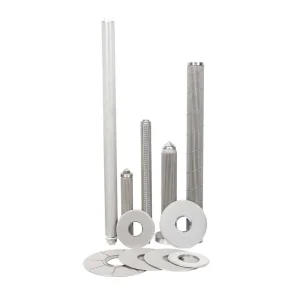
Explore our primary range of engineered stainless steel pleated candles, leaf disc filters, and precision screen mesh solutions designed for continuous extrusion lines.
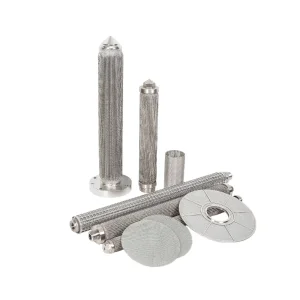
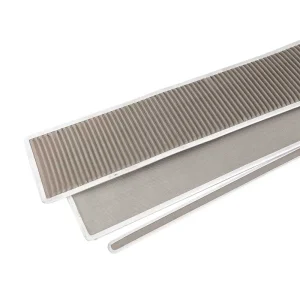
In modern continuous polymer processing—spanning polyolefins (PET, PE, PP, PS), engineering thermoplastics (PA, PC, PBT), and recycled resins—the role of continuous screen changers and high-capacity melt filter exchangers has evolved from simple contaminant catching to a critical determinant of process economics, line uptime, and end-product rheological integrity. As global manufacturing standards push toward thinner gauge optical films (BOPET, BOPP), ultra-fine denier spunbond/meltblown synthetic fibers, and high-percentage Post-Consumer Recycled (PCR) feedstocks, the tolerance for particulate contamination, degradation gels, and thermal spikes approaches zero.
Leading engineering firms and famous filter exchanger manufacturers are restructuring filtration architecture to accommodate non-Newtonian melt behaviors under extreme conditions (pressures exceeding 350 bar and temperatures upwards of 340°C). The fundamental search intent of tier-1 plant operators and procurement officers centers on minimizing volumetric flow fluctuations ($\Delta P$), eliminating melt degradation during filter indexing, and maximizing total dirt holding capacity (DHC).
Evaluating structural mechanics across high-capacity continuous dual-piston exchangers, bolt-type screen changers, and continuous rotary filter systems.
| Exchanger Architecture | Operating Principle | Pressure Drop ($\Delta P$) Impact | Optimal Polymer Applications | Maintenance & Life Expectancy |
|---|---|---|---|---|
| Dual-Piston Continuous Exchanger | Two hydraulic pistons working in parallel; one piston indexes while the other maintains 50–75% flow. | Minimal (< 2.5% variation during stroke execution) | BOPET/BOPP film, high-speed sheet extrusion, virgin resin polymerization | High reliability; seals require annual inspection; 10+ year frame life |
| Continuous Rotary Disc Exchanger | A rotating breaker plate ring indexes incrementally through a sealed housing channel. | Ultra-Low (< 1% variation; smooth continuous indexing) | Optical PC, micro-denier filament spinning, thin-wall blow molding | Precision metallic seals require calibration; low screen consumption rate |
| Hydraulic Slide-Plate Exchanger | Single flat plate pushed linearly across the melt flow path; discontinuous process interruption. | High momentary pressure drop during rapid slide actuation | Compound pelletizing, pipe extrusion, heavy-gauge sheet extrusion | Robust structural build; rapid seal wear under abrasive recycling feeds |
| Auto-Backflush Screen Exchanger | Integrated hydraulic storage channels force purified melt backward to flush contaminated screens. | Automated self-cleaning minimizes step-up pressure build-up | High-contamination PCR recycling (PET bottle flakes, PE agricultural film) | Reduces screen disc consumption by up to 80%; requires regular hydraulic servicing |
Computer-simulated finite element analysis (FEA) ensures fluid channels feature zero dead-zones. This prevents polymer thermal degradation (black specs) during prolonged residence times at elevated temperatures.
Pressure-activated metallic seal rings leverage the polymer melt pressure itself to form a leak-free dynamic seal against the moving piston, operating without polymer degradation up to 500 bar.
Pre-filling channels bleed trapped air and pre-pressurize fresh filter cavities before entry into the active melt stream, eliminating air bubbles, gauge variation, and downstream web breakage.
Understanding structural differences between woven wire screens, vacuum-sintered metallic fiber felts, and multi-layer disc assemblies.
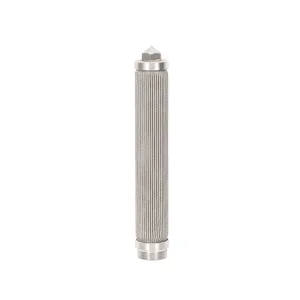
Constructed from non-woven micro-denier stainless steel fibers with a diameter ranging from 2 to 25 microns, vacuum-sintered at extreme temperatures to form a three-dimensional porous structure.
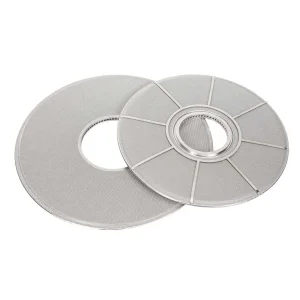
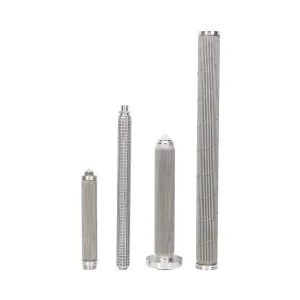
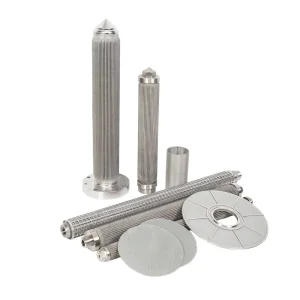
The structural choice between cylindrical pleated candle cartridges and flat leaf discs (hard or soft center hub) depends on vessel geometry and residence time tolerances.
Detailed analysis of demand drivers, regional compliance mandates, and localized integration strategies across major industrial zones.
Driven by stringent US state mandates (e.g., California Senate Bill 270 / post-consumer recycled content quotas), North American processors are retrofitting legacy extruders with high-capacity continuous auto-backflush filter exchangers. The primary focus is processing highly contaminated HDPE/LDPE waste streams with minimal operator intervention.
European plants prioritize strict energy consumption limits (kWh per ton processed) and ultra-fine filtration (down to 3–5 microns) for technical textiles, medical nonwovens, and high-barrier food packaging. Filter exchangers must demonstrate near-zero pressure drop hysteresis and CE / PED 2014/68/EU pressure vessel compliance.
As the manufacturing hub for global synthetic fibers and biaxially oriented films, APAC requires large-footprint CPF (Continuous Polymer Filter) systems housing up to 120 pleated candle cartridges per vessel. Key criteria include low total cost of ownership (TCO) and rapid OEM replacement parts delivery.
Challenge: A premier film manufacturer experienced micro-gel pinholes and web snaps on a 500 m/min BOPET line when operating standard woven screen changers, resulting in over 14% scrap rate during screen changes.
Solution: Implementation of a Dual-Piston Continuous Filter Exchanger equipped with 316L vacuum-sintered stainless steel fiber felt candle elements (10-micron absolute rating).
Result: Pressure fluctuations during filter indexing dropped from 18 bar to < 0.4 bar. Web breakages were reduced to zero over a 12-month evaluation period, delivering an annual operational saving of $420,000.
Challenge: A recycling plant processing post-consumer HDPE bottle flakes suffered severe screen blinding every 12 to 15 minutes, requiring manual screen replacements and causing high polymer melt losses.
Solution: Retrofitting an Auto-Backflush Continuous Screen Exchanger utilizing high-durability multi-layer sintered mesh disc packs.
Result: The automated backflush cycle regenerated filter media up to 150 times before requiring physical disc changes, increasing daily output by 32% while decreasing melt loss to under 0.8%.
The technological trajectory driving smart filtration, self-optimizing hydraulic controls, and advanced metallurgical coatings.
Integration of IoT pressure transducers and predictive algorithms to calculate precise filter cake resistance buildup, optimizing backflush cycles automatically.
Deposition of titanium nitride (TiN) and diamond-like carbon (DLC) coatings on sintered fibers to eliminate polymer adhesion and chemical corrosion under fluorine-containing polymers.
Next-gen auxiliary hydraulic displacement cylinders that isolate, purge, and filter purge melt internally, eliminating polymer waste discharge entirely.
Direct 3D metal printing (LPBF) of custom porous media featuring gradient pore structures impossible through traditional mechanical wire weaving.
Closed-loop robotic filter handling systems capable of removing, pyrolyzing, ultrasonic cleaning, and reinstalling candle cartridges without human intervention.
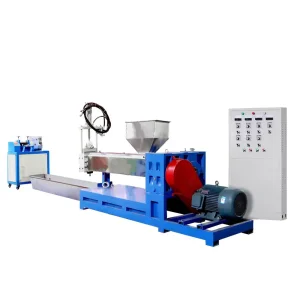
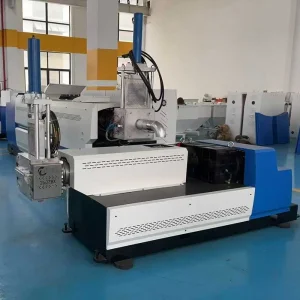
Discover our specialized lines for recycling machinery, multi-layer screen mesh packs, and high-viscosity candle filter configurations.
Authoritative answers addressing engineering selection, maintenance procedures, and operational optimization of melt filter exchangers.