Comprehensive Technical Guide & Industry Whitepaper on High-Viscosity Polymer Melt Filtration, Extrusion Screen Changers & Advanced Recycling Systems
Explore precision-engineered candle filter elements, screen mesh assemblies, and recycling equipment certified for demanding industrial melt processing applications.
The global plastic manufacturing and polymer synthesis market is undergoing a structural transformation driven by stringent circular economy regulations, rising demand for high-purity recycled resins (PCR/PIR), and the expansion of high-speed extrusion lines for optical films and synthetic fibers.
In modern extrusion and polymer continuous processing, melt filtration is no longer merely a protective measure for gear pumps or spinnerets; it has evolved into a strategic lever for yield optimization, waste reduction, and process stability. Processing high-viscosity melts such as Polyethylene Terephthalate (PET), Polypropylene (PP), Polyamide (PA), and Polycarbonate (PC) presents unprecedented thermal and mechanical stresses. Suppliers of plastic filtration machinery must navigate complex fluid dynamics, variable contaminant loads, and strict differential pressure ($\Delta P$) constraints.
Leading manufacturers in China and globally are shifting toward continuous, non-stop screen changers and high-surface-area candle filter housings. By integrating advanced alloy metallurgy—specifically SUS 304, SUS 316L, and Nickel-Chromium superalloys—modern suppliers enable long-run operational cycles without frequent shutdown cycles, drastically reducing the Total Cost of Ownership (TCO) for global plastic converters.
Selecting the appropriate filter media configuration is essential to balance flow rates, shear rate sensitivities, and dirt-holding capacities (DHC). The table below outlines the core engineering trade-offs across common plastic filtration architectures.
| Filtration Architecture | Primary Material Grade | Effective Filter Area Ratio | Shear Degradation Risk | Cleaning & Reusability | Optimal Application Segment |
|---|---|---|---|---|---|
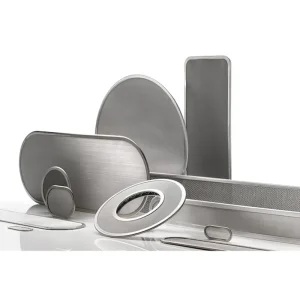
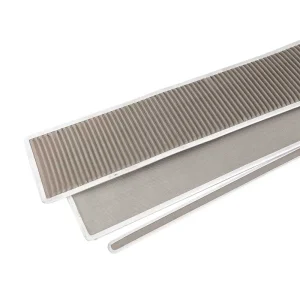
| Woven Wire Screen Mesh | SUS 304 / SUS 316 | 1.0x (Standard Base) | Moderate | Single-use / Ultrasonic Clean | Basic recycling granulating & sheet extrusion |
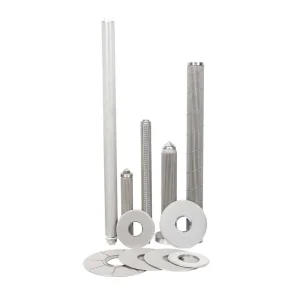
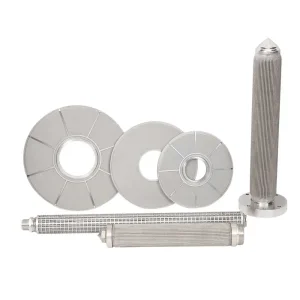
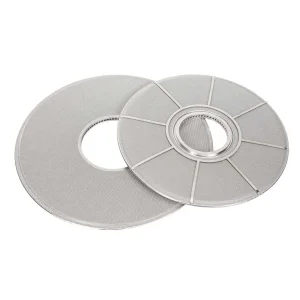
| Multi-Layer Leaf Disc Filter | 316L Sintered Mesh / Fiber | 3.5x - 5.0x Expansion | Low (Optimized flow path) | Pyrolysis / Hydrocarbon Solvent | BOPP / BOPET high-speed optical film lines |
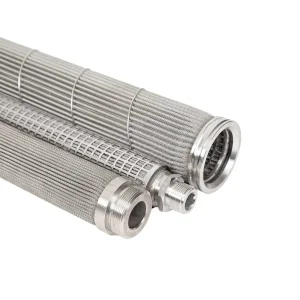
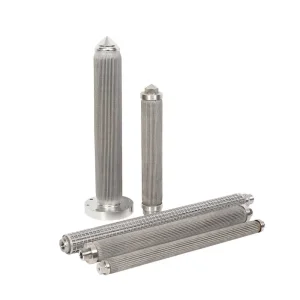
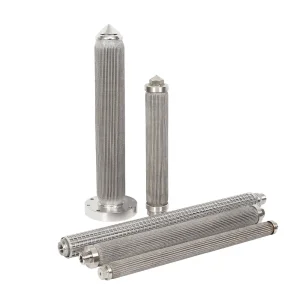
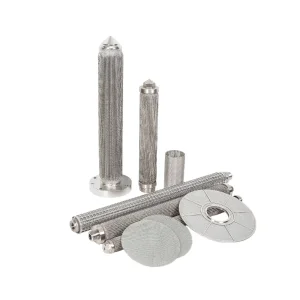
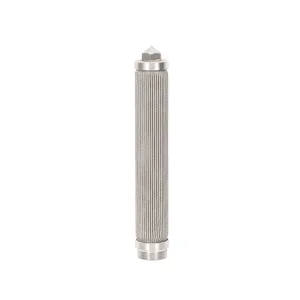
| Pleated Metal Fiber Candle Filter | SUS 316L Sintered Fiber Felt | 8.0x - 12.0x Expansion | Ultra-Low (Uniform radial flow) | TEG / Calcination / Ultrasonic | Spunbond nonwovens & chemical fiber spinning |
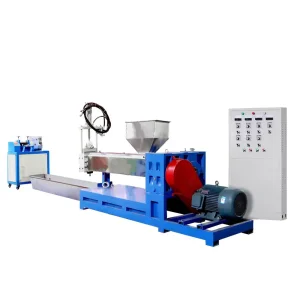
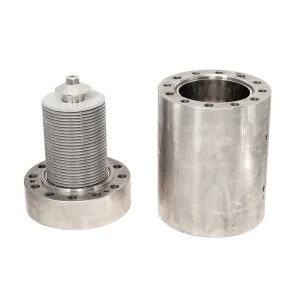
| Continuous Dual-Piston Screen Changer | Hardened Alloy Steel / SUS 304 | 2.0x (Parallel cavity) | Moderate to Low | Auto-Backflush Automated | Post-consumer waste pelletizing (PCR PE/PP) |
Fabricated through random three-dimensional nonwoven layering of micro-micron stainless steel fibers. Provides ultra-high porosity (up to 85%), minimal initial pressure drop, and exceptional gel retention capacity for high-viscosity PET/PA melts.
Utilizes heavy warp wires combined with densely packed fine weft wires. Yields precise pore size distribution, high mechanical bursting strength under differential pressures up to 250 bar, and robust backwash capability.
Pleating increases available filtration surface area by over 300% relative to smooth cylindrical designs. This dramatically reduces melt velocity through the media, preventing shear-induced degradation of delicate polymer chains.
Plastic filtration equipment must be configured specifically to match the rheological behavior of individual polymer matrices and end-product quality demands.
Challenge: Pin-hole defects, localized web tears, and optical haze caused by micron-scale carbonized particles, gel contaminants, or agglomerated additive powders.
Solution: Implementation of high-precision Polymer Leaf Disc Filters with 10–20 micron absolute ratings. The smooth hub-to-outer rim gradient channel design eliminates dead zones where polymer melt might stagnate and thermally degrade over long production cycles.
Challenge: Spinneret hole plugging on multi-thousand-hole spin packs, leading to filament breakage, uneven fabric weight, and costly downtime.
Solution: Deployment of multi-element SUS 316L Pleated Candle Filter Cartridges within dedicated vertical filter vessels. High dirt-holding capacity extends online cycle times to 60+ days between chemical cleaning routines.
Challenge: Massive contaminant spikes consisting of paper fibers, aluminum foils, sand, and cross-linked polymers in recycled PP/PE waste streams.
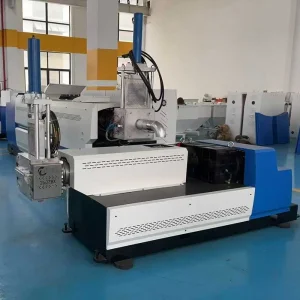
Solution: Integration of automatic continuous hydraulic screen changers utilizing custom SUS 304 Extrusion Wire Mesh Filters paired with specialized high-torque PP plastic pelletizing systems.
Ensuring continuous factory operation requires strict adherence to international metallurgical standards, pressure vessel engineering safety regulations, and rapid local technical service support.
Every batch of stainless steel wire cloth, sintered fiber felt, and candle cartridge hub undergoes rigorous PMI (Positive Material Identification) testing, bubble point determination (ASTM E128), and burst pressure testing to guarantee 100% structural integrity under max differential pressure.
Filter housings and melt changers are constructed in alignment with ASME Section VIII and CE PED (Pressure Equipment Directive 2014/68/EU) standards, ensuring complete thermal stability up to 350°C and hydraulic pressure ratings up to 35 MPa.
With global supply capabilities, premier Chinese manufacturers provide full design customization—including tailored thread connectors, bayonet locks, outer dimensions, and private-label packaging—supported by express spare-parts inventory delivery worldwide.
The evolution of plastic melt filtration machines is rapidly moving toward digitalized monitoring, super-critical solvent cleaning techniques, and ultra-high surface area density.
Next-generation filter vessels are incorporating real-time differential pressure telemetry linked with machine-learning algorithms. This enables precise prediction of filter saturation curves, alerting operators to scheduled backflushes or element changes prior to gel breakthrough.
Modern sustainability protocols prioritize long-term reusable filter elements. Modern vacuum calcination furnaces combined with ultrasonic solvent baths allow stainless steel candle filter elements to undergo 10–15 cleaning cycles without degradation of micron rating.
Surface treatment innovations, including TiN (Titanium Nitride) and specialized ceramic coatings, are reducing friction coefficients inside melt channels, minimizing polymer residence time and preventing thermal degradation of heat-sensitive polymers like PVC and EVOH.
Direct answers to crucial procurement, operational, and engineering questions surrounding plastic filtration machinery and filter media selection.
Answer: SUS 304 is highly cost-effective and provides excellent mechanical strength for standard non-corrosive polymers such as standard grade PP, PE, and PS under routine extrusion temperatures. However, for aggressive polymers, high moisture applications, or processes releasing acidic byproducts (e.g., fluoropolymers, PET condensation setups, or degraded PCR streams), SUS 316L is mandatory. SUS 316L contains molybdenum, providing significantly higher resistance to pitting corrosion and chemical degradation under high temperatures (up to 340°C).
Answer: In standard polymer melt filtration systems, initial clean $\Delta P$ typically ranges between 10 to 30 bar. When continuous contaminant loading causes the $\Delta P$ to reach 80 to 120 bar (depending on vessel design and polymer grade), a filter switch or backflush cycle should be initiated. Operating beyond 150 bar risks extrusion gel shear-through, media deformation, or severe flow rate drops that strain melt gear pumps.
Answer: Spunbond lines process thousands of continuous filament strands simultaneously. Any minor pulsation or micro-particle passing through can cause fiber breakage across the entire die beam. Pleated candle cartridges offer 300% to 500% more active surface area than standard cylindrical screens within the same vessel envelope. This extra area lowers the flux rate (flow velocity per unit area), reduces shear stress on the melt, dramatically increases dirt-holding capacity, and ensures months of unbroken production runs.
Answer: Reusable metal filter elements are typically cleaned using a 4-step protocol: 1) Thermal Pyrolysis / Vacuum Calcination furnace at 450°C to break down organic polymer chains into gas and carbon ash; 2) TEG (Triethylene Glycol) boiling baths for PET/PA removal; 3) High-pressure forward and reverse water-jet flushes; and 4) Ultrasonic bath cleaning in mild acidic/alkaline detergent, followed by dry bubble-point integrity verification.
Answer: Yes. Continuous dual-piston or continuous belt screen changers equipped with automatic high-pressure backflush capability are specifically designed for PCR recycling. When pressure spikes due to contaminant buildup, a small fraction of clean polymer melt is automatically routed in reverse through the off-line screen section, ejecting contaminants outside the machine without stopping the primary pelletizing line.
Answer: To ensure perfect fitment and performance, you should provide: 1) Target polymer type and melt flow index (MFI/MFR); 2) Normal operating temperature and pressure; 3) Desired micron rating (nominal or absolute); 4) Outer diameter (OD), inner diameter (ID), and length/height dimensions; 5) Connection type (e.g., 222/226 O-ring, threaded NPT/M18, or flat flange); and 6) Preferred filter media structure (woven mesh, sintered mesh, or metal fiber felt).
Review our full range of custom pleated candle filter cartridges, leaf disc systems, extruder wire mesh filters, and plastic pelletizing equipment.