Explore our top-tier stainless steel candle filter elements, leaf disc filters, and extruder screens engineered for high-temperature and high-pressure extrusion lines.
A Comprehensive Analysis of Polymer Melt Rheology, Porous Metallurgical Media, and Operational Efficiency in Modern Extrusion Infrastructure
In the rapidly advancing landscape of high-molecular-weight polymer synthesis, resin processing, and continuous film extrusion, the search for premier resin filter cartridge manufacturers and factory partners has evolved from a simple procurement exercise into a core strategic engineering imperative. Modern industrial filtration system design requires a thorough technical understanding of non-Newtonian fluid mechanics, thermal degradation kinetics, and precise physical impurity entrapment under extreme operational pressures.
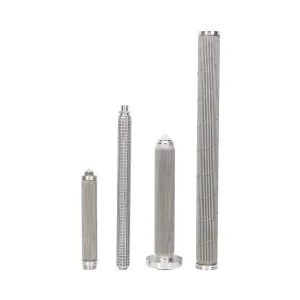
Resin filter cartridges—specifically those utilizing sintered stainless steel fiber felts, multi-layered wire mesh weaves, and robust candle or leaf disc geometries—act as the ultimate quality defense line in melt processing. Operating under working temperatures reaching up to 350°C and differential pressures ($\Delta P$) exceeding 250 to 300 bar, these specialized filtration media prevent microscopic gel structures, degraded carbonaceous particles, cross-linked polymer aggregates, and inorganic contaminants from compromising downstream product integrity.
Conventional depth filters often fail when handling high-viscosity resins due to gel extrusion—a phenomenon where flexible polymer gels deform and pass through rigid pore structures under high pressure gradient conditions. Premium resin filter cartridge manufacturers solve this through multi-tiered gradient density sintering. By establishing a continuous pore distribution gradient from coarse pre-filtration layers to ultra-fine retention cores, shear-induced gel deformation is suppressed, providing consistent absolute micron retention rates across long production runs.
The global market for industrial resin filtration equipment is experiencing a major structural shift. Traditionally dominated by legacy Western European and North American OEMs with high markups, global chemical fibers, plastic film manufacturers (BOPP, BOPET, BOPA), and resin recyclers are increasingly shifting toward top-tier Chinese manufacturing centers. This shift is driven by strict requirements for capital investment optimization and shorter component lead times.
As global demand grows for high-clarity optical films, medical-grade nonwovens, and post-consumer recycled (PCR) resin purification, filter element manufacturers must guarantee zero compromise in metallurgical quality. Modern Chinese factories have closed the quality gap by adopting imported automated vacuum sintering furnaces, high-precision laser-welding robotics, and advanced bubble-point pore measurement systems.
1. Circular Economy & PCR Processing: The integration of recycled plastics (PET bottle flakes, post-industrial polyolefin film scrap) increases contamination variance. Resin filter cartridges must manage heavier particulate loads without rapid pressure spiking.
2. High-Speed Extrusion Line Speeds: Modern film extrusion lines operate at speeds over 500 meters per minute. Flow interruptions or micro-voids caused by particle pass-through result in costly web breaks, making structural element integrity critical.
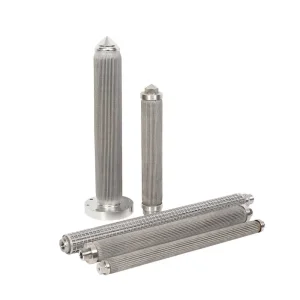
3. Extended On-Stream Service Life: Minimizing line shutdown frequency during screen/candle replacement directly maximizes production yield. Modern candle elements feature pleated geometries that expand effective filtration area by 200% to 400% compared to smooth cylindrical designs.
Deconstructing the Internal Metallurgy of High-Performance Filter Cartridges
| Media Material Type | Structural Construction | Porosity Range | Temperature Limit | Primary Industrial Application |
|---|---|---|---|---|
| SUS 316L Sintered Metal Fiber Felt | Non-woven 3D random fiber matrix vacuum-sintered at high temperature | 75% - 85% | Up to 480°C | High-viscosity polymer melt (PET, PA, PP), BOPET optical film, CPF systems |
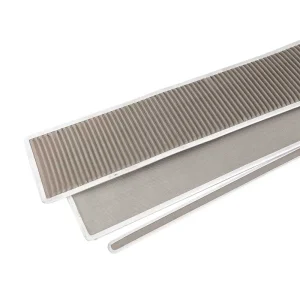
| SUS 304 Multi-Layer Mesh | Woven stainless steel wire mesh layers diffusion-bonded via sintering | 40% - 60% | Up to 400°C | Extruder screen packs, general resin granulation, masterbatch compounding |
| Hastelloy C-276 / Inconel 600 | High-nickel alloy sintered fiber or perforated sheet core | 65% - 75% | Up to 600°C | Highly corrosive resin processing, fluoropolymer (PVDF/PTFE) melt filtration |
| Pleated Sintered Wire Mesh | Corrugated Dutch-weave wire mesh supported by inner perforated core | 50% - 70% | Up to 450°C | Spunbond nonwovens, low viscosity resin filtration, high flow hydraulic lines |
While AISI 304 stainless steel offers cost benefits for standard non-corrosive polyolefin extrusion, AISI 316L remains the industry standard for high-molecular resin processing. The addition of 2-3% Molybdenum in 316L provides superior resistance to pitting corrosion and chemical degradation caused by polymer additives, organic acid traces, and high-temperature oxidation.
Vacuum diffusion bonding under extreme thermal profiles creates metallic bonds at every wire-to-wire or fiber-to-fiber intersection point. This process eliminates media migration risk—ensuring that no wire fragments detach under high pressure fluctuations to contaminate the final resin melt stream.
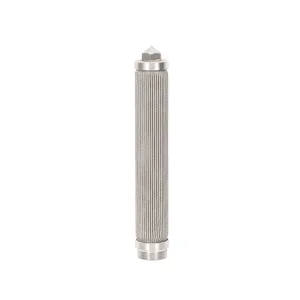
Smooth cylindrical elements offer ease of cleaning and low initial cost, but pleated candle cartridges provide 3x to 5x higher filtration surface area within the same outer vessel envelope. This significantly reduces flux rate ($m^3 / m^2 \cdot hr$), lowers differential pressure growth, and extends operational run time.
Why leading international OEMs and resin processing facilities partner with premier Chinese filtration manufacturers like Pujiang HG Plastic Machinery Co., Ltd.
From stainless steel wire drawing and precision weave loom operation to high-vacuum sintering, CNC machining of end caps, and robotic plasma welding—top Chinese factories control the complete manufacturing pipeline internally. This integration drastically reduces production lead times from months to weeks.
No two polymer extrusion lines have identical flow dynamics. Chinese manufacturers excel at low-volume OEM/ODM customization, engineering bespoke end-cap thread fittings (M42, NPT, bayonet, snap-in), custom length dimensions, and specific multi-layer pore structures mapped precisely to client drawings.
Leveraging concentrated industrial clusters in Zhejiang and robust raw material access, Chinese suppliers deliver filter elements matching or exceeding ISO 16889 filtration specifications at a total cost of ownership (TCO) 40% to 60% below European alternatives.
Leading manufacturers enforce strict quality control, including ISO 9001 certification, 100% first-bubble-point pore size testing (ISO 4003), hydraulic collapse pressure testing (ISO 2941), and non-destructive ultrasonic cleaning validation prior to export packaging.
Operating Environment: Continuous high-output extrusion of Polypropylene and Polyethylene Terephthalate optical films at temperatures up to 290°C and melt pressures exceeding 200 bar.
Filtration Challenge: Particles larger than 5–10 microns cause pinholes, tear propagation, and optical haziness in thin-gauge films (down to 12 microns thick).
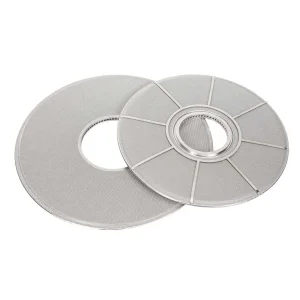
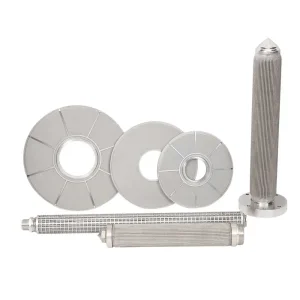
Optimal Filter Solution: Large-surface-area Leaf Disc Filters (Win Series) and continuous CPF (Continuous Polymer Filter) systems equipped with SUS 316L sintered metal fiber felt media rated at 5μm to 10μm absolute.
Operating Environment: PP polymer melt feeding multi-thousand hole spinneret plates for hygiene, medical, and technical textiles.
Filtration Challenge: Micro-gel clusters block spinning orifice holes (100–300μm diameter), causing filament breakage, spinning drops, and unplanned downtime.
Optimal Filter Solution: High-surface-area pleated Polymer Candle Filter Cartridges featuring high-porosity sintered wire mesh outer sleeves, providing stable differential pressure for continuous spinning runs of 30 to 60 days.
Operating Environment: Recycling bottle flakes and post-industrial film scrap into uniform high-purity resin granules.
Filtration Challenge: Variable contamination levels including paper fibers, foreign polymers, aluminum traces, and degraded rubber particles.
Optimal Filter Solution: Heavy-duty multi-layer Polymer Extruder Screen Mesh Filters and dynamic continuous screen changers capable of handling high dirt-holding capacity without structural mesh collapse.
Operating Environment: High-viscosity resin melt processing for industrial tire cord, micro-denier yarns, and carpet fibers.
Filtration Challenge: Extreme shear stress and thermal degradation risk if resin dwell time distribution is uneven inside the filter vessel.
Optimal Filter Solution: Precision-machined SUS 304/316L Melt Filter Elements with optimized internal flow distribution cores that prevent dead zones and polymer stagnation.
Advanced manufacturers are leveraging computational fluid dynamics (CFD) and AI modeling to simulate non-Newtonian polymer melt trajectories through porous metal media. This enables precise optimization of fiber diameter gradients, resulting in filter elements with 25% lower initial pressure drop and significantly higher contaminant retention capacity.
To support sustainability, modern metallic filter cartridges are designed for repeated reusability. Through controlled vacuum pyrolysis (TEG cleaning) followed by multi-frequency ultrasonic solvent flushing, spent resin filter cartridges can undergo 10 to 15 refurbishment cycles without loss of structural integrity or filtration performance.
Applying specialized silanized or fluorinated nano-coatings to stainless steel fiber surfaces reduces polymer melt adhesion. This surface modification prevents thermo-oxidative degradation of sensitive resins during long residence times, keeping melt quality consistent over extended production runs.
Key Evaluation Criteria for Sourcing Resin Filter Cartridges from OEM Manufacturers
When evaluating a resin filter cartridge factory or supplier, procurement teams and technical directors should verify the following five critical engineering benchmarks:
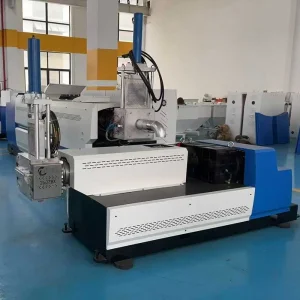
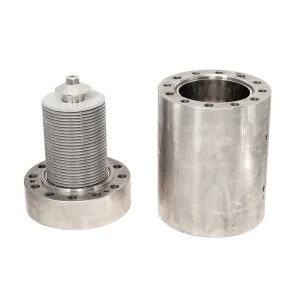
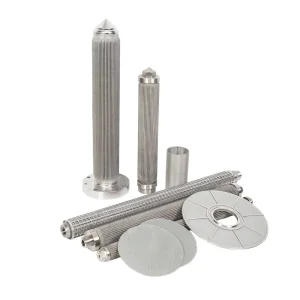
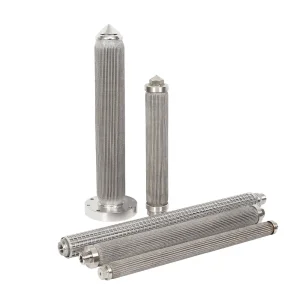
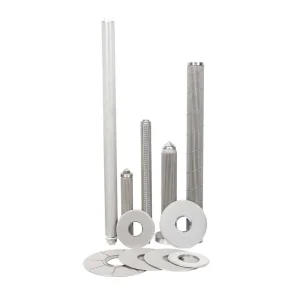
Comprehensive Range of OEM/ODM Stainless Steel Candle Elements, Leaf Discs, and Recycling Machinery
Expert Engineering Guidance on Resin Filter Cartridges and Polymer Melt Filtration