Explore our top-tier stainless steel extruder screen meshes, candle filter elements, and high-purity leaf discs manufactured under strict ISO quality standards.
A Comprehensive Technical Analysis on Metallurgical Selection, Differential Pressure Optimization, and Circular Economy Adaptation.
In the contemporary polymer processing paradigm, polymer extruders operate under unprecedented operational stresses. The global imperative toward circular economy practices—specifically the rapid integration of Post-Consumer Recycled (PCR) and Post-Industrial Recycled (PIR) polymers—has fundamentally altered the rheological landscape of melt filtration. As primary manufacturers of high-performance extruder screens, Pujiang HG Plastic Machinery Co., Ltd. stands at the forefront of this industrial transition, providing critical engineering solutions that protect extrusion hardware, maintain polymer melt homogeneity, and maximize process efficiency.
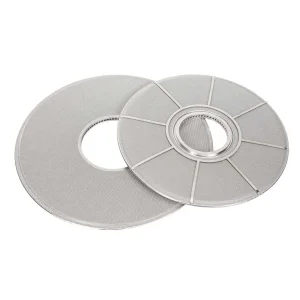
Melt filtration is no longer merely a defensive mechanism to catch tramp metal or un-melted resin pellets. Today, it represents a core quality control node that determines the tensile strength, optical clarity, and thickness uniformity of downstream extruded products, including BOPP/BOPET films, medical-grade nonwovens, and high-density polyolefin pipes. The global market demand is shifting rapidly from primitive single-layer wire meshes toward engineered multi-layer spot-welded rim packs, high-porosity sintered wire mesh laminates, and continuous extended-surface candle filter cartridges capable of withstanding operational pressures exceeding 30 MPa (4,350 PSI) and temperatures up to 350°C.
The efficiency of an extruder screen is defined by its ability to capture cross-linked polymer gels, inorganic contaminants, and degradative carbonaceous specs without inducing severe pressure drops across the breaker plate. When high-viscosity melts such as PET, PP, PC, or PA pass through a restriction, the differential pressure ($\Delta P$) elevates proportionally to melt viscosity and volume flow rate.
Our research and empirical testing validate that optimized multi-layer weave gradients (e.g., coarse backing mesh → intermediate drainage layer → fine filtration weave → protective outer mesh) establish a depth-filtration effect. This dynamic gradient prevents rapid face-blindment, distributing particulate capture across three dimensions rather than a two-dimensional surface plane. Consequently, operational campaign life is extended by up to 300% compared to conventional screen pack configurations.
Engineering breakdown of austenitic stainless steels, nickel alloys, and precise wire weave geometries engineered for severe industrial conditions.
SUS 304: Standard industry grade offering optimal balance of tensile strength and cost efficiency. Suitable for non-corrosive commodity resins (PE, PP, PS).
SUS 316 / 316L: Formulated with 2-3% Molybdenum to resist pitting corrosion caused by halide flame retardants, acidic additives, and PVC degradation compounds. 316L provides superior intergranular corrosion resistance post-welding.
Engineered for extreme thermal degradation environments and highly reactive fluoropolymers (PVDF, PTFE, FEP). Hastelloy C-276 provides near-total immunity to wet chlorine gas, hypochlorite, and chlorine dioxide corrosive attack under extreme thermal stress up to 400°C.
Diffusion bonding via high-temperature vacuum sintering fuses wire intersection points without solder or binder resin. Sintered metal fiber felts utilize random 3D micro-fiber structures yielding up to 85% void volume, resulting in exceptionally low initial pressure drops and superior contaminant retention capacity.
| Filter Element Type | Primary Material Grade | Filtration Micron Rating (μm) | Max Pressure Differential ($\Delta P$) | Primary Industrial Application | Cleanability / Reusability |
|---|---|---|---|---|---|
| Spot-Welded Rim Packs | SUS 304 / SUS 316 | 20 - 250 μm | 15 - 25 MPa | Standard Polyolefin Granulation, Sheet Extrusion | Disposable / Single-Use |
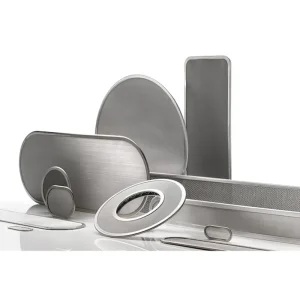
| Sintered Leaf Disc Filters | SUS 316L Stainless Steel | 5 - 100 μm | 25 - 35 MPa | BOPP / BOPET Optical Film, Polycarbonate Extrusion | High (Ultrasonic / Calcination) |
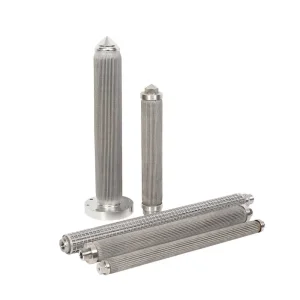
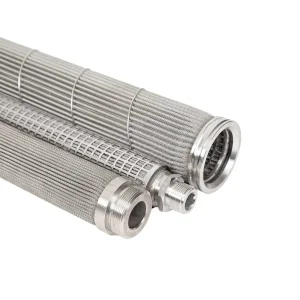
| Pleated Candle Filter Cartridges | 316L Sintered Fiber Felt | 3 - 60 μm | 20 - 30 MPa | Spunbond / Meltblown Nonwoven Lines, PET Spinning | High (TEG Cleaning / Hydro-jet) |
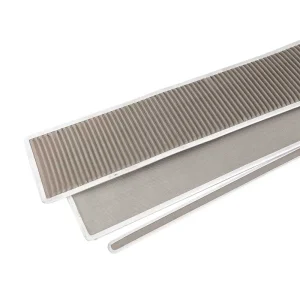
| Auto-Belt Screen Mesh Rolls | High-Tensile SUS 304 Wire | 40 - 200 μm | 18 - 28 MPa | Continuous Screen Changers (PCR Plastic Recycling) | Continuous Auto-Advance |
| Framed Cylinder Screens | SUS 304 / 316 + Aluminum Frame | 50 - 500 μm | 10 - 20 MPa | Blow Molding, Pipe Extrusion, Masterbatch Production | Moderate (Solvent Wash) |
Strategic supply chain alignment, total cost of ownership (TCO) minimization, and customized engineering integration for worldwide polymer processors.
Procurement directors in major resin manufacturing hubs (Europe, North America, Southeast Asia) frequently evaluate screen cost versus downtime loss. Unplanned line stoppages caused by screen blowouts or rapid clogging can cost processors up to $15,000 USD per hour. HG Polymer Filter integrates reinforced support layers and precision wire tensioning to eliminate screen displacement and rupture, maximizing continuous operational hours.
Post-Consumer Recycled plastics contain heterogeneous impurities such as paper fibers, cross-linked elastomers, micro-aluminum foil, and high-viscosity degraded gels. Our heavy-duty continuous ribbon belt screens and reinforced multi-layer spot welded packs are specifically designed for continuous screen changers (e.g., EREMA, KAHLE, Nordson), enabling seamless filtration of recycled PP, PE, and PET without flow interruption.
With over two decades of dedicated manufacturing expertise in Pujiang, China, our engineering team works directly from client CAD schematics to produce custom screen diameters (from 10mm micro-discs to 1200mm continuous filter belts), specialized rim alloys (Aluminum, Copper, Stainless Steel), and multi-stage micron ratings tailored to proprietary extrusion die configurations.
Ensuring seamless regulatory alignment for food packaging, medical grade nonwovens, and industrial plastic manufacturing across global jurisdictions.
All stainless steel wires (SUS 304/316L) used in our food packaging filter screen lines undergo ultrasonic degreasing and solvent wash treatment, certifying zero chemical oil residue in compliance with US FDA regulations and EU 10/2011 plastic material contact directives.
Our Pujiang manufacturing facility utilizes automated laser mesh counting systems, optical digital calipers, and Bubble Point Testing apparatus to verify pore size distribution integrity (ISO 4003) and absolute filtration ratings prior to global dispatch.
Our raw material supply chain guarantees total absence of Substances of Very High Concern (SVHC) and heavy metals (Lead, Cadmium, Hexavalent Chromium). Full material traceability certificates (EN 10204 3.1) are supplied with every export container.
Strategic product development milestones driving efficiency, AI-integrated continuous filtration, and nano-coated wire surfaces.
Implementation of specialized ceramic and PVD (Physical Vapor Deposition) nano-coatings on stainless steel wires. This technology drastically reduces melt adhesion, preventing localized thermal carbonization of sticky resins (EVA, TPU, PVB) and reducing cleaning downtime by 45%.
Development of next-generation intelligent filter packs integrated with micro-pressure differential transponders. Providing real-time telemetry on screen loading, localized face-blindment, and predicting exact screen changer index timing via AI predictive maintenance algorithms.
Pioneering 3D asymmetric sintered metal fiber structures optimized for severe contamination loads in closed-loop circular economy recycling systems. Engineered to operate under extreme continuous back-flushing pressures up to 40 MPa.
Expert answers to common engineering, procurement, and process design inquiries encountered by extrusion line operators and OEMs.
The ideal screen pack structure depends on resin viscosity, contamination level, and target product purity. A standard high-performance 5-layer sequence consists of: Coarse Support (e.g., 20 mesh) → Intermediate Drainage (60 mesh) → Fine Filtration Mesh (e.g., 150-250 mesh) → Intermediate Drainage (60 mesh) → Coarse Support (20 mesh). The outer coarse layers provide structural rigidity against high melt pressure, preventing the fine inner mesh from stretching or tearing over breaker plate holes.
Multi-layer spot-welded packs consist of individual woven wire meshes spot-welded together at the perimeter using aluminum or stainless rims. They are cost-effective and ideal for standard extrusion lines. Sintered wire mesh, conversely, is diffusion-bonded under heat and pressure into a solid, unified structure. Sintered mesh cannot delaminate or shift under ultra-high pressure ($\Delta P > 25\text{ MPa}$), offering precise pore size retention and high reusability via calcination or ultrasonic cleaning.
SUS 316L contains low carbon content ($\le 0.03\%$) and added Molybdenum, providing superior resistance to thermal degradation, organic acids, and corrosive catalysts present in PET polycondensation and melt spinning. Furthermore, 316L maintains exceptional mechanical strength and oxidation resistance at sustained operational temperatures of 280°C–320°C.
A properly engineered screen pack establishes uniform back-pressure behind the extruder screw, enhancing melt shear, color pigment dispersion, and temperature homogenization. Excessive pressure drops caused by incorrectly sized mesh fine layers can induce melt fracture, polymer thermal degradation, and screw surge, leading to gauge variations in extruded sheet or blown film.
High-value stainless steel candle filter cartridges and leaf discs are cleaned using a multi-stage protocol: 1. Triethylene Glycol (TEG) liquid bath hydrolysis at 280°C to dissolve residual polymer; 2. Vacuum calcination furnace processing to carbonize embedded micro-gels; 3. High-pressure ultrasonic water jetting; 4. Bubble point pressure testing to verify pore restoration efficiency.
Yes. Pujiang HG Plastic Machinery Co., Ltd. specializes in custom OEM/ODM manufacturing. We supply oval, kidney-shaped, rectangular, cylindrical, and custom perimeter-rimmed screen packs cut with high-precision CNC laser systems to meet exact customer breaker plate drawings with tolerances within $\pm 0.1\text{ mm}$.
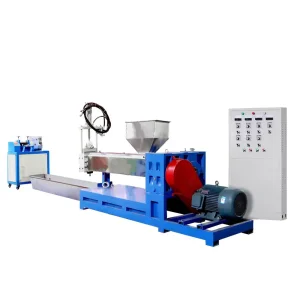
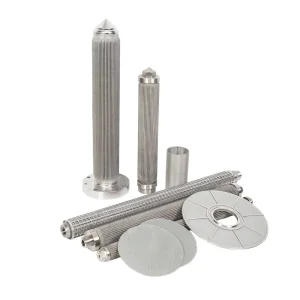
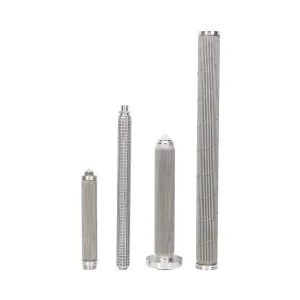
Select from our specialized line of CPF candle filters, stainless steel wire mesh belts, and plastic recycling pelletizing systems.
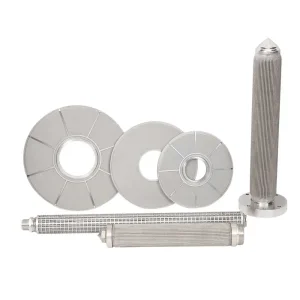
Partner directly with Pujiang HG Plastic Machinery Co., Ltd. for factory-direct wholesale pricing, OEM custom filtration designs, and rapid international shipping.