Direct factory supply of high-precision polymer candle filters, leaf discs, and extruder wire mesh filters engineered for maximum operational uptime.
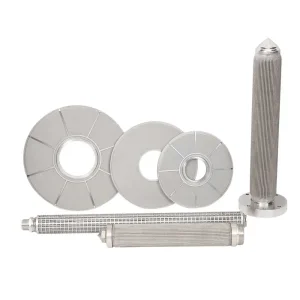
A comprehensive engineering review of sintered metal media, differential pressure dynamics, and advanced filtration medium selection in modern polymer processing.
In modern industrial extrusion, chemical fiber spinning, and biaxially oriented film production (BOPP, BOPET, BOPA), polymer melt quality dictates final tensile strength, optical transparency, and break rate. As processing lines accelerate to speeds exceeding 500 m/min, the operational demand on polymer candle filter elements and leaf discs escalates exponentially.
Industrial processors are transitioning away from conventional single-layer wire screens toward multi-layer sintered metal fiber fleets and pleated stainless steel mesh filter cartridges. Key drivers include total cost of ownership (TCO) optimization, extended continuous operational cycles, and zero-defect quality requirements in technical nonwovens and optical-grade plastic sheets.
The core objective of a premium melt filter element is capturing degraded gel particles, inorganic catalysts, and carbonized specks without inducing excessive shear degradation or pressure drops. High differential pressure ($\Delta P$) accelerates polymer degradation, decreases throughput, and compromises downstream die integrity.
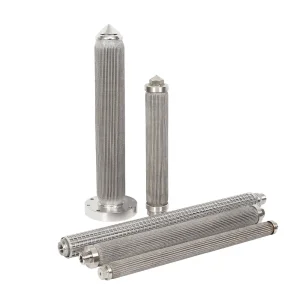
By employing gradient-density 316L sintered stainless steel fiber media, current candle filters provide a 3D tortuous flow path. This structure increases dirt-holding capacity by up to 300% compared to plain wire mesh, while maintaining structural integrity under crushing pressure differentials exceeding 210 bar (3,000 PSI).
| Filtration Medium Type | Pore Size Spectrum ($\mu m$) | Dirt Holding Capacity | Pressure Resistance ($\Delta P$) | Thermal Limits (°C) | Primary Industrial Use Case |
|---|---|---|---|---|---|
| 316L Sintered Metal Fiber Felt | 3 - 60 $\mu m$ | Exceptionally High (3D Gradient) | Up to 250 Bar | 600°C | PET/PA Fiber Spinning, BOPP Film, Spunbond Nonwoven |
| Multi-Layer Sintered Wire Mesh | 5 - 150 $\mu m$ | Moderate to High | Up to 200 Bar | 480°C | Polymer Leaf Discs, High-Viscosity Melt Extrusion |
| Plain/Twill Woven SS Wire Mesh | 20 - 500 $\mu m$ | Standard (Surface Filtration) | Up to 100 Bar | 400°C | Extruder Screen Mesh Packs, Recycled Plastic Pelletizing |
| Metal Powder Sintered Porous Media | 0.5 - 20 $\mu m$ | High (Rigid Structure) | Up to 300 Bar | 650°C | Petrochemical Catalyst Recovery & Gas Purification |
Understanding the critical decision factors for technical buyers, plant managers, and OEM machinery manufacturers when selecting a long-term filter element supplier.
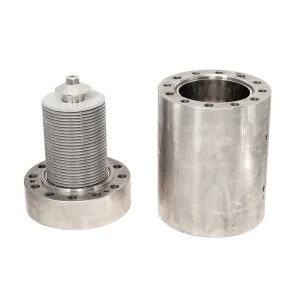
Global procurement teams prioritize exact tolerance compliance ($\pm 0.1 \text{ mm}$) to ensure seamless replacement in OEM filter housings such as Kreyenborg, Maag, Nordson, and Gneuss. Mismatched threads or flange seating cause melt leakage, expensive downtime, and safety hazards.
Uncertified stainless steel leads to premature corrosion, weld joint failure under thermal shock, and polymer contamination. Senior technical auditors require certified AISI 304 / 316L grades backed by raw material heat certificates and X-ray fluorescence (XRF) testing.
Industrial sustainability initiatives demand filter elements that withstand multiple cleaning cycles (pyrolysis furnace, calcination, solvent wash, ultrasonic bath) without pore structural collapse, maximizing overall service life.
From high-viscosity virgin polymers to heavily contaminated post-consumer plastic recycling, explore specialized technical approaches.
For high-throughput masterbatch production and plastic extrusion lines, continuous wire mesh screen belts provide uninterrupted melt flow. Manufactured using high-tensile 304/316 stainless steel reverse Dutch weave wire cloth, preventing melt leakage during screen changes.
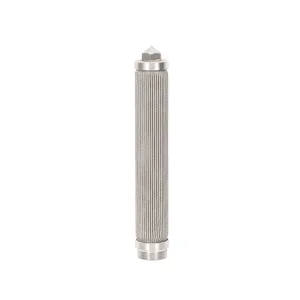
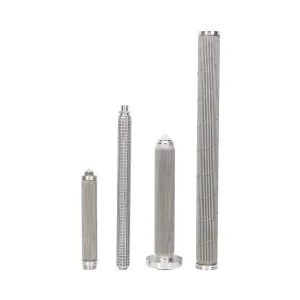
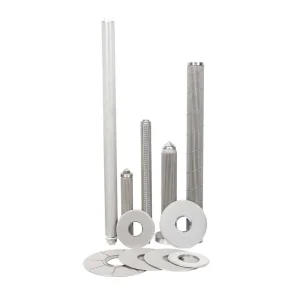
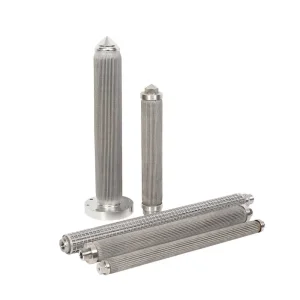
Spunbond, Meltblown, and Filament Yarn (POY/FDY) production lines demand pristine polymer melt. Our candle filter cartridges feature deeply pleated sintered fiber media, expanding effective filtration area by up to 400% within compact cylindrical dimensions.
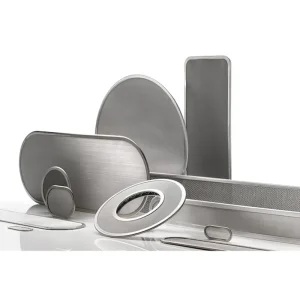
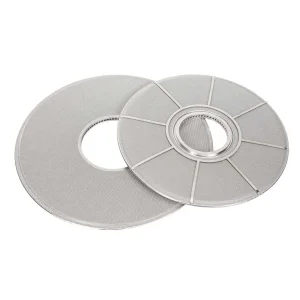
Engineered specifically for ultra-thin film casting, our leaf disc filters feature smooth outer hard rims, precise spot welding, and high-porosity inner support meshes. Provides ultra-clean melt free from pinholes and optical defects.
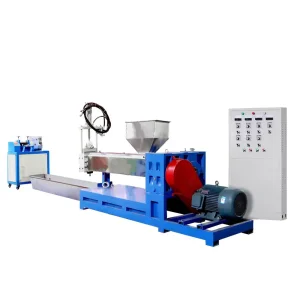
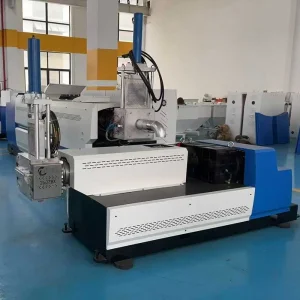
Post-consumer waste (PCR) and agricultural film recycling involve severe particulate loads, metal specks, and paper fibers. Our specialized plastic recycling machine filter screens and robust perforated support elements endure high contaminant torque and abrasiveness.
Handling corrosive fluids, monomers, and high-temperature organic solvents requires all-welded stainless steel, Hastelloy, or Inconel filter elements. Custom engineered for extreme chemical compatibility and pressure fatigue resistance.
We provide full-service OEM/ODM manufacturing based on customer blueprints, reverse engineering of worn components, or tailored design for next-generation polymer machinery prototypes.
Adhering to strict international quality standards, E-E-A-T principles, and verifiable testing protocols for every batch shipped worldwide.
Every manufacturing step—from wire drawing, weaving, and vacuum sintering to end-cap welding—is audited under ISO 9001 quality management systems.
Non-destructive pore diameter verification ensures zero pinholes or oversized openings, guaranteeing absolute micron rating reliability.
Structural integrity testing under max flow and differential pressure ensures structural weld seams will not rupture during peak operational spikes.
All metallic alloys and cleaning solvents comply with European REACH and RoHS standards, guaranteeing heavy-metal-free operation for food packaging applications.
Exploring upcoming innovations in smart filtration monitoring, nano-structured porous media, and eco-friendly thermal regeneration.
Development of smart filter housings embedded with wireless micro-transducers that real-time log differential pressure and flow velocity, enabling predictive maintenance prior to gel breakthrough.
Incorporating sub-micron metal fibers into traditional 316L felt backings to achieve 1$\mu m$ absolute efficiency without sacrificing dirt-holding capacity or mechanical strength.
Advance high-frequency ultrasonic fluidization combined with vacuum pyrolysis furnaces, reducing chemical solvent usage by 95% while restoring 99.2% of original permeability.
In-depth engineering responses addressing common procurement, maintenance, and specification challenges.
Explore the remaining high-performance product lineup including specialized high-viscosity candle elements, screen mesh packs, and recycling machinery.