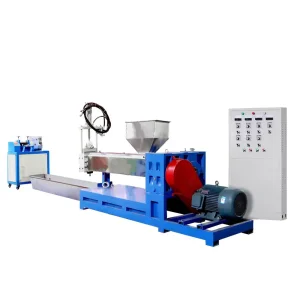
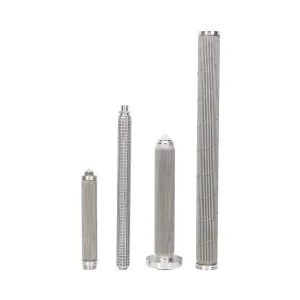
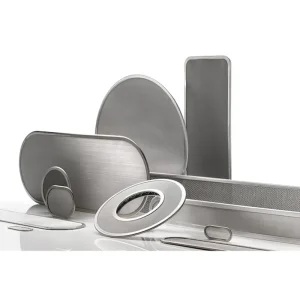
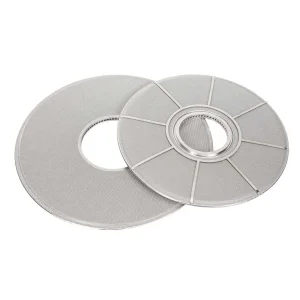
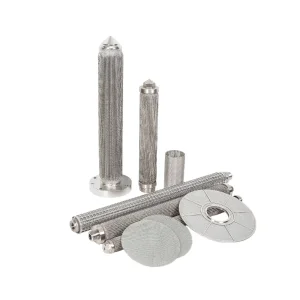
Explore our precision-engineered polymer melt filters, extruder screen mesh assemblies, and industrial plastic pelletizing machinery designed for maximum throughput and minimum melt differential pressure.
The global plastic recycling market is undergoing a seismic paradigm shift. Driven by stringent international environmental frameworks—such as the European Union’s Packaging and Packaging Waste Regulation (PPWR), national ESG imperatives, and global corporate commitments to Net-Zero carbon emissions—plastic film recycling has evolved from a low-margin secondary processing sector into an advanced engineering discipline.
Flexible plastic films, primarily composed of Low-Density Polyethylene (LDPE), Linear Low-Density Polyethylene (LLDPE), Polypropylene (PP), Cast Polypropylene (CPP), and Biaxially Oriented Polyethylene Terephthalate (BOPET), constitute over 40% of global plastic packaging waste. Unlike rigid plastics, post-consumer and post-industrial plastic films present complex processing hurdles due to their low bulk density, high surface-to-volume ratio, residual moisture content, thermal sensitivity, and frequent contamination by paper labels, organic matter, inks, and cross-polymers.
Leading Plastic Film Recycling Machine Factories & Companies are shifting away from standalone machinery toward fully integrated macro-solutions. These systems combine automated pre-sorting, intensive friction washing, continuous mechanical dewatering, twin-screw degassing extrusion, non-stop backflushing melt filtration, and underwater or water-ring pelletizing.
Procurement directors and plant operations managers at Tier-1 recycling facilities face stringent operational requirements when evaluating machinery suppliers and melt filtration partners. Evaluating Total Cost of Ownership (TCO) requires looking far beyond the initial equipment investment.
Fluctuations in differential pressure (ΔP) across screen changers cause polymer degradation and inconsistent pellet geometry. Leading systems maintain delta-P variation under 5 bar during automated screen changeover sequences.
Extrusion melt temperatures for PET/PA can exceed 280°C with operating pressures up to 250 bar. Stainless steel filter elements (SUS 304/316L) prevent wire migration and element collapse under high viscosity shear stress.
State-of-the-art pelletizing plants target an energy consumption benchmark of 0.28–0.35 kWh/kg. Optimized barrel heating, energy-efficient drives, and low-friction filtration geometries directly reduce utility costs.
| Evaluation Parameter | Legacy Mechanical Recycling Line | Advanced HG Integrated Recycling System | Impact on Enterprise ROI |
|---|---|---|---|
| Melt Filtration Media | Single-layer mesh / Manual plate screen | Multi-layer Sintered SUS 316L Candle / Leaf Disc | Reduces line stoppage by 85%; filters to 5μm |
| Degassing Efficiency | Single atmospheric vent | Dual-zone high-vacuum continuous degassing | Eliminates pinholes, moisture voids, and odor in PCR pellets |
| Pelletizing Consistency | Strand pelletizing (frequent breakage) | Automated Water-Ring / Underwater Pelletizing | Produces uniform spherical granules suitable for high-speed blown film |
| Filter Reusability | Single-use disposable screens | Ultrasonic cleanable candle filter cartridges | Lowers long-term consumable expenditure by up to 60% |
Achieving high-purity recycled granules requires a seamless synergy between heavy-duty mechanical shredding/washing and fine polymer melt purification. Below is the blueprint of an enterprise-grade plastic film recycling solution:
Post-consumer films (agricultural film, stretch wrap, shopping bags) undergo multi-stage wet shredding to release trapped dirt and grit. High-speed friction washers operating at 1,200 RPM strip adhesives and printing inks, while sink-float separation tanks isolate PE/PP polymers from heavier contamination. Mechanical squeezer compactors lower surface moisture content to below 3% prior to extrusion.
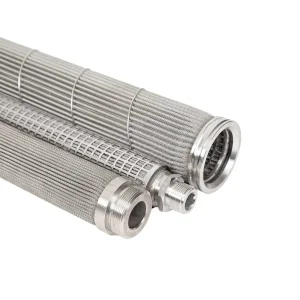
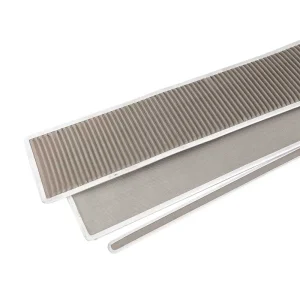
Compacted film flakes enter single or twin-screw extruders where controlled shear heating converts the polymer into a homogeneous melt stream. The melt is driven through high-capacity filter units housing SUS 304/316L candle filter elements or leaf disc filters. Micro-contaminants, un-melted gels, and degraded polymer particles down to 25–50 microns are trapped, preventing nozzle clogging during final conversion.
Operating across international borders demands complete compliance with industrial manufacturing standards, safety norms, and localized technical support networks. High-quality machinery suppliers must back hardware with robust service frameworks.
All pressure vessels, extruder barrels, and polymer filter housings are manufactured under ISO 9001 certified quality control management. Machinery complies with European CE directives (2006/42/EC Safety of Machinery and Pressure Equipment Directive 2014/68/EU).
Every filter element—whether candle cartridges, leaf discs, or screen mesh packs—is supplied with material test certificates (MTC compliant with EN 10204 3.1), verifying exact chemical composition of Stainless Steel 304, 316, or 316L.
Recognizing that downtime costs thousands of dollars per hour, global factories benefit from rapid-dispatch spare parts logistics, standard OEM component sizes, remote PLC telemetry diagnostics, and localized field service assistance.
As the polymer recycling industry accelerates toward Industry 4.0, plastic film recycling equipment is evolving rapidly to incorporate smart monitoring, zero-waste backflushing, and advanced metallurgical coatings.
Next-generation recycling lines integrate real-time viscosity and pressure sensors paired with machine learning algorithms. By dynamically adjusting extruder screw RPM, barrel temperature zones, and automatic backflush cycles, the line automatically compensates for variable contamination levels in raw PCR film feedstock.
Traditional wire mesh is giving way to three-dimensional sintered stainless steel fiber felts. Sintered fiber media offers up to 80% porosity compared to 30–40% for conventional woven mesh, providing dramatically higher dirt-holding capacity, lower initial differential pressure, and extended intervals between cleaning cycles.
Addressing crucial operational, metallurgical, and mechanical questions for engineering leads and procurement decision-makers.
Explore our complete range of specialized filtration cartridges, pelletizing machine units, and OEM stainless steel mesh solutions engineered for heavy-duty industrial applications.