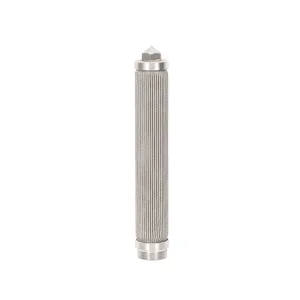
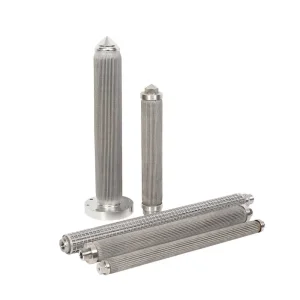
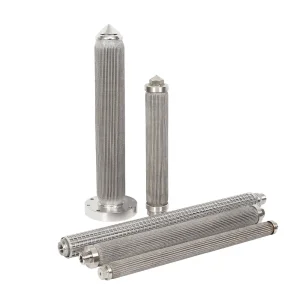
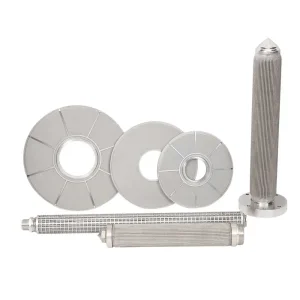
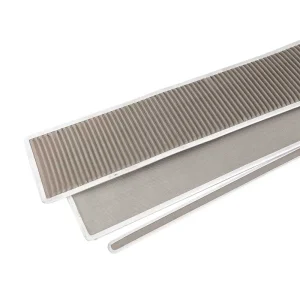
Explore our precision-engineered SUS304/316L candle elements, screen mesh assemblies, and high-efficiency extrusion filters designed for demanding thermal and hydraulic environments.
In modern polymer processing—ranging from ultra-thin BOPET film casting to high-denier spunbond nonwoven manufacturing—the demand for thermal stability and absolute particle separation has reached unprecedented levels. As a premier polymer filter media factory, Pujiang HG Plastic Machinery Co., Ltd. addresses the critical physical challenges associated with non-Newtonian melt rheology under high hydraulic pressures (up to 350 bar) and elevated temperatures exceeding 330°C.
Polymer melt filtration is fundamentally a pressure-driven depth and surface separation mechanism. When raw thermoplastic resins (PET, PP, PA66, PE, PC) undergo thermal plastification in extruders, foreign debris, degraded black specs, un-melted gels, and inorganic catalyst residues threaten to clog spinnerets or tear thin films. Incorporating engineered micro-porous SUS316L sintered metal felt and multi-layer wire mesh filters mitigates line interruptions and ensures seamless continuous production.
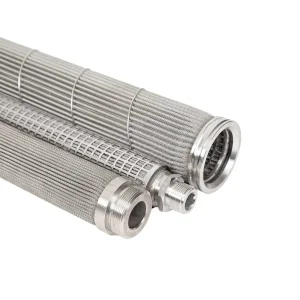
Extending stream-time requires optimized flow channels. High differential pressure can distort standard filter mesh, leading to gel breakdown or bypass. Our continuous-flow candle filters utilize reinforced internal perforated cores (SUS 304/316) that withstand extreme structural stress without collapsing, maintaining uniform velocity profiles across all filter elements.
Polymeric gels exhibit pseudo-plastic behavior; under high shear stress, they can deform and force their way through standard surface wire screens. By utilizing non-woven metal fiber sintered felt, our media creates a complex 3D tortuous pathway. Gels are captured within the depth matrix, preventing film breakages in optical-grade plastic manufacturing.
The international polymer industry is undergoing a structural transition toward environmental sustainability and circular resource utilization. The rapid scaling of Post-Consumer Recycled (PCR) and Post-Industrial Recycled (PIR) resin processing has introduced significant variability into raw melt stock. Recycled polymers carry high concentrations of paper residues, cross-linked elastomers, aluminum foils, and mixed contaminants that rapidly blind traditional screen pack exchangers.
To maintain operating margins, global plastic convertors require robust filtration media capable of handling elevated dirt loads while preserving long service lifecycles. Our engineering facilities in Zhejiang, China specialize in developing heavy-duty, cleanable, and reusable candle filter cartridges and leaf disc filters. By shifting from single-use wire meshes to ultra-durable stainless steel sintered filtration elements, global manufacturing plants achieve up to a 40% reduction in consumable filtration overhead.
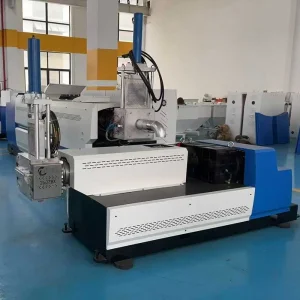
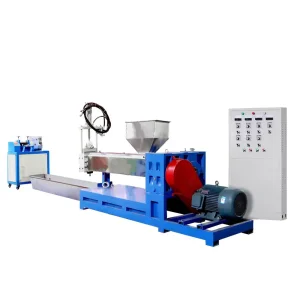
Recycling lines for rPET bottle flakes, rHDPE milk jugs, and rPP woven bags experience frequent pressure spikes. Our heavy-duty continuous pelletizing filtration units integrate multi-stage coarse-to-fine screen layouts, protecting granulators and guaranteeing pristine pellet output matching virgin polymer standards.
A clogged filter element increases backpressure on the extruder screw, driving up motor amperage draw and thermal energy consumption. By optimizing open-area ratios in our sintered wire mesh and leaf discs, dynamic resistance is minimized—saving thousands of kilowatt-hours annually per extrusion line.
The reliability of polymer melt filter media depends on advanced metallurgical selection and thermal processing techniques. Pujiang HG Plastic Machinery Co., Ltd. employs high-grade austenitic stainless steels (SUS 304, SUS 316, and SUS 316L) as well as nickel-based alloys for specialized corrosive polymers such as PVC or fluoropolymers.
Manufactured by vacuum-sintering non-woven micro-denier stainless steel fibers into a uniform porous depth medium. Provides an extraordinarily high void volume (up to 85%), delivering exceptionally low initial pressure drop, high dirt-holding capacity, and extended stream life compared to plain woven wire cloths.
Combining precise square woven mesh layers with protective and reinforcing support meshes, fused under diffusion-bonding heat and pressure. Creates a dimensionally stable filter media with precise pore geometry that resists high differential pressure spikes without pore migration or wire displacement.
Pleating a filter element increases its effective filtration surface area by 200% to 400% compared to a plain cylindrical sleeve of identical outer dimensions. This configuration dramatically reduces flux rate (flow per unit area), lowering shear degradation of sensitivity-prone polymers and extending operational cycle length.
Our custom-engineered polymer filter media serve critical functions across diverse industrial processing plants globally:
In PP spunbond and meltblown hygiene lines, micro-denier filament spinning nozzles (0.15mm diameter) are extremely vulnerable to clogging. Our SUS316L pleated candle filters deliver absolute retention down to 10-25 microns, stopping fine degraded gels and ensuring continuous web uniformity without filament breakage.
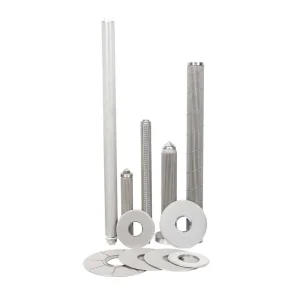
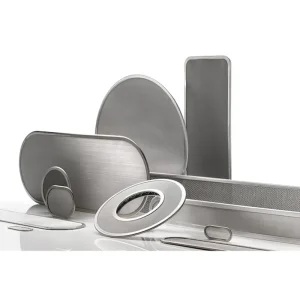
High-speed film stretching requires ultra-clean melt stock to avoid pinhole formation and film tears. Utilizing continuous leaf disc filter assemblies with smooth outer rim designs prevents stagnant melt zones and polymer degradation during long production runs.
Processing highly contaminated post-consumer plastic scrap (PE, PP, ABS, PS) requires robust extruder screen mesh filters and heavy-duty pelletizing systems. Our multi-layer stainless steel screens effectively capture paper pulp, dirt, and rubber particles while sustaining high torque conditions.
Pujiang HG Plastic Machinery Co., Ltd. combines rigorous factory quality management with responsive international customer support. We understand that unplanned downtime in polymer manufacturing facilities costs thousands of dollars per hour. Therefore, our operational methodology prioritizes absolute consistency, traceability, and localized engineering support.
Every batch of candle filters and leaf discs undergoes rigorous quality checks: First-Bubble Point Testing (ISO 4003) to verify absolute pore size ratings, Hydraulic Burst Pressure Validation (ISO 2941) to ensure structural core integrity, and Ultrasonic Degreasing prior to clean-room packaging.
We support global OEM filter housing manufacturers and line builders by offering custom dimensioning, specialized end-fitting hardware (NPT, threaded hex, bayonet, or custom adapter flanges), and private labeling options. Drawings are validated via CAD/FEA simulation prior to mass fabrication.
To maximize product life cycle value, our stainless steel candle filters are fully cleanable. We supply operational guidelines for Triethylene Glycol (TEG) boiling, vacuum pyrolysis, and ultrasonic cavitation protocols—allowing filter elements to be reused up to 10-15 times without performance degradation.
As plastic processing advances toward higher throughputs, intelligent automation, and bio-based polymers (PLA, PHA, PBAT), our R&D division is driving innovations in metal fiber surface treatments and digital monitoring integration:
Applying chemical vapor deposition (CVD) micro-coatings to stainless steel wire mesh to reduce polymer adhesion, lower residence degradation, and extend backwashing intervals.
Engineering progressive-density sintered metal felts that capture coarse contaminants on the outer skin while trapping microscopic gel particles in deeper inner zones.
Developing smart filter housings integrated with real-time melt pressure telemetry to dynamically predict element blinding and automate continuous screen changes.
Get expert answers to common operational, material, and specification queries regarding polymer filter elements and recycling machinery.
While SUS 304 provides excellent structural strength and basic heat resistance for standard non-corrosive polymers (like general PP or PE), SUS 316L contains molybdenum (2-3%), offering vastly superior corrosion resistance against acidic additives, brominated flame retardants, or degrading PET. SUS 316L also features a lower carbon content, preventing intergranular corrosion during high-temperature sintering processes.
Filter element lifecycle is evaluated by monitoring differential pressure across the melt pump/housing (ΔP). When differential pressure increases to a predetermined critical threshold (typically 150–200 bar, depending on housing engineering limits), the filter pack should be switched or removed for TEG/ultrasonic regeneration to prevent structural collapse or gel breakthrough.
Yes. We provide complete OEM/ODM manufacturing services. Clients can supply engineering CAD drawings or physical sample elements. We match exact thread connections, flange styles, outer diameters, micro-porous ratings, and core structural reinforcement requirements.
Sintered metal fiber felt consists of a three-dimensional depth matrix with up to 85% open porosity, whereas woven wire mesh is primarily a 2D surface medium. The 3D structural depth captures soft deformative gels and non-rigid impurities much more effectively, maintaining stable filtration over significantly longer periods without premature pressure spikes.
Browse our complete line of industrial polymer candle cartridges, extruder screens, and plastic pelletizing equipment: