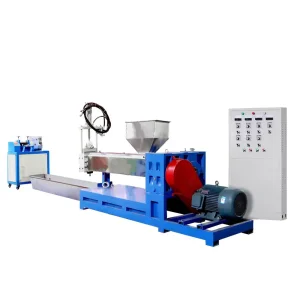
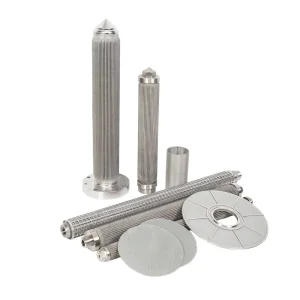
Explore our core engineered solutions for extruder screen changing, high-viscosity melt purification, and plastic recycling.
Executive OEM/ODM Engineering Brief: In modern polymer extrusion, melt filtration is no longer merely a consumable line item—it is a critical control parameter governing shear rate, differential pressure ($\Delta P$), melt homogeneity, and final extrudate purity. Selecting an established Original Design Manufacturer (ODM) specializing in extruded filter media ensures complete alignment between alloy chemistry, weave structure, mechanical housing tolerances, and operational economics.
Macroeconomic drivers, recycling mandates, and high-viscosity processing requirements across international manufacturing hubs.
The global polymer processing sector is experiencing a paradigm shift driven by stringent quality standards for thin-gauge packaging films (BOPP, BOPET), spunbond nonwoven fabrics, high-tenacity chemical fibers, and post-consumer recycled (PCR) resins. As polymer manufacturers increase throughput rates and incorporate higher percentages of reprocessed flakes, contaminant loadings rise exponentially.
Extruder filter media acts as the last line of defense against un-melted gels, degraded polymer specks, inorganic ash, and metallic micro-debris. Without customized ODM filter media optimized for specific rheological properties, extruders experience frequent screen-changer pressure spikes, web breaks, die blockage, and costly unscheduled downtime.
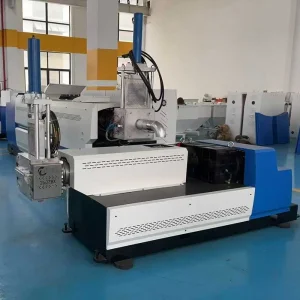
Legislative mandates across North America, the European Union, and Asia-Pacific dictate mandatory minimum recycled content in consumer packaging. Translating Post-Consumer Recycling (PCR) and Post-Industrial Recycling (PIR) polyolefins (PP/PE) into high-value pellets requires robust melt continuous filtration systems (CPF).
ODM filter media tailored for recycling applications feature multi-layer gradient depth filtration, reinforced sintered metal weaves, and high dirt-holding capacity (DHC) to sustain continuous operation under heavy impurity loads without degrading polymer chain structure.
| Polymer Process Sector | Typical Viscosity Range (Pa·s) | Target Contaminants | Recommended ODM Filter Structure | Micron Rating Range |
|---|---|---|---|---|
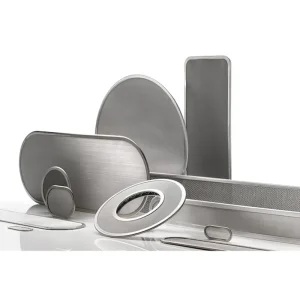
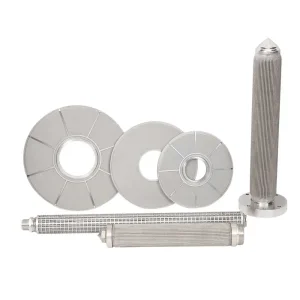
| BOPET / BOPP Film Lines | 150 - 400 | Gels, degraded oligomers, dust | Multi-layer Sintered Stainless Felt Leaf Discs | 5 - 25 μm |
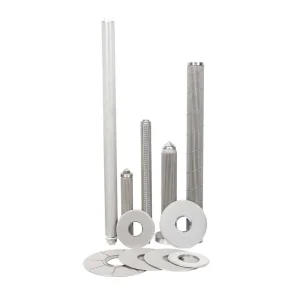
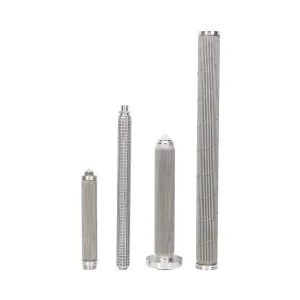
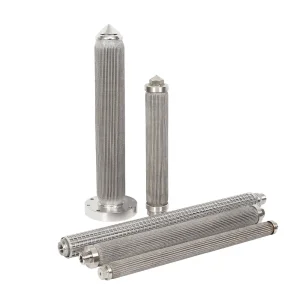
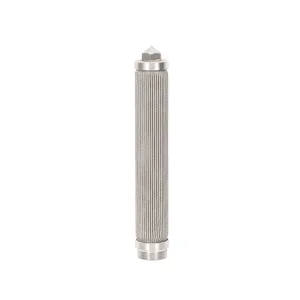
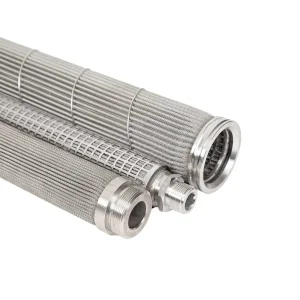
| Spunbond / Meltblown Nonwoven | 80 - 250 | Particulate impurities, crosslinked gel clusters | Pleated SUS 316L Candle Cartridges | 15 - 40 μm |
| PCR / PIR Plastic Pelletizing | 300 - 1,200 | Paper fiber, aluminum fragments, un-melts | Continuous Reverse Dutch Weave Belts / Discs | 50 - 250 μm |
| Chemical Fiber (PET, PA66 Spinning) | 200 - 600 | TiO2 agglomerates, black specks | Sintered Metal Fiber & Mesh Composite Candle Packs | 10 - 30 μm |
Custom design methodologies, alloy chemistry, and physical structural configurations engineered for extreme pressure and temperature environments.
Standard commercial screens fail under continuous thermal stress and chemical oxidation. Precision ODM manufacturing utilizes low-carbon Stainless Steels (AISI 304, 316L), Hastelloy C-276, and Nickel Alloys to resist corrosive polymer additives, flame retardants, and thermal degradation up to 350°C (662°F).
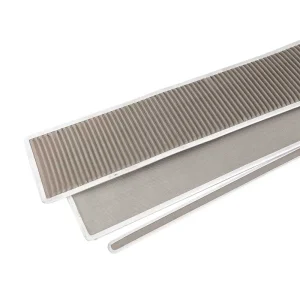
From Plain Weave and Twilled Weave to Plain Dutch and Reverse Plain Dutch (RPDW), weave selection dictates mechanical burst strength and flow velocity. ODM engineering aligns pore geometry with the shear-sensitivity of the target polymer to minimize thermal degradation.
Vacuum high-temperature sintering fuses intersecting wire nodes without alterating pore aperture sizes. Sintered multi-layer mesh laminates and sintered metal fibers eliminate wire migration, enabling backwashing cycles and operational life extension up to 300%.
Filter media performance is dictated by Darcy’s Law for fluid flow through porous media. As shear-thinning polymer melt traverses the media, the pressure drop across the filter pack ($\Delta P$) is proportional to melt viscosity ($\mu$), volume flow rate ($Q$), and thickness ($L$), inversely proportional to permeability ($k$) and filtration area ($A$):
$\Delta P = \frac{\mu \cdot Q \cdot L}{k \cdot A}$
Custom ODM solutions maximize active surface area ($A$) via pleated candle configurations or offset leaf disc geometries, effectively reducing $\Delta P$ while extending dirt-holding longevity.
How precise filter media configurations resolve severe operational bottlenecks across major manufacturing verticals.
In sheet and cast film lines, gel particles cause optical blemishes (fish eyes) and reduce tensile strength. ODM suppliers deliver rimmed screen packs—incorporating spot-welded multi-mesh layers with aluminium or stainless copper rims—that ensure zero side-leakage and uniform distribution of melt across the die.
Melt spinning processes require extremely fine filtration to protect spinnerets with microscopic capillary orifices (often < 0.2mm). Blocked capillaries lead to filament breakage, non-uniform denier, and machine downtime.
Recycling heavily contaminated agricultural film, post-consumer bottles, or ocean waste plastic places immense mechanical stress on filter media. High dirt loads cause rapid clogging in conventional screen packs.
Polymerization reactors and Continuous Polymer Filtration (CPF) systems operate continuously for months. Filter failure causes catastrophic downstream contamination.
Next-generation filtration technologies advancing sustainable polymer manufacturing and smart process control.
Integrating pressure sensor telemetry with machine learning algorithms enables accurate forecasting of filter pack saturation. ODM manufacturers are customizing pore gradient structures based on predictive shear models, reducing premature replacement by up to 25%.
Thermal degradation at high temperatures causes polymer cross-linking and carbon deposits (coking) on metallic surfaces. Advanced nano-coatings and fluorinated surface treatments reduce friction, prevent polymer adhesion, and facilitate cleaner pyrolytic regeneration.
Future filter elements are designed from the onset for circularity. Closed-loop chemical pyrolysis, ultrasonic baths, and TEG (Triethylene Glycol) boiling recovery protocols allow premium 316L candle filters to undergo up to 20 regeneration cycles without structural deformation.
Ensuring global quality standards, localized technical dispatch, and rigorous material traceability.
As a global ODM exporter, filter media production adheres strictly to international industrial protocols. Every batch undergoes rigorous quality assurance to guarantee structural integrity, pore size distribution, and material purity:
Navigating international supply chains requires more than just high-quality products. It demands reliable logistics, localized technical support, and transparent communication:
Addressing core procurement questions, technical selection criteria, and operational optimization.
Explore our full range of high-performance candle cartridges, wire mesh filters, and recycling machinery.
Partner with our experienced engineering team to optimize your polymer melt filtration efficiency, lower operational pressure drops, and extend production cycles.