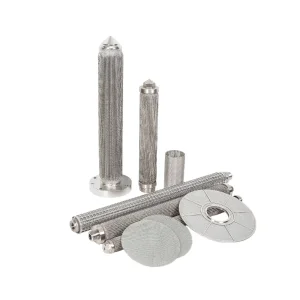
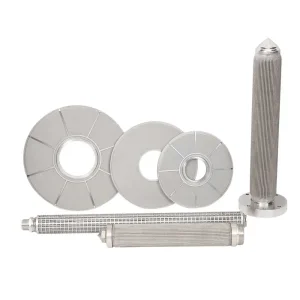
Engineered for continuous polymer melt filtration, minimal differential pressure drop, and extended operational service life under high temperature and extreme mechanical stress.
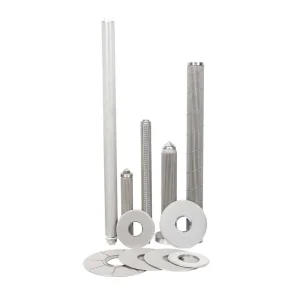
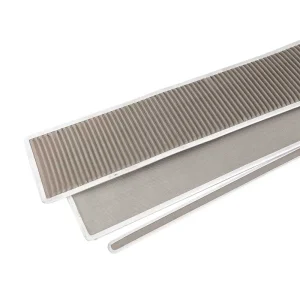
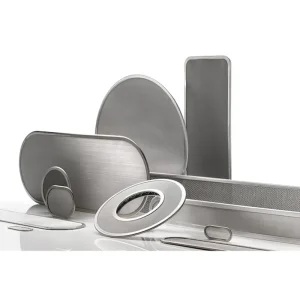
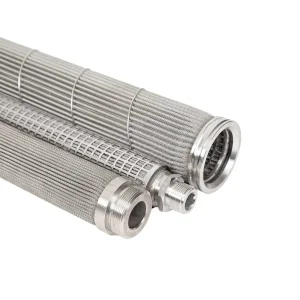
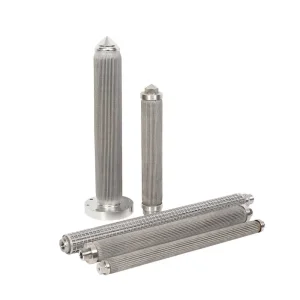
In modern industrial extrusion, chemical fiber spinning, and plastic circular recycling, the performance of the melt filtration system dictates both end-product quality and operational profitability. Filter Mesh Stainless Steel serves as the critical defense barrier against gel formation, degradation particles, cross-linked contaminants, and foreign particulate matter within high-viscosity fluids.
As premier ODM (Original Design Manufacturer) suppliers and global exporters, our engineering framework integrates advanced metallurgy with computerized weave physics. Stainless steel filter mesh elements must operate continuously under non-Newtonian fluid dynamics, enduring operating temperatures up to 350°C (662°F) and extreme pressure differentials ($\Delta P$) exceeding 250 bar (3,625 PSI) without mechanical deformation or pore collapse.
Selection of alloy chemistry is foundational. We employ austenitic stainless steel grades—primarily AISI 304, 304L, 316, 316L, alongside super-austenitic 904L and nickel alloys such as Hastelloy C-276 for highly corrosive fluoropolymer (PTFE/PVDF) applications. Grade 316L, characterized by its low carbon threshold (≤0.03%), eliminates chromium carbide precipitation during heat treatment and thermal cleaning cycles (pyrolysis and TEG vacuum calcination), preventing intergranular corrosion and extending element lifecycle by up to 300%.
From Plain Square Weave and Twilled Dutch Weave (TDW) to 5-Heddle and Sintered Fiber Felts, pore geometry is optimized for laminar melt flow and targeted pore size distribution (1µm to 500µm).
Diffusion bonding under ultra-high vacuum (10⁻⁴ mbar) locks wire contact points permanently, eliminating wire migration under pressure spikes while retaining high dirt holding capacity.
Resistant to thermal shocks, aggressive solvents, organic monomers, and continuous backwashing. Compatible with TEG (Triethylene Glycol) cleaning and ultrasonic rejuvenation.
The global demand for high-specification stainless steel filter mesh is undergoing a structural paradigm shift driven by three primary industrial imperatives: the acceleration of circular plastic recycling (PCR/PIR), the demand for ultra-thin high-barrier packaging films, and the expansion of hygienic spunbond/spunlace nonwoven production lines.
Historically, B2B buyers relied on standardized wire cloth cut-outs. However, contemporary continuous extrusion lines—equipped with automatic continuous screen changers (piston-type, plate-type, or backflush screen changers)—demand engineered ODM Filter Mesh Assemblies. These comprise multi-layer spot-welded packs, rimmed disc filters with aluminum/copper border seals, and pleated candle cartridges engineered to maximize effective filtration surface area ($A_{eff}$) within constrained vessel volumes.
Processing recycled PET flakes, HDPE bottles, and PP films introduces variable contaminant loads (paper residue, cross-linked gels, metal dust). Procurement strategies now mandate multi-stage gradient mesh structures that distribute contaminant capture across coarse barrier layers and fine micron retention layers, preventing premature screen blinding.
In POY (Partially Oriented Yarn), FDY (Fully Drawn Yarn), and industrial cordage manufacture, a single broken filament caused by a 15-micron gel defect can halt high-speed winders operating at 5,000 meters per minute. B2B buyers demand sintered stainless steel fiber felt with absolute rating guarantees verified via Bubble Point Testing (ISO 4003).
Global plastic film converters are replacing disposable single-use filters with reusable, cleanable SUS 316L candle filter cartridges. The ability to burn off polymer residue via controlled vacuum pyrolysis and ultrasonic washing allows cartridges to be reused 20 to 50 times, significantly reducing Scope 3 operational waste metrics.
The global industrial filtration procurement vector has decisively shifted toward China’s advanced manufacturing clusters. As a leading China ODM supplier and exporter, our facility exemplifies the China Factory 4.0 paradigm shift—moving from labor-intensive assembly to fully automated, digitally monitored metallurgical processing.
Our vertical integration begins at raw wire procurement. Stainless steel wire drawn from premium billets undergoes continuous online annealing to ensure uniform tensile strength and ductility across every wire spool. Automated rapier and shuttleless looms weave mesh with microscopic precision, maintaining pore pitch tolerances within ±3% across kilometer-long production runs.
High-tension computerized looms yield wire mesh with absolute warp and weft alignment, eliminating pore distortion during continuous polymer flow.
CNC fiber laser systems cut filter discs and rimmed packs to exact dimensional tolerances (±0.05mm), ensuring burr-free edges that protect screen changer seals.
High-vacuum sintering furnaces operate at 1150°C under hydrogen reduction atmospheres to fuse multi-layer mesh combinations into rigid, non-migrating filter plates.
Multi-stage ultrasonic degreasing removes residual drawing lubricants and particulate matter, achieving oil-free cleanliness standards suitable for medical grade polymer processing.
The table below presents standardized engineering parameters for selecting stainless steel filter mesh media across various industrial polymer processes.
| Alloy Grade | Weave Architecture | Micron Rating (Absolute) | Max Temp (°C) | Max $\Delta P$ (Bar) | Primary Industrial Application |
|---|---|---|---|---|---|
| AISI 304 / 304L | Plain Square Weave | 100 µm – 500 µm | 300°C | 150 Bar | Coarse virgin PP/PE film extrusion, masterbatch pelletizing |
| AISI 316L | Twilled Dutch Weave (TDW) | 10 µm – 80 µm | 400°C | 250 Bar | High-viscosity polymer melt, BOPP film, PET recycling |
| SUS 316L | Sintered Wire Mesh (5-Layer) | 2 µm – 50 µm | 480°C | 300 Bar | Continuous backflush screen changers, BOPET capacitor film |
| 316L Stainless Steel | Sintered Metal Fiber Felt | 1.0 µm – 40 µm | 500°C | 250 Bar | Chemical fiber spinning (POY/FDY), spunbond nonwovens |
| 904L / Hastelloy C-276 | Multi-Layer Dutch Weave | 5 µm – 100 µm | 550°C | 280 Bar | Fluoropolymer processing (PTFE/PVDF), corrosive monomer filtration |
Filter mesh performance depends entirely on its integration within specific plant machinery. Below are four primary application environments where our ODM stainless steel filter mesh elements deliver decisive operational superiority.
Challenge: High impurity concentration in post-consumer PE/PP films causing rapid pressure spikes and screen changing downtime.
Solution: Custom multi-layer spot-welded mesh packs combining a coarse protective Dutch weave facing layer with a 40-micron fine retention layer, extending on-stream cycle times by 180% between screen replacements.
Challenge: Microscopic gel particles clogging spinneret orifices, causing broken filaments in spunbond polypropylene nonwovens.
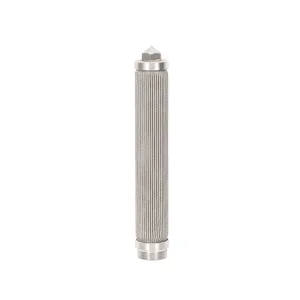
Solution: Pleated SUS 316L candle filter elements using high-porosity sintered metal fiber felt media, offering 300% more surface area than cylindrical elements and ensuring sub-5 micron gel retention.
Challenge: Pinholes and optical haze in ultra-thin 12-micron flexible packaging film lines.
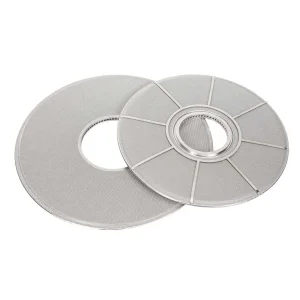
Solution: Precision leaf disc filters featuring hard-rim metal seals and smooth internal drainage hubs, eliminating polymer stagnation zones and guaranteeing zero gel leakage under 200 bar operating pressure.
Challenge: Highly corrosive chemical catalyst recovery under high temperature and aggressive acid exposure.
Solution: 904L and Hastelloy C-276 sintered wire mesh tubes with TIG-welded end caps, delivering high chemical corrosion resistance and structural integrity up to 550°C.
We work directly with OEM machinery builders, extrusion line engineers, and procurement directors to turn specific operating parameters into high-performance filter elements.
We analyze melt viscosity, polymer type (MFR/IV), operating temperature, target throughput, and continuous pressure limits.
Our engineers model wire diameters, layer counts, and aperture combinations to achieve target micron ratings and optimal flow dynamics.
Custom tooling and laser cutting systems manufacture sample disc packs or candle elements within 5–7 business days.
Elements undergo diffusion bonding and CNC rim edge binding (aluminum, copper, stainless steel) to prevent edge leakage.
Every batch undergoes Bubble Point validation for pore integrity, dimensional checks, and optical surface inspection.
Automated high-volume production with flexible scheduled deliveries, VMI (Vendor Managed Inventory), and export-ready packaging.
Detailed technical answers to common queries from procurement managers and plant engineers regarding stainless steel filter mesh selection and ODM capabilities.
Explore our complete ODM catalogue of pleated candle elements, extruder screen packs, sintered wire mesh tubes, and leaf disc filter elements manufactured to exact customer specifications.