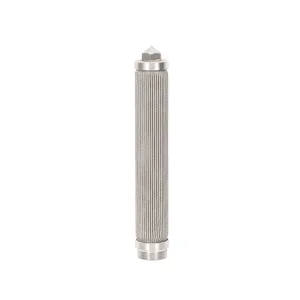
Explore our top-performing ODM & OEM mesh filter assemblies engineered for extreme polymer extrusion and chemical processing environments.
Analyzing micro-filtration engineering, polymer melt behaviors, and original design manufacturing (ODM) paradigms in modern industrial extrusion.
In high-viscosity polymer processing, continuous extrusion, and synthetic fiber spinning, filtration media are subject to severe shear stress, thermal degradation, and differential pressures exceeding 250 bar. As a primary ODM filter mesh supplier, our engineering architecture centers around maximizing dirt-holding capacity (DHC), stabilizing flow dynamics, and preventing media migration under high-pressure cycles. Custom-designed mesh configurations—utilizing multi-layered sintered stainless steel (SUS304, 316L, Hastelloy)—mitigate melt channeling and guarantee consistent shear rates across screen packs.
With over two decades of metallurgical filtration research, our technical team aligns custom manufacturing workflows with strict international standards (ISO 9001:2015, CE certification, REACH, and RoHS compliance). Providing high Information Gain for engineering buyers, our technical documentation delivers clear empirical validation: bubble-point pore size analysis, hydraulic permeability testing, and stress-strain curve assessments for every production batch. We bridge raw material selection with precision wire drawing and vacuum sintering.
Technical Insight for Purchasing Director: Selecting an experienced ODM filter mesh company requires evaluating weave geometry (Plain Dutch, Twilled Dutch, Reverse Dutch Weave), wire gauge tolerance (±0.002mm), and metallurgical purity. Premium 316L stainless steel eliminates intergranular corrosion caused by volatile additives in recycled engineering plastics (PET, PA66, PBT).
Next-generation technological shifts reshaping polymer filtration performance, nano-scale surface functionalization, and smart continuous screening systems.
Transitioning from traditional loose woven wire mesh to diffusion-bonded sintered wire mesh composites. By bonding 5 to 7 layers of wire cloth under high vacuum conditions, the media achieves exceptional mechanical strength, zero pore movement under high delta-P, and superior backwashing capability for extended service lifecycles.
Integration of advanced anti-coking nano-coatings and fluoropolymer surface treatments. These thin-film modifications reduce melt adhesion, prevent polymer degradation and black-spot formation on long-run continuous extruders, and optimize rheological flow velocity through sub-10 micron apertures.
Developing real-time continuous pressure-differential (ΔP) monitoring interfaces embedded in automatic continuous belt screen changers. AI-driven predictive analytics forecast cake build-up rate, allowing plant managers to automate screen indexing prior to melt pressure spikes.
Comprehensive engineering data matching wire mesh weave geometries with specific polymer viscosity and thermal requirements.
| Weave / Construction Type | Micron Rating (μm) | Material Grade | Max Pressure (Bar) | Primary Industrial Application |
|---|---|---|---|---|
| Plain Square Mesh | 150 - 500 | SUS 304 / 316 | 100 - 150 | Coarse plastic recycling, pelletizing coarse screening |
| Twilled Dutch Weave (TDW) | 15 - 100 | SUS 316L / Hastelloy C276 | 200 - 280 | BOPP/BOPET film extrusion, blown film clarity lines |
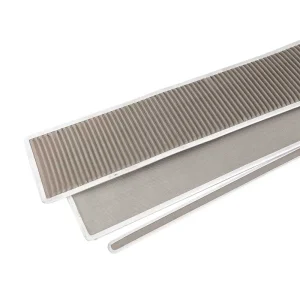
| Reverse Dutch Weave (RDW) | 40 - 125 | SUS 304L / 316L | 250 - 320 | Automatic ribbon/belt screen changers for high-volume PP/PE |
| 5-Layer Sintered Mesh | 5 - 80 | SUS 316L | 350+ | CPF Candle filters, high-viscosity nylon/polyester melt spinning |
| Sintered Metal Fiber Felt | 3 - 40 | AISI 316L Fiber | 300+ | Spunbond non-woven fabrics, optical-grade polycarbonate sheets |
Tailored OEM/ODM filtration frameworks engineered for distinct high-demanding manufacturing sectors across global supply chains.
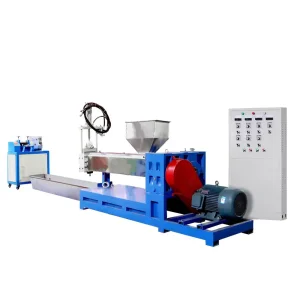
Post-consumer and post-industrial plastic waste streams contain severe abrasives (sand, paper, metal fragments). Our high-tensile Reverse Dutch Wire Belts and multi-layer spot-welded mesh packs endure continuous friction in high-torque extruders, ensuring clean melt flow to pelletizing dies.
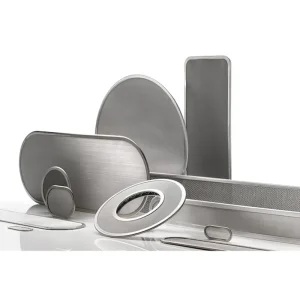
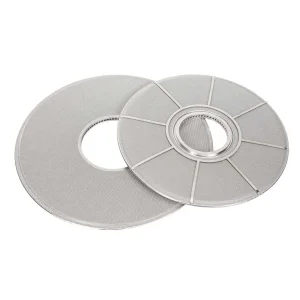
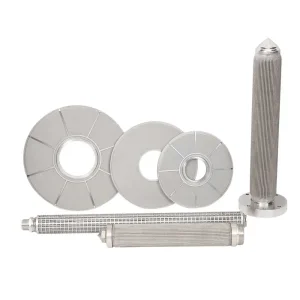
Ultra-thin packaging and optical films demand defect-free melt streams. We supply high-precision Leaf Disc Filters (rim-welded or hub-sintered) engineered with zero gel bypass, guaranteeing film thickness uniformity without pinholes or premature web breakage.
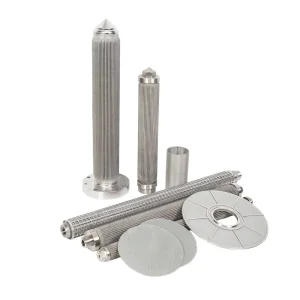
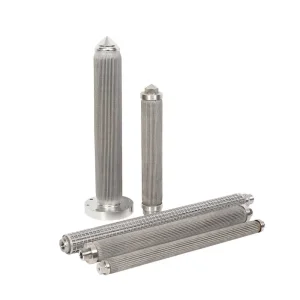
Polymer melt spinning for medical hygiene nonwovens (Spunbond / Meltblown) requires long on-stream life and tight pore distribution. Our Continuous Polymer Filtration (CPF) Candle Elements utilize pleated sintered fiber felt, increasing filtration area by 250% over standard cylinders.
Ensuring seamless international procurement, multi-jurisdictional compliance, and localized technical field support.
Strict quality assurance protocols at every phase—from incoming stainless wire rod inspection to automated digital micro-scope mesh pore verification.
Full material traceability and chemical safety guarantee. Free of heavy metal contamination, meeting European Union import requirements.
Vendor-Managed Inventory (VMI) arrangements, safety stock stocking programs, and expedited air/sea logistics hubs in North America, Europe, and SEA.
24/7 multilingual technical assistance, rapid CAD drawing validation within 12 hours, and on-site filtration auditing for major plant overhauls.
Leveraging state-of-the-art automated weaving looms, cleanroom ultrasonic washing, and integrated raw material sourcing.
Our manufacturing facility in Zhejiang operates over 150 computer-controlled Heavy Heavy-Duty German and Swiss weaving looms. Capable of weaving wire diameters down to 0.02mm with extreme pitch accuracy, we eliminate defects, mechanical stress concentration points, and aperture variance across large production runs.
Polymer melt applications cannot tolerate residual drawing lubricants or oil stains. All our screen mesh filter packs, candle elements, and leaf discs undergo multi-stage ultrasonic solvent degreasing and vacuum baking, followed by hermetic sealing in Class 10,000 cleanroom environments.
A standardized 4-step collaborative engineering process designed for multinational B2B purchasing teams and OEMs.
Submission of operating conditions: polymer type, melt viscosity, temperature, pressure range, and target filtration micron rating.
Our engineering team generates detailed 2D/3D structural schematics, material selection recommendations, and prototype samples within 3-5 days.
Rigorous bubble point testing, hydraulic drop validation, and small-batch extrusion trial runs to verify on-stream filtration stability.
ISO-standardized mass manufacturing, full batch quality certification delivery, and scheduled multi-destination global shipping.
Expert technical answers addressing common procurement, engineering, and maintenance queries regarding ODM filter mesh systems.
An ODM (Original Design Manufacturer) filter mesh supplier provides complete custom engineering. Rather than forcing your extrusion or filtration system to adapt to standard mesh sizes, an ODM supplier tailors wire diameters, weave geometry, rim bonding methods, and multi-layer sintering to match your specific polymer rheology, operating pressure, and thermal profile, maximizing filtration efficiency and line uptime.
SUS 304 is cost-effective for standard non-corrosive polymers like PP and PE. SUS 316L offers low carbon content and molybdenum addition, providing superior resistance to organic acids and halogenated additives found in PET, PA66, and recycled plastics. Hastelloy C276 is reserved for extreme corrosive chemical processes or fluoropolymers (PVDF, PTFE) operating at elevated temperatures above 350°C.
Sintered wire mesh is constructed by diffusion bonding woven wire cloths, resulting in precise pore geometry and high mechanical rigidity. Sintered metal fiber felt is a non-woven matrix of micro-grade stainless steel fibers, offering extremely high porosity (up to 80%) and significantly higher dirt-holding capacity, making it ideal for deep bed filtration such as CPF candle cartridges.
Yes, high-quality stainless steel candle filters and leaf discs can undergo multiple cleaning cycles using TEG (Triethylene Glycol) hydrolysis, vacuum calcination, or ultrasonic solvent baths to burn off residual polymer matrix without damaging the metallic pore structure, substantially reducing operational replacement costs.
Explore additional specialized filtration cartridges, leaf discs, and custom extruder screen mesh configurations.