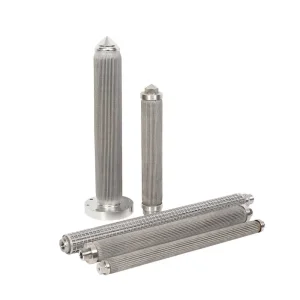
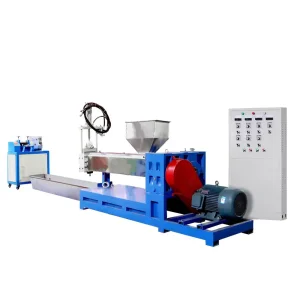
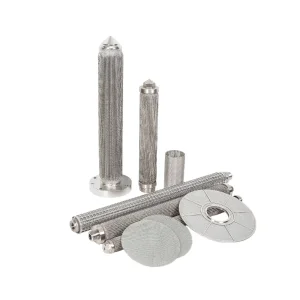
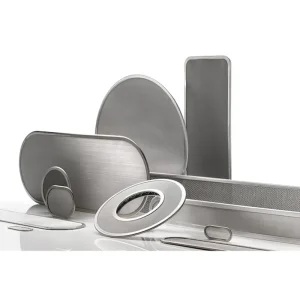
Explore our primary manufacturing line of high-yield extruder wire mesh screens, sintered candle filter elements, and custom melt filtration assemblies built for demanding industrial environments.
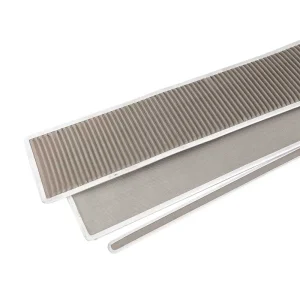
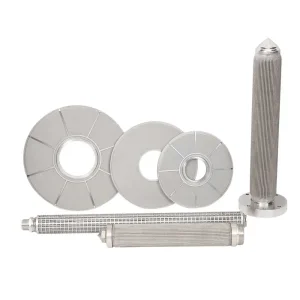
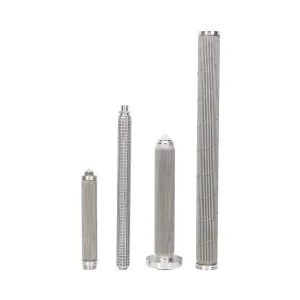
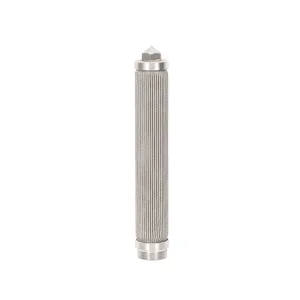
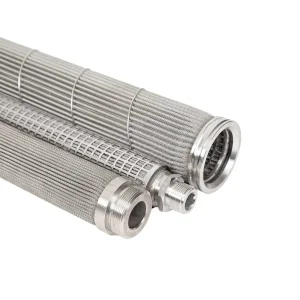
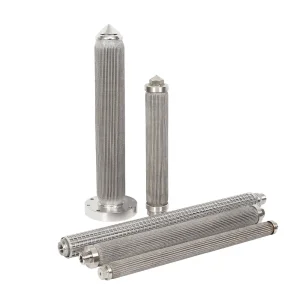
In modern high-speed polymer processing—encompassing BOPP/BOPET film extrusion, spunbond nonwoven lines, and synthetic chemical fiber spinning—the filtration media operates under extreme hydrodynamic pressure gradients (up to 30 MPa) and elevated thermal conditions reaching 350°C. Managing polymer melt rheology while preventing premature pressure differential spikes (ΔP) requires sophisticated Original Design Manufacturing (ODM) filter engineering.
A persistent operational bottleneck in plastic pelletizing and polymer extrusion is the structural transition of micro-gels. Standard square-weave screen packs frequently fail because deformable gels elongate under hydraulic shear stress, squeezing through pore openings. High-performance ODM mesh screen filters solve this through multi-layer graduated pore structures.
By vacuum-sintering variable micron layers—ranging from coarse protective outer mesh (e.g., 60 mesh) to ultra-fine inner capture matrices (e.g., 3μm to 20μm Dutch twill or sintered stainless steel felt)—our engineered screens establish progressive depth filtration. This topology retains non-deformable inorganic contaminants (such as silica, catalyst residues, and metal flakes) while trapping and breakdown-dispersing organic gels without clogging the downstream spinneret or film die head.
Engineering Core Principle: Precision mesh design must balance dirt-holding capacity (DHC) with low initial differential pressure (ΔP_initial). Higher porosity sintered metal felt structures increase filtration area by up to 300% compared to flat wire mesh discs, drastically extending operational run-times between screen changes.
China's advanced metallurgy and industrial filtration clusters deliver unmatched economic, technical, and supply chain efficiencies for global enterprises.
Based in Zhejiang's machinery manufacturing core, Pujiang HG Plastic Machinery Co., Ltd. controls the complete production chain—from wire drawing and precision weaving to high-vacuum sintering, spot welding, rim binding, and ultrasonic cleanroom decontamination.
Every batch of SUS 304, SUS 316L, and exotic alloy wire undergoes Positive Material Identification (PMI) spectrographic testing, bubble point integrity validation (ISO 4003), and burst strength testing up to 250 bar to prevent mesh blowout during high-viscosity processing.
ODM direct sourcing eliminates intermediary markups while offering customizable alloy grades and multi-layer combinations. Lower unit costs coupled with high dirt-holding capacity minimize extruder downtime and optimize scrap recycling yields.
Selecting the right alloy grade and weave topology is paramount to withstand operational shear, acidic degradation, and thermal cycling.
| Material Alloy Grade | Filter Element Structure | Micron Rating Range | Max Temp Tolerance | Primary Industrial Application |
|---|---|---|---|---|
| SUS 304 Stainless Steel | Multi-Layer Spot-Welded Mesh Pack / Flat Disc | 20μm – 500μm | 550°C | Standard PP, PE, PS Extrusion & Recycling Granulation |
| SUS 316L Stainless Steel | Pleated Candle Element / Sintered Metal Felt | 1μm – 100μm | 650°C | BOPP/BOPET Films, PET Spinning, High-Viscosity Polymers |
| 904L / Alloy 20 | Dutch Twill Sintered Wire Cloth Cartridge | 5μm – 80μm | 700°C | Corrosive Fluoropolymer (PVDF/PTFE) & Acidic Resin Processing |
| Hastelloy C-276 | High-Porosity Sintered Fiber Fleece Assembly | 0.5μm – 40μm | 815°C | Extreme Petrochemical Synthesis & Supercritical Fluid Refining |
Our factory custom-engineers diverse wire mesh topologies matching specific continuous hydraulic screen changers (auto-belt, piston-type, and slide-plate):
Features thicker warp wires and compact shute wires, offering high mechanical strength for heavy extrusion pressures.
Densely packed warp wires provide exceptional longitudinal tensile strength, ideal for automatic continuous ribbon screen changers.
Diffusion-bonded layers combine protective mesh, control mesh, and support mesh into an immutable structure that eliminates wire migration.
Delivering specialized filtration architectures tailored to global manufacturing sectors demanding strict quality control and zero downtime.
Optical-grade films demand zero gel defects and microscopic contaminant removal down to 5μm. Our leaf disc filters and pleated candle cartridges feature smooth, electropolished inner cores that eliminate melt dead zones, preventing thermal degradation and carbon spot formation.
For polypropylene (PP) spunbond and PET filament production, maintaining uniform melt viscosity across spinneret plates is vital. Our SUS 316L candle filter elements deliver high porosity and uniform pressure distribution, ensuring unbroken filament spinning and extended pack life.
Recycling heavily contaminated PP/PE agricultural films and rigid plastics requires rugged wire mesh belt filters and multi-layer rimmed screen packs capable of capturing high dirt loads without collapsing under differential pressures exceeding 200 bar.
Used in continuous monomer purification, chemical intermediate processing, and high-temperature gas filtration. Custom-designed Hastelloy and 316L stainless steel filter cartridges withstand corrosive acidic catalysts and extreme thermal cycling.
We streamline direct factory procurement for international buyers, engineering procurement companies (EPCs), and machine OEMs worldwide.
Review CAD/3D drawings, melt flow index (MFI), polymer viscosity, operating pressure, and target micron retention specs.
Custom tooling setup with rapid sample production within 5–7 business days for dimensional and bubble point testing.
Automated CNC spot welding, vacuum furnace sintering, 100% PMI material verification, and ISO 4003 pore size validation.
Ultrasonic degreasing cleanroom washing, vacuum sealing, shockproof wooden casing, and expedited air/sea global shipping.
The global shift toward sustainable plastics, circular economic mandates, and high-efficiency extrusion automation is transforming mesh filter manufacturing standards. Key technological shifts include:
Automated screen changers increasingly utilize specialized high-tensile reverse Dutch weave ribbon screens to allow real-time continuous self-cleaning, reducing plastic scrap by up to 15%.
As micro-denier synthetic fibers and ultra-thin technical films demand absolute purity, sintered metal fiber felts with rating capabilities below 1μm are replacing traditional wire mesh.
Advanced ceramic and fluoropolymer surface passivations are applied to stainless steel screens to reduce polymer adhesion, lower degradation, and simplify burn-out cleaning cycles.
Detailed insights on mesh selection, operational troubleshooting, and custom manufacturing specs.
Multi-Layer Sintered Wire Mesh offers superior structural rigidity, high mechanical strength, and precise pore geometry, making it optimal for continuous hydraulic screen changers and high-pressure extrusion. Sintered Metal Fiber Felt, on the other hand, possesses an open 3D non-woven matrix providing up to 80% porosity and significantly higher dirt-holding capacity (DHC). Sintered felt is preferred for gel removal in high-viscosity BOPP film lines and spunbond nonwovens where low pressure drop (ΔP) and extended operational life are paramount.
Rapid ΔP spikes usually stem from improper micron rating selection, rapid gel buildup, or uneven flow distribution across the screen face. An ODM custom screen filter optimizes the layer structure by introducing a progressive depth arrangement (e.g., placing coarse 80-mesh support layers upstream of fine 20μm capture mesh). This allows coarse particles to settle in outer layers without immediately blinding the fine filtration wire, extending screen pack operating cycles by 50% to 150%.
Yes. Pujiang HG Plastic Machinery Co., Ltd. provides full ODM/OEM customization. We fabricate round, oval, kidney-shaped, rectangular, and continuous ribbon screen packs compatible with all major global screen changer brands (including Nordson BKG, Maag, Kreyenborg, and Gneuss). Rims can be spot-welded or custom-encapsulated with aluminum, copper, or stainless steel borders to prevent melt bypass.
Our quality control protocol adheres strictly to ISO 9001:2015 standards. Every production lot undergoes: 1) Positive Material Identification (PMI) alloy validation; 2) Optical microscopic wire diameter and mesh count inspection; 3) Bubble point testing according to ISO 4003 to measure maximum pore size; and 4) Hydraulic collapse pressure testing up to 210 bar to guarantee structural integrity under extreme processing torque.
High-grade SUS 316L candle filter elements and leaf discs manufactured by our factory are designed for repeated cleaning cycles (typically 10 to 20 cycles depending on polymer type and contaminant severity). Approved cleaning methods include TEG (triethylene glycol) boiling, vacuum pyrolitic burnout ovens, ultrasonic chemical baths, and calcination ovens. Properly maintained elements restore up to 95% of their initial clean pressure drop.
Standard prototype samples are produced and dispatched within 5 to 7 working days. Full mass-production enterprise orders typically require 15 to 25 business days depending on geometric complexity, vacuum sintering schedules, and cleanroom packaging specifications. We offer expedited air freight options for emergency production line maintenance.
Discover our comprehensive offering of polymer candle filter cartridges, melt filter elements, plastic recycling machinery, and extrusion wire mesh accessories.