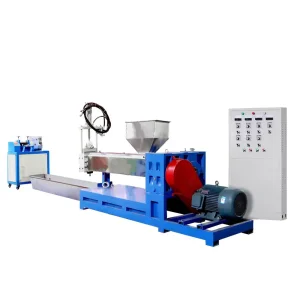
The global plastics manufacturing and recycling ecosystem is undergoing a fundamental structural transition. Driven by stringent international environmental frameworks—such as the European Union’s Packaging and Packaging Waste Regulation (PPWR), US state-level Extended Producer Responsibility (EPR) mandates, and global ESG disclosure requirements—the demand for high-grade virgin-equivalent re-granulate has escalated exponentially. In this industrial paradigm, selecting an established ODM Pelletizing Machine Supplier is no longer merely a procurement decision; it is a strategic imperative that directly governs operational uptime, thermal efficiency, and polymer rheological integrity.
Modern polymer processing requires transforming highly heterogeneous post-industrial waste (PIW) and post-consumer recyclate (PCR) into uniform, dense, and contaminant-free pellets. Thermoplastics including Polypropylene (PP), Polyethylene (PE), Acrylonitrile Butadiene Styrene (ABS), Polyamide (PA), and Polycarbonate (PC) exhibit distinct degradation kinetics under shear stress and elevated thermal profiles. Consequently, Original Design Manufacturer (ODM) partners must possess deep mechanical engineering expertise to configure specialized extrusion screws, vacuum degassing chambers, and continuous melt filtration units tailored to exact polymer melt indices (MFI).
The economic viability of plastic compounding and re-pelletizing hinges on minimizing thermal hysteresis while achieving maximum throughput. Legacy single-stage compounding systems often fail to adequately handle heavily printed, moist, or multi-layered flexible packaging films, leading to severe melt degradation, viscosity drop, and voids within output pellets. Advanced ODM solutions bridge this gap through co-rotating twin-screw architectures, multi-venting atmospheric and high-vacuum degassing, and precision pelletizing heads (underwater strand, water-ring, or air-cooled die-face cutter systems).
As a premier manufacturing force headquartered in Zhejiang, China, Pujiang HG Plastic Machinery Co., Ltd. integrates more than two decades of mechanical mastery into full-spectrum OEM and ODM customization. Engineering a high-output pelletizing line requires meticulous attention to the thermodynamic and mechanical mechanics governing plastic melt behavior.
Engineered with heavy-duty parallel twin-screw gearbox drives capable of torque density up to 11.5 Nm/cm³. Optimized length-to-diameter (L/D) ratios (ranging from 36:1 to 52:1) guarantee homogeneous polymer melting, dispersion of additives, and uniform color masterbatch distribution without thermal scorching.
Equipped with dual atmospheric and ultra-high vacuum extraction ports operating down to -0.098 MPa. Effectively strips out residual moisture, low-molecular-weight volatiles, printing ink solvents, and monomer gas residues, eliminating porous bubbles within final recycled granules.
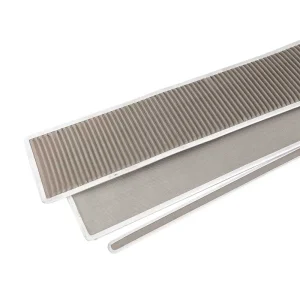
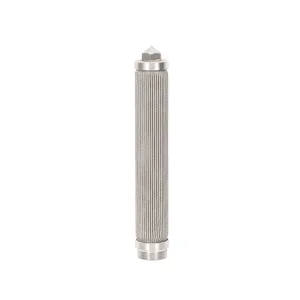
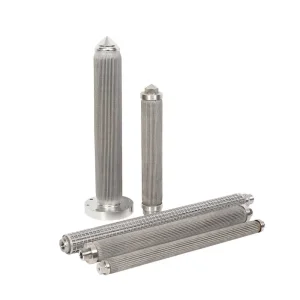
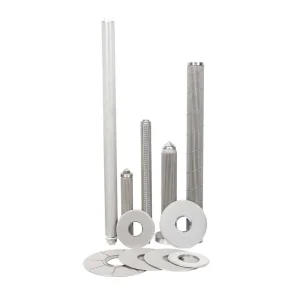
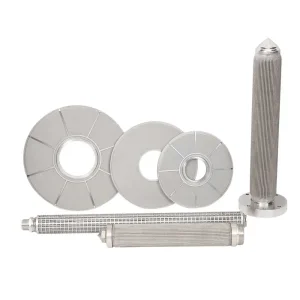
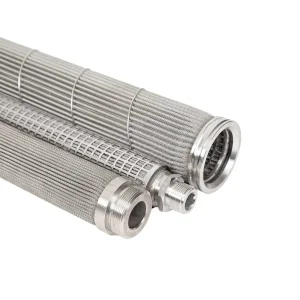
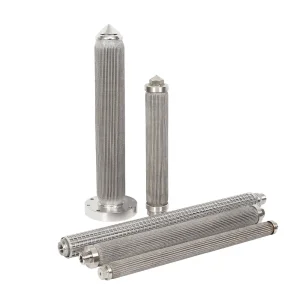
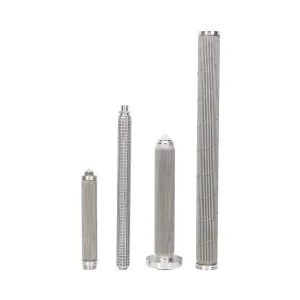
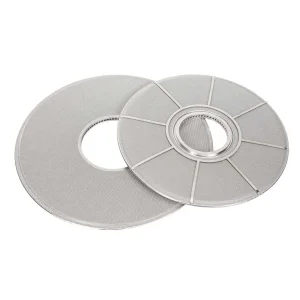
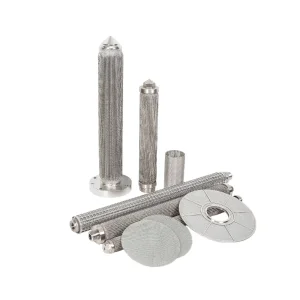
Seamless integration with high-efficiency candle filter cartridges, stainless steel 304/316L pleated mesh elements, and multi-plate leaf disc filters. Ensures continuous filtration ratings down to 15 microns while maintaining ultra-low hydraulic pressure differentials.
| System Architecture | Target Polymer Polymers | Filtration Component Integration | Pelletizing Method | Operational Throughput |
|---|---|---|---|---|
| Single-Stage Water-Ring Line | PE, PP Film Scrap, Agricultural Sheets | Dual-Piston Continuous Screen Changer | Water-Ring Die-Face Cutting | 200 – 800 kg/h |
| Two-Stage (Cascade) Line | Heavily Printed Film, Post-Consumer PCR | High-Surface-Area Candle Filter Assemblies | Water Stranding / Die-Face | 300 – 1500 kg/h |
| Co-Rotating Twin-Screw Line | ABS, PA6/PA66, PC, Engineered Alloys | Sintered SS 316L Pleated Cartridges | Underwater Pelletizing System | 500 – 3500 kg/h |
| PET Bottle-to-Bottle Line | PET Flakes, Viscous Polymer Melt | Polymer Leaf Disc Filter Elements | Automatic Strand Pelletizing | 800 – 4000 kg/h |
The polymer processing equipment sector is experiencing an unprecedented phase of technological convergence. As AI-driven automation, real-time spectroscopy, and sustainable circular engineering intersect, compounding and pelletizing machinery suppliers must innovate at a rapid velocity.
Modern ODM pelletizing machines are increasingly integrated with online melt viscosity sensors and infrared melt temperature monitoring. By feeding continuous pressure and temperature data back to the central PLC, the extruder dynamically adjusts screw rotation speed, barrel zone temperature profiles, and feeder dosing rates. This real-time compensation preserves the Intrinsic Viscosity (IV) of sensitive polymers such as PET and Polyamide.
Down-time associated with filter screen replacement represents a primary source of operational margin loss. Modern ODM architectures adopt fully automatic, self-cleaning backflush screen changers combined with high-capacity stainless steel candle filter elements. Contaminants are backflushed automatically when pressure differentials reach pre-set thresholds, permitting uninterrupted production cycles lasting hundreds of operational hours.
Energy consumption accounts for up to 40% of the total operating expenditure in polymer recycling facilities. Cutting-edge pelletizing units replace traditional belt-driven motors with direct-drive permanent magnet synchronous motors (PMSM) paired with ceramic barrel heater bands. This design reduces electrical energy losses by up to 22% while providing precise thermal regulation.
The acceleration of compostable polymers—such as PLA (Polylactic Acid), PBAT, and PHA—requires specialized pelletizing hardware. These materials display low melt strength and extreme thermal sensitivity. Custom ODM screw geometry featuring soft-shear kneading elements and ultra-precise water-ring cutter control prevents thermal degradation during re-granulation.
To achieve optimal Information Gain, industrial buyers must evaluate equipment performance within real-world manufacturing environments. Pujiang HG Plastic Machinery Co., Ltd. designs specialized pelletizing and melt filtration solutions customized to distinct regional raw material inputs and application demands.
Application Context: Automotive scrap, electronic appliance housings, battery casing recycling.
Engineering Solution: High-torque co-rotating twin-screw pelletizing line equipped with vacuum degassing and high-viscosity SUS 304 stainless steel polymer candle filters. Delivers high impact resistance and bubble-free structural pellets suitable for injection molding.
Application Context: Post-industrial agricultural films, shopping bags, PP raffia woven sack regrind.
Engineering Solution: Integrated cutter-compactor single-stage pelletizer featuring dual-piston continuous screen changers and water-ring die-face cutting. Eliminates pre-shredding steps and maintains low thermal stress.
Application Context: Hygiene product scrap, medical nonwoven trim, mask manufacturing waste.
Engineering Solution: Ultra-fine continuous melt filtration utilizing micron-rated pleated candle filter cartridges (25–50μm). Re-granulated PP pellets maintain original MFI characteristics, allowing 100% re-introduction into high-speed spunbond extrusion lines.
As global plastic recycling transitions toward higher purity standards and zero-carbon processing, ODM equipment suppliers must align mechanical engineering with sustainable lifecycle assessments (LCA). Below is the strategic development roadmap governing next-generation pelletizing and melt filtration machinery over the coming decade:
Direct coupling of NIR (Near-Infrared) inline polymer sorting units with extruder feeding hoppers to automatically adjust barrel zone temperatures based on incoming polymer composition variations.
Development of metallic sintered felt leaf disc filters optimized for super-critical PET bottle-to-bottle recycling, removing microscopic gel particles and carbonaceous specs without shear-induced degradation.
Implementation of full-line heat recovery exchangers capturing kinetic motor heat and exhaust steam to preheat raw plastic flakes, reducing overall kWh per ton consumption to record lows.
Navigating the acquisition and customization of industrial pelletizing machinery requires addressing critical engineering questions. Here are expert answers grounded in technical experience.