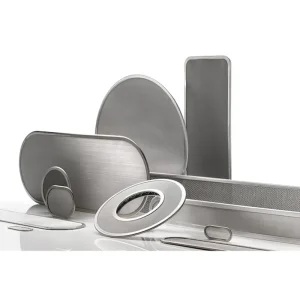
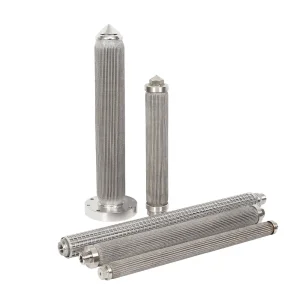
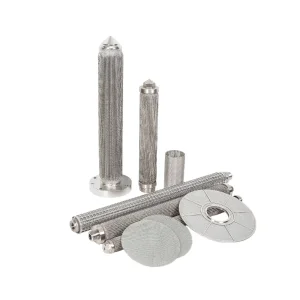
Explore our ODM manufactured candle filters, SUS 304/316 extruder screen mesh packs, and high-viscosity filtration systems built for zero-defect polymer processing.
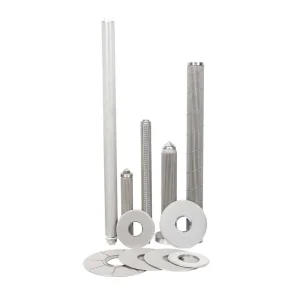
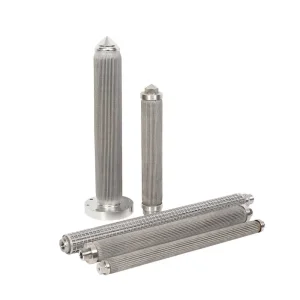
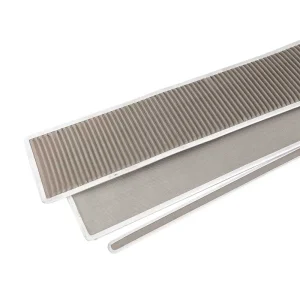
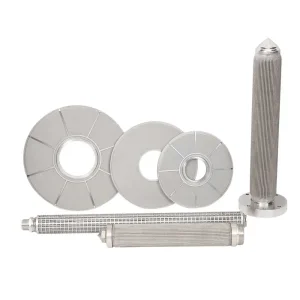
Understanding the critical engineering requirements of high-viscosity polymer processing, continuous extrusion, and advanced wire mesh manufacturing.
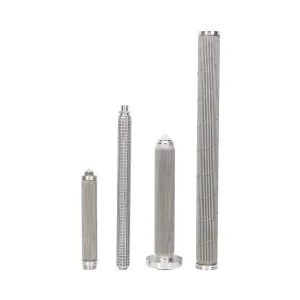
Industrial polymer melt filtration operates under extreme hydrostatic pressures reaching up to 350 Bar and operational temperatures up to 350°C. In high-viscosity polymer processing—such as PET, PA66, PP, and PC extrusion—non-homogeneous melt streams and micro-gel contaminants present significant quality risks. An ODM welding wire mesh factory must engineer custom filter media that delivers uniform shear stress distribution while eliminating dead zones where thermal degradation (coking) occurs.
During continuous screen changes and high-tonnage granulating, wire mesh elements suffer intense cyclic mechanical fatigue. Precision welding at cross-wire junctions is imperative. Superior resistance to wire displacement (mesh migration) under high differential pressure (ΔP) guarantees stable pore geometry, preventing un-filtered bypass and extending on-stream operational lifetimes by over 40%.
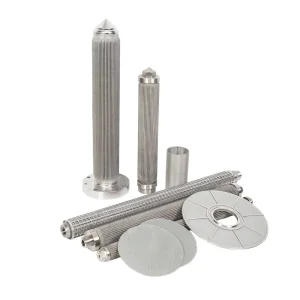
By engineering specialized multi-layer mesh combinations—integrating coarse support Dutch weaves with fine rating inner sintered layers—manufacturers achieve optimal dirt-holding capacity (DHC). ODM custom configurations cater directly to specific melt flow indexes (MFI), lowering overall operational expenditure (OpEx) for international film and fiber spinning mills.
Supply chain trends, circular economy mandates, and the shift toward heavy-duty post-consumer resin (PCR) filtration.
The global industrial wire mesh and polymer filter market is undergoing a seismic transition driven by global sustainability regulations and circular economy initiatives. Plastic recycling machinery manufacturers and pelletizing plants are increasingly processing post-consumer resin (PCR) and post-industrial resin (PIR), which carry significantly higher impurity loads (sand, aluminum flakes, paper fibers, unmelted gels) than virgin polymers.
Consequently, global buyers are pivoting away from standard off-the-shelf wire mesh toward specialized ODM Welding Wire Mesh Factory & Exporters capable of engineering high-durability SUS 304/316L wire mesh, pleat-stabilized candle filter elements, and continuous auto-belt filter screens. High-purity applications, such as spunbond nonwovens and optical-grade BOPET films, require filtration accuracy down to 5 microns under unrelenting production schedules.
Comparative technical breakdown of filter media grades, structural weaves, and welding technologies engineered at our facility.
| Material / Construction | Alloy Grade | Filtration Precision | Max Pressure (ΔP) | Primary Industrial Application |
|---|---|---|---|---|
| Multi-Layer Sintered Wire Mesh | SUS 316L / Hastelloy C-276 | 3 µm – 100 µm | 250 – 310 Bar | BOPP/BOPET Film, Fiber Melt Spinning |
| Pleated Sintered Metal Felt Candle | SUS 304 / 316L Stainless Steel | 5 µm – 60 µm | 210 Bar | High-Viscosity Polymer Melt (CPF Systems) |
| Heavy Welding Wire Mesh Screen | SUS 304 High-Tensile Steel | 100 µm – 500 µm | 180 Bar | Plastic Recycling Granulating & Pelletizing |
| Plain/Reverse Dutch Weave Pack | SUS 304 / 316 Wire Mesh | 20 µm – 250 µm | 150 Bar | Sheet Extrusion, Blown Film, Pipe Extrusion |
Case study scenarios illustrating how precise filtration engineering solves complex production bottlenecks.
In high-speed PP spunbond nonwoven manufacturing, filament breakage caused by melt contaminants leads to line shutdowns. Utilizing our customized SUS 304/316 Polymer Candle Filter Elements ensures zero micro-gel passage, preserving spinneret longevity and maintaining high fabric tensile uniformity across 4.2-meter wide production lines.
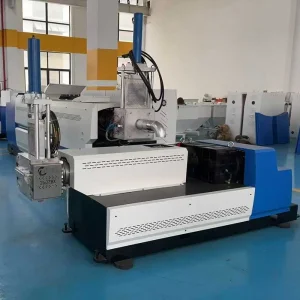
Waste plastic recycling machines operating under heavy contamination require auto-belt continuous screen changers equipped with high-strength welding wire mesh. Our ODM reinforced mesh structure withstands severe abrasive forces, filtering out soil, debris, and foreign polymers during PE/PP film wash-line pelletizing.
In chemical fiber synthesis facilities handling polyamides and polyester resins, candle filter elements must withstand aggressive chemical cleaning procedures (such as TEG hydrolysis and calcination ovens). Our diffusion-bonded stainless steel mesh retains pore integrity across 30+ cleaning cycles without deformation.
Rigorous quality management systems guaranteeing consistent pore distribution and global export compliance.
Every batch of welding wire mesh and polymer candle filter elements undergoes strict bubble point pressure testing (ISO 4003), absolute rating verification (ISO 16889), and ultrasonic cleaning prior to export. Material heat numbers and chemical analysis certificates (MTC 3.1) accompany all shipments.
We provide localized engineering support across North America, Europe, Southeast Asia, and the Middle East. Our application engineers offer rapid CAD drawings, sample prototyping within 72 hours, and field diagnostic advice for extruder back-pressure optimization.
For machinery manufacturers (OEMs) and international distributors, we provide complete private-label manufacturing. Custom laser-engraved part numbers, bespoke packaging, and specialized rim-stamping guarantee seamless integration into your supply chain.
Pioneering smart filtration, anti-coking nano-coatings, and zero-waste recycling integration.
As polymer processing advances toward higher speed automation and tighter eco-compliance, our research facility is leading three critical technological breakthroughs:
Expert insights into selecting, operating, and cleaning industrial wire mesh and polymer candle filter elements.
ODM welding wire mesh bonds intersecting wires at exact junction points through precision electrical resistance welding. Unlike plain woven mesh where wires can shift under high pressure (ΔP), welded mesh maintains rigid aperture sizes. This eliminates pore distortion under heavy melt flow, preventing un-filtered particles from passing through during high-tonnage extrusion.
SUS 304 offers excellent mechanical strength and cost-efficiency for standard polyolefin extrusion (PP, PE). However, for high-temperature applications, corrosive additives, or aggressive chemical cleaning processes (such as TEG hydrolysis for polyester PET), SUS 316L is recommended due to its molybdenum content, providing superior pitting corrosion resistance.
Pleating increases the total filtration surface area by 300% to 500% compared to smooth cylindrical elements of the same footprint. This dramatically reduces the face velocity of the polymer melt, lowers initial pressure drop, increases dirt-holding capacity (DHC), and significantly extends operational on-stream time before screen replacement is needed.
For post-consumer plastic recycling (PCR PE/PP), recommended filter ratings typically range from 80 µm to 250 µm (60 to 180 mesh). For post-industrial recycling (PIR) or high-quality pelletizing intended for film blowing, finer filtration between 40 µm and 80 µm is utilized to protect downstream equipment.
Yes, our SUS 304/316L candle filter elements are designed for multi-cycle reusability. Cleaning methods include TEG (triethylene glycol) boiling, pyrolysis furnace burn-off, solvent extraction, and ultrasonic bath cleaning followed by high-pressure water flushing and bubble-point integrity testing.
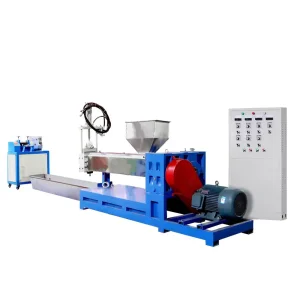
Browse our additional line of custom wire mesh filters, plastic pelletizing machines, and high-performance melt filter elements.