Explore our factory-engineered filtration systems and heavy-duty plastic recycling machinery optimized for high-throughput PET shredding and polymer melt purification.
The global post-consumer Polyethylene Terephthalate (rPET) market is undergoing a seismic structural shift. Driven by worldwide legislative mandates—such as the European Union’s Single-Use Plastics Directive requiring at least 25% recycled content in PET beverage bottles by 2025 and 30% by 2030—the demand for high-purity recycled flakes has outstripped conventional primary recycling capacities. In this industrial paradigm, selecting an established OEM PET Flakes Shredding Factory & Company is no longer merely a procurement task; it is a fundamental strategic decision influencing yield rates, energy consumption per metric ton, and downstream polymer melt quality.
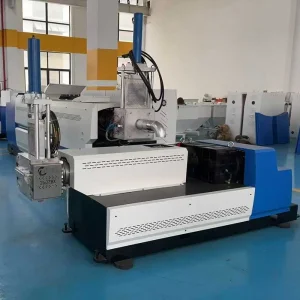
Shredding is the gateway unit operation in mechanical recycling. Post-consumer bottles, thermoformed trays, and industrial strapping waste exhibit extreme variations in bulk density, moisture content, tensile strength, and foreign particle contamination (including PVC caps, polyolefin labels, aluminum rings, and silica dirt). High-performance shredding machinery must execute uniform particle size reduction without inducing localized thermal degradation or excessive fine generation, which severely compromises intrinsic viscosity (IV) during subsequent extrusion and filtration.
An authentic original equipment manufacturer (OEM) for PET flake shredder systems optimizes machine design around three critical pillars: blade shear geometry, rotor kinematics, and continuous contamination shedding. Unlike generic plastic crushers, specialized PET shredding factories design custom rotor profiles tailored specifically to rigid bottle walls and thin-walled thermoforms.
Rotary blades are precision machined from vacuum heat-treated D2 (1.2379) or SKD-11 tool steel, reaching a surface hardness of 58–62 HRC. For heavily contaminated post-consumer streams containing sand or metallic inclusions, specialized tungsten carbide (WC) tipped inserts prevent premature abrasive edge roundedness, maintaining clean scissor cutting actions.
By utilizing multi-stage planetary gearboxes operating at low rotational speeds (80–120 RPM) with hydraulic force-feeding pushers, the shredder exerts massive instantaneous torque without generating frictional heat. This prevents the PET glass transition temperature ($T_g \approx 78^\circ\text{C}$) from being reached, eliminating sticky agglomeration inside the cutting chamber.
The discharge screen geometry controls flake size spectrum. Hexagonal or staggered round mesh perforations (8mm–12mm) ensure that shredded flakes exhibit a narrow PSD (Particle Size Distribution). Uniform bulk geometry minimizes feeding bridging issues in downstream twin-screw extruders and vacuum desiccant dryers.
Even under optimal mechanical shredding, post-consumer rPET flakes carry sub-micron inorganic debris, cross-linked gels, label adhesives, and micro-aluminum particles. When these flakes enter the melt phase within single or twin-screw extruders operating at 260°C–280°C, continuous melt filtration becomes mandatory to protect fine fiber spinnerets or ultra-thin film casting dies.
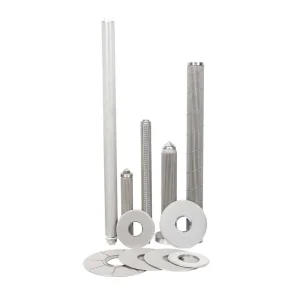
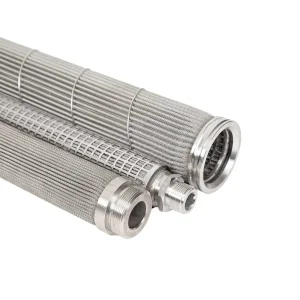
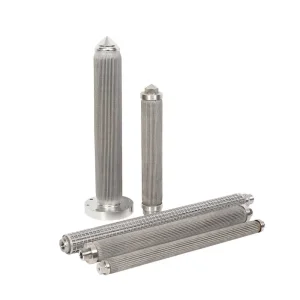
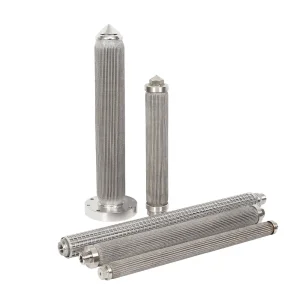
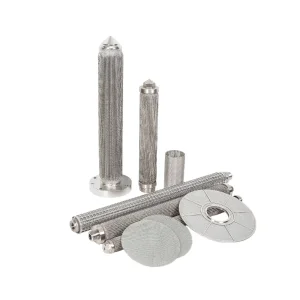
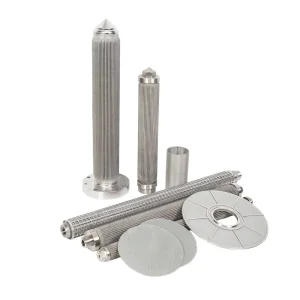
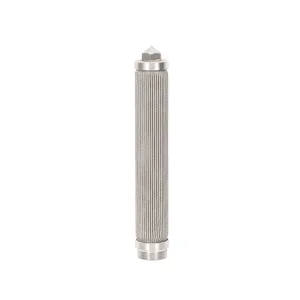
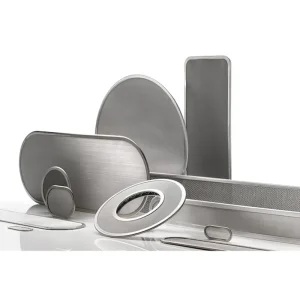
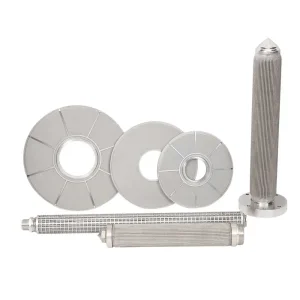
This is where our integrated OEM production line aligns shredding machines with continuous stainless steel melt filter elements. Our SUS 304/316L Polymer Candle Filters and Extruder Screen Mesh Filters capture contaminants down to 5 microns, establishing a seamless link between raw mechanical shredding and high-value virgin-grade polymer output.
Different regional markets and target application sectors impose distinct engineering constraints on PET shredding and polymer refining machinery. As an experienced OEM manufacturer, we engineer custom system architectures tailored to specific localized operational scenarios worldwide.
Local Requirement: Strict FDA / EFSA compliance in North America & Western Europe requiring ultra-low volatile organic compound (VOC) levels and zero metallic trace contaminants.
OEM System Solution: Heavy-duty wet shredding integration where water is continuously sprayed into the cutting chamber. This pre-washes surface contamination, cools the blades, and liberates glue prior to hot washing. Post-extrusion melt flows through high-area stainless steel pleated candle filters (10µm-20µm) to guarantee melt purity suitable for food-contact bottle preforms.
Local Requirement: High-throughput manufacturing centers in Southeast Asia and East Asia producing POY, FDY, and spunbond nonwoven fabrics from 100% rPET flakes.
OEM System Solution: Precision dry shredding to deliver 10mm uniform flakes, combined with multi-bolt continuous candle filter housings fitted with 316L sintered stainless steel metal fiber felt elements. This configuration delivers exceptionally low pressure drop ($\Delta P$) under melt pressures reaching up to 250 bar, eliminating filament breakage during ultra-fine spinning.
Local Requirement: Thermoforming factories requiring high optical clarity, absence of black spots, and low thermal history for clamshell and blister packaging.
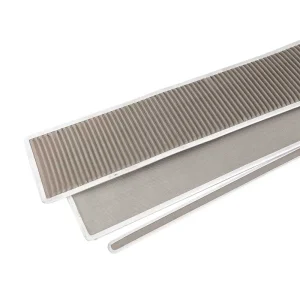
OEM System Solution: Shredding systems equipped with dust extraction cyclones to minimize micro-fines before vacuum drying, coupled with high-flow continuous wire mesh screen changers for seamless filter screen replacement without stopping production lines.
Local Requirement: Heavy-duty industrial packaging producers utilizing post-industrial strapping scrap and dense PET bottle bales.
OEM System Solution: Dual-shaft shredder pre-choppers combined with secondary granulators, backed by high-strength woven wire mesh filter discs engineered to withstand severe melt surge pressures while filtering out coarse impurities.
Navigating global procurement requires balancing capital expenditure (CAPEX), operational durability (OPEX), and long-term supply stability. Operating out of Zhejiang’s premier industrial machinery cluster, our manufacturing facilities embody the core advantages of China’s mature industrial ecosystem:
| Supply Chain Dimension | European / Western OEM Benchmark | Pujiang HG Plastic Machinery Advantage | Customer Value Proposition |
|---|---|---|---|
| Raw Material Integration | Extended alloy procurement lead times (12–16 weeks) | Direct partnership with top-tier domestic steel mills for certified SUS 304/316L & D2 tool steel | Lead times reduced by up to 50%; guaranteed raw material traceability certificates. |
| Manufacturing Ecosystem | Outsourced machining operations across fragmented regional vendors | Fully integrated localized cluster: CNC machining, vacuum heat treatment, and laser welding under one roof | Uncompromised dimensional tolerances (±0.005mm) with maximum manufacturing agility. |
| Cost-to-Performance Ratio | High overhead premiums; costly replacement spare parts | Optimized factory-direct pricing with zero intermediary markup | CAPEX savings of 35%–50% allowing faster payback periods for recyclers. |
| Customization Velocity | Rigid standardized catalog designs; high engineering modification fees | Agile OEM/ODM engineering customization with 3D CAD modeling within 48 hours | Bespoke machinery engineered exactly to existing facility footprints and melt flow specs. |
Our ISO 9001:2015 certified factory integrates strict quality control protocols across every stage of fabrication. From ultrasonic non-destructive testing of welded filter housings to dynamic balancing of heavy shredder rotors, we ensure that every unit leaving our factory meets international operational standards.
The polymer recycling and melt purification landscape is evolving rapidly under the influence of Industry 4.0 automation and advanced chemical recycling methodologies. Our engineering team actively advances next-generation technical roadmaps to maintain market leadership:
Integration of real-time vibration, acoustic, and motor current sensor arrays linked to AI algorithmic controllers. The system automatically adjusts hydraulic pusher feed pressure and rotor speed in response to material density shifts, preventing rotor jams and optimizing energy usage per kg of shredded PET.
Development of multi-layer gradient-density metallic felt candle filters capable of continuous operation down to 3 microns. This technology bridges mechanical recycling outputs directly into optical-grade PET film lines and fine filament microfibers.
Next-gen automatic backflush melt filtration systems configured to purge accumulated contaminants with minimal polymer loss (< 0.1% melt loss per cycle), ensuring continuous non-stop extrusion during high-contaminant post-consumer flake processing.
Deploying heavy industrial recycling machinery across international boundaries demands full regulatory compliance and robust post-sale localized technical support. Pujiang HG Plastic Machinery Co., Ltd. guarantees complete compliance frameworks for international buyers:
Discover our full lineup of OEM replacement candle filters, pleated stainless steel filter elements, and plastic granulating machines manufactured to exacting specifications.
Answers to technical, operational, and commercial questions queried by OEM procurement directors, plant engineers, and recycling facility operators.