Factory-direct OEM solutions engineered for extreme thermal stability, chemical inertness, and high-pressure extrusion environments.
An authoritative engineering breakdown on structural mesh design, shear rate preservation, differential pressure ($\Delta P$) management, and thermal resilience in continuous extrusion systems.
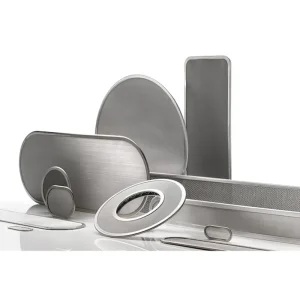
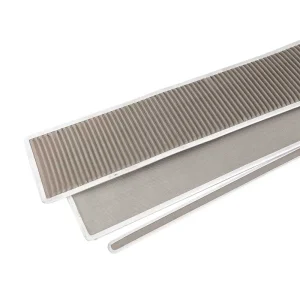
In high-viscosity polymer extrusion (such as PET, PP, PE, and PA66), screen packs must withstand extreme shear stress without causing melt fracture or non-linear velocity gradients. Premium round screen mesh filter packs maintain laminar melt velocity while capturing foreign particulate matter down to 25 microns.
Single-layer screens frequently suffer from wire displacement under high differential pressure ($\Delta P > 250 \text{ bar}$). OEM multi-layer round screens utilize spot-welded perimeter binding (incorporating coarse support mesh sand-wiched around fine filtration mesh) to ensure mechanical rigidity and zero screen pack distortion.
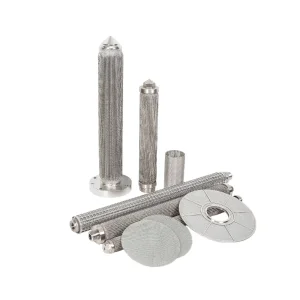
Corrosive polymers such as fluoropolymers (PVDF, PTFE) and flame-retardant additives demand advanced austenitic stainless steel (SUS 316L, 317L) or nickel superalloys (Inconel 625, Hastelloy C-276). Proper alloy selection prevents intergranular corrosion and thermal degradation during long continuous production runs.
Engineered to exceed rigorous ISO 9001 and international extrusion machinery standard operational thresholds.
How global sustainability mandates, PCR resin usage, and high-speed automated extrusion lines are driving next-generation filtration specifications.
With global regulations mandating minimum recycled content in packaging films, bottles, and automotive components, extruders face unprecedented contamination levels. Recycled resins carry paper pulp, aluminum traces, cross-linked polymers, and degradation gels.
To process PCR materials efficiently, processing plants require custom spot-welded round screen packs equipped with high dirt-holding capacity (DHC) reverse dutch weave layers. This prevents rapid screen blinding and reduces costly downtime in continuous pelletizing operations.
Compare mechanical properties, chemical compatibility, and application suitability across primary alloy grades and wire weave geometries.
| Material Grade / Alloy | Weave Structure Type | Micron Rating Range | Corrosion & Temp Resistance | Primary Industrial Application |
|---|---|---|---|---|
| SUS 304 (UNS S30400) | Plain Square Weave | 75μm – 500μm | Moderate Corrosion / Up to 300°C | Standard PE/PP Extrusion, Blown Film & Masterbatch Granulation |
| SUS 316 (UNS S31600) | Twill Weave | 40μm – 200μm | High Acid & Chloride Resistance / 350°C | PET Bottle Flake Recycling, Sheet Extrusion & Packaging Film |
| SUS 316L (Low Carbon) | Dutch Weave / Twilled Dutch | 10μm – 100μm | Superior Intergranular Resistance / 400°C | High-Purity Polymer Candle Filters, Micro-Denier Fiber Spinning |
| Inconel 625 / Hastelloy | Multi-Layer Sintered Wire Mesh | 5μm – 50μm | Extreme Chemical Inertness / Up to 550°C | Fluoropolymer Extrusion (PVDF/PTFE), Corrosive Monomer Polymerization |
Tailored OEM configurations designed to solve specific operational bottlenecks across diverse polymer processing sectors.
Heavy-duty multi-layer spot-welded round screen packs designed for automatic hydraulic slide-plate screen changers. Superior resistance to tear under heavy particle loading in pelletizing machinery.
Rimmed aluminum and copper edge round filter discs engineered for zero gel leakage in biaxially oriented film manufacturing. Maintains structural integrity under ultra-high melt pressures.
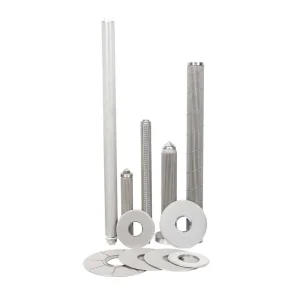
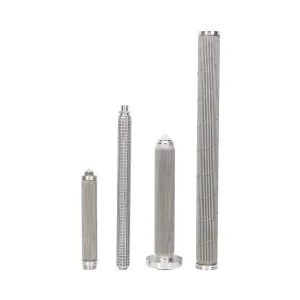
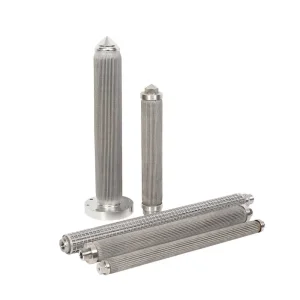
Polymer candle filter elements and sintered screen packs engineered for chemical fiber extrusion (Polyester, Nylon). Maintains absolute uniform flow distribution through spinneret dies.
Rigorous quality verification protocols guaranteeing compliance with international industrial and food-contact regulatory frameworks.
End-to-end dimensional and visual inspection of wire mesh weave density, wire diameter, and spot-weld integrity.
Materials certified compliant for food-contact polymer packaging applications (FDA 21 CFR 177.1520 & EU 10/2011).
Positive Material Identification testing ensures exact chemical composition (Nickel, Chromium, Molybdenum percentage verification).
Customized safety inventory buffers and export packaging for seamlessly integrated Just-In-Time supply chains.
Next-generation engineering initiatives driving efficiency, automation, and material science breakthroughs.
Integrating 3D Computational Fluid Dynamics (CFD) modeling to analyze melt flow velocity profiles across multi-layer screen pack geometries, optimizing pressure drop ($\Delta P$) before tooling production.
Transitioning traditional spot-welded mesh assemblies to diffusion-bonded sintered wire cloth, providing 40% higher structural strength and zero risk of individual wire strand migration.
Developing automated ultrasonic and vacuum pyrolysis cleaning processes that restore continuous screen pack permeability, allowing up to 5 reuse cycles for specialized high-alloy filters.
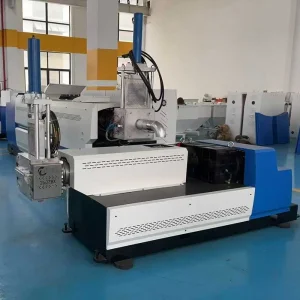
Explore our complete range of specialized industrial filter elements and plastic recycling granulating systems.
Expert answers addressing common procurement, technical specification, and operational performance inquiries.
Single-layer round screens consist of a single sheet of woven wire cloth, ideal for basic extrusion with low contamination. Multi-layer spot-welded screen packs combine fine filtration mesh (e.g., 100 mesh) sand-wiched between coarse drainage and support meshes (e.g., 20 and 40 mesh). The spot-welded construction prevents mesh displacement under high differential pressure ($\Delta P$) and increases total dirt-holding capacity.
SUS 304 is the industry standard for general polyolefin extrusion (PE, PP, PS) where corrosion risk is minimal. SUS 316 contains 2-3% Molybdenum, providing superior resistance against acidic additives, brominated flame retardants, and recycled PVC traces. SUS 316L features a lower carbon content (<0.03%), which prevents carbide precipitation during continuous high-temperature operation (above 300°C), making it essential for critical polymer candle filters and BOPP film production lines.
Premature screen pack blinding occurs when oversized contaminant gels or foreign matter rapidly block the open area of the wire cloth. Choosing an improper weave density or wire diameter reduces open area percentage. Thinner wire diameters increase total open area and flow rate but reduce burst strength. OEM screen design optimizes the ratio between wire diameter and mesh opening to deliver maximal flow throughput while maintaining structural stability under differential pressure.
Rimmed filter discs feature an outer metallic border made from aluminum, copper, or stainless steel strip. The rim acts as a compressible gasket seal inside the screen changer pocket, preventing polymer melt bypass around the edges of the filter. Rimmed discs also protect the delicate wire mesh edges from fraying or tearing during rapid hydraulic screen switches.
Yes, heavy-gauge multi-layer spot-welded and sintered screen packs can be cleaned using thermal burnout ovens (pyrolysis furnaces), ultrasonic cleaning baths, or triethylene glycol (TEG) boiling systems. However, for ultra-fine filtration (<40 microns), single-use replacement is often recommended to guarantee absolute pore opening integrity and prevent polymer degradation products from re-entering the extrusion melt.