Direct factory supply of leaf disc filter cartridges, candle filters, extruder screen mesh, and recycling granulating hardware.
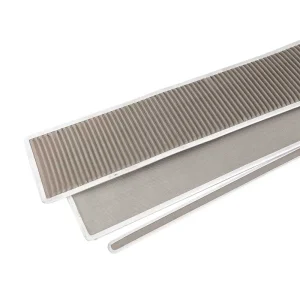
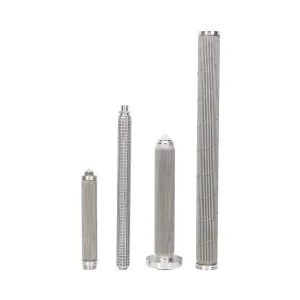
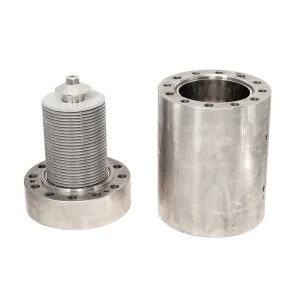
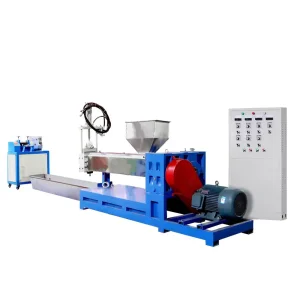
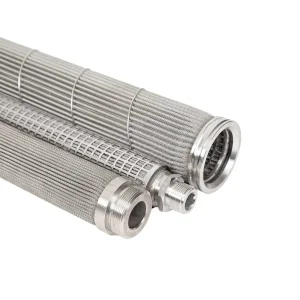
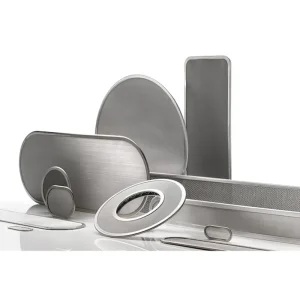
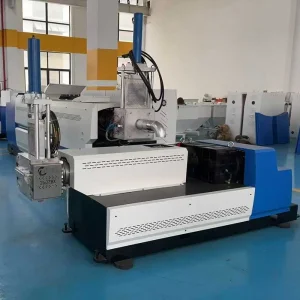
In the era of modern continuous polymer processing, industrial polymer extrusion lines for BOPET (Biaxially-Oriented Polyethylene Terephthalate), BOPP (Biaxially Oriented Polypropylene), BOPA, micro-denier synthetic fibers, and spunbond/meltblown nonwovens operate under extreme physical stress. Fluid polymer melts exhibit complex non-Newtonian rheological behavior at elevated temperatures (ranging from 240°C to 340°C) and extreme operational pressures up to 320 bar. Under these harsh conditions, even sub-micron inorganic particulates, degraded polymer gels, carbon deposits, or catalyst residues can cause severe web breaks, die lines, fiber filament snapped ends, and catastrophic production line downtime.
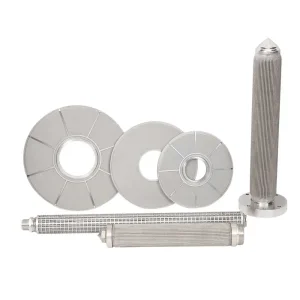
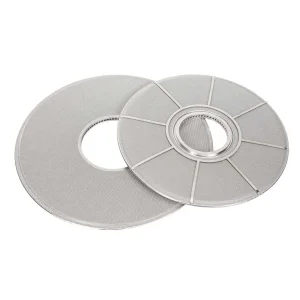
Disc Filter Cartridges—frequently configured as circular leaf discs assembled along central distribution shafts inside specialized melt filter housings—represent the gold standard in high-surface-area melt filtration. Unlike conventional cylindrical filter candles, disc filter cartridges maximize the active filtration surface within a compact vessel footprint. By arranging multiple thin, double-sided filtering discs (often referred to as leaf discs) onto a central perforated collector tube, processing plants achieve up to a 5-fold increase in effective surface area per unit volume.
Information Gain Key Metric: Transitioning from standard screen mesh packs to optimized multi-layer sintered disc filter cartridge assemblies reduces system pressure drop (ΔP) by 35-45%, extends continuous production cycles from 14 days to over 90 days, and dramatically reduces total cost of ownership (TCO) for global polymer exporters.
Global procurement directors and process engineers are increasingly shifting their supply chain reliance toward tier-1 Chinese wholesale disc filter cartridge factories. This structural pivot is driven not merely by competitive unit pricing, but by significant technological maturation across Chinese precision metallurgical manufacturing ecosystems:
China's leading export factories utilize state-of-the-art vacuum sintering furnaces (operating above 1150°C under ultra-clean vacuum environments) to fuse multi-layer stainless steel wire mesh (SUS 316L/304) and fiber felts without binder agents, preserving 100% pore stability and mechanical integrity.
Disc rim sealing requires absolute hermetic integrity. Chinese specialized exporters employ fully automated robotic TIG and micro-plasma welding systems that produce ultra-smooth, continuous outer and inner rim welds, completely eliminating melt bypass risks during high-pressure thermal spikes.
From raw stainless steel wire drawing and precision loom weaving to final ultrasonic bubble-point testing, integrated Chinese industrial clusters in Zhejiang and Jiangsu deliver custom OEM disc filter cartridges within 15–20 calendar days—slashing European OEM lead times by 60%.
Understanding the micro-structure of a leaf disc filter is paramount for optimizing polymer filtration performance. A typical commercial leaf disc consists of an outer rim, an inner hub, a central drainage support mesh core, and protective filtering layers on both sides.
Hard Rim Leaf Discs: Incorporate a precision-machined solid stainless steel outer ring (often SUS 316L) resistance welded to the filter media. Hard rim designs provide structural rigidity capable of withstanding extreme differential pressure surges (ΔP up to 250–320 bar) without disc deformation or distortion. They are mandatory for high-viscosity PET/PA melt lines.
Soft Rim Leaf Discs: Utilize folded stainless steel foil or lightweight crimped outer borders. They offer lightweight, economical alternatives for lower-pressure applications such as polyolefin pelletizing or secondary recycling melt filtration where frequent disc replacement is standard operational procedure.
The choice of filtration medium dictates dirt holding capacity and cleanability:
The global polymer melt filtration industry is undergoing rapid technological transformation fueled by sustainability mandates, recycled resin integration, and demands for extreme film thinness.
With global legislation pushing for post-consumer recycled (PCR) content in packaging, extruders face massive contamination loads (paper fiber, aluminum foil micro-particles, cross-linked gels). Disc filter designs now incorporate gradient-density multi-stage filtration layers to handle heavy particulate loading without rapid blinding.
Driven by optical-grade PET display films, lithium-battery separators, and ultra-fine micro-filament spinning, demand for 3µm to 5µm absolute rating leaf discs made from micro-diameter 316L fiber felts has grown by 28% year-over-year.
Modern factories demand renewable disc cartridges capable of surviving 10–15 pyrolysis and ultrasonic cleaning cycles. Advanced surface passivation treatment prevents chrome depletion during thermal cleaning, doubling overall disc service lifetime.
Wholesale disc filter cartridges exported from leading Chinese manufacturers are deployed across diverse global processing sectors:
In BOPET film lines operating at speeds up to 500 meters/minute, even a 10-micron gel particle can cause film breakage in the transverse orientation frame (TDO). High-density sintered leaf disc cartridges installed in dual-housing continuous screen changers ensure continuous uninterrupted film production for months.
Melt spinning of Poy (Partially Oriented Yarn) and DTY (Drawn Textured Yarn) requires constant melt rheology. Specialized sector-type leaf discs deliver uniform radial flow, preventing melt stagnation zones where polymer degradation and thermal carbonization occur.
Heavy-duty plastic recycling pelletizers rely on stainless steel screen mesh discs and robust disc filter cartridges to continuous-screen post-industrial plastic waste, converting contaminated scrap into pristine recycled polymer pellets.
Selecting the correct disc filter specification requires balancing filtration rating, flow rate, differential pressure tolerance, and cleanability.
| Filter Media Type | Micron Rating (µm) | Porosity % | Gel Retention Ability | Cleanability & Reuse | Primary Application |
|---|---|---|---|---|---|
| 5-Layer Sintered Wire Mesh | 5 – 150 µm | 35% – 50% | Moderate | Excellent (15+ Cycles) | BOPP Film, Extruder Screen Mesh |
| Sintered Metal Fiber Felt (PNS) | 3 – 60 µm | 75% – 85% | Outstanding (3D Depth Capture) | Very Good (8-12 Cycles) | BOPET Optical Film, Fiber Spinning |
| Square Woven SS Mesh Pack | 20 – 250 µm | 40% – 55% | Basic Surface Capture | Fair (Single to Few Uses) | PP/PE Recycling Granulating Machine |
| Dutch Weave Sintered Mesh | 10 – 80 µm | 45% – 60% | Good Surface Capture | Excellent (10+ Cycles) | High-Pressure Chemical Polymer Melt |
When evaluating Chinese wholesale factories and exporters for large-scale disc filter cartridge supply contracts, enterprise buyers should enforce a strict technical auditing protocol based on Google's E-E-A-T (Experience, Expertise, Authoritativeness, Trustworthiness) criteria:
Verify that the factory performs 100% bubble point testing on every manufactured leaf disc to guarantee no pore anomalies or welding micro-cracks exist before export shipment.
Demand certified PMI (Positive Material Identification) mill certificates verifying SUS 316L chemical composition (Nickel > 10%, Molybdenum > 2.0%) to prevent corrosion failures in high-temp polymer melts.
High-end leaf discs for optical film or spinning applications must be final-cleaned in ultrasonic solvent baths and packed inside Class 10,000 (ISO 7) cleanrooms to eliminate air-borne particle contamination.
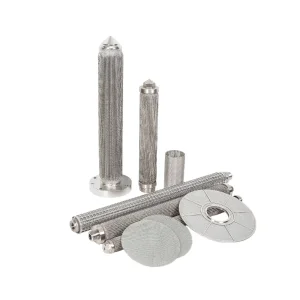
Explore our full wholesale product catalog manufactured directly in Zhejiang, China.
In-depth technical answers for procurement directors and plant process engineers.
The continuous operational lifespan depends on melt cleanliness, polymer viscosity, and filtration rating. Under standard virgin PET film extrusion conditions (25–30 µm rating), premium sintered metal fiber leaf discs run continuously for 60 to 90 days before reaching maximum differential pressure limit (ΔP = 150–200 bar). Once dirty, discs can undergo TEG (Triethylene Glycol) burn-off, calcination, and ultrasonic cleaning, restoring 95–98% of initial permeability across 10 to 15 reuse cycles.
Hard rim leaf discs feature a solid, machined stainless steel outer ring welded to the filter mesh, enabling them to withstand extreme differential pressures up to 320 bar without radial bowing or seal leakage. Soft rim discs use lightweight crimped foil borders suitable for lower pressure (<100 bar) or economic applications. Hard rims are mandatory for continuous high-viscosity PET/PA film lines.
For post-consumer recycled (PCR) PP/PE granulating lines, filtration ratings usually range between 75 µm and 150 µm to balance throughput with contaminant removal. Conversely, optical-grade virgin PET film extrusion requires ultra-fine filtration ratings of 5 µm to 20 µm using porous metal fiber felts (PNS) to capture micro-gels and catalyst debris.
SUS 316L contains 2.0–3.0% Molybdenum and significantly lower carbon content than SUS 304. This chemical makeup confers superior resistance to intergranular corrosion, organic acid degradation at 300°C+, and pitting corrosion during chemical off-line cleaning procedures (e.g., nitric acid or TEG baths).
Tier-1 Chinese manufacturers utilize automated robotic plasma/TIG welding for all inner hub and outer rim joints, followed by 100% Bubble Point Testing (ISO 4003) and dimensional gauge inspection on every single disc before cleanroom packaging.
Yes. Leading exporters provide full OEM reverse-engineering and custom drawing manufacturing. Disc outside diameters (e.g., 7 inches / 177.8mm, 12 inches / 304.8mm), hub splines, and outer rim seals are custom machined to drop directly into existing OEM melt filter vessels with zero modification needed.