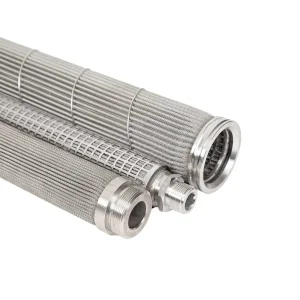
Proven technical hardware optimized for high-viscosity extrusion, post-consumer recycling, and melt-blown synthetic fiber production in Bangladeshi plants.
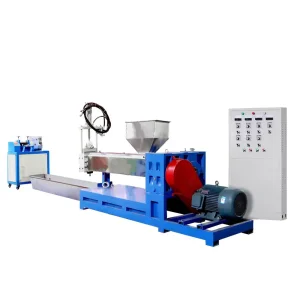
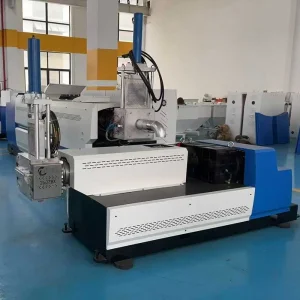
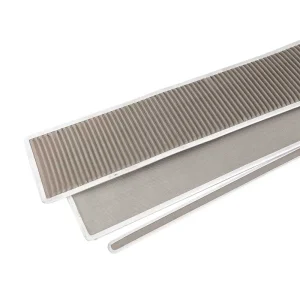
The People's Republic of Bangladesh has emerged as one of the fastest-growing industrial hubs in South Asia. As the nation expands its manufacturing base beyond traditional Ready-Made Garments (RMG) into high-value synthetic textiles, nonwoven hygienic materials, BOPP/PET flexible packaging, and post-consumer plastic circular economies, the technical demand for continuous, high-efficiency melt filtration systems has reached an unprecedented peak.
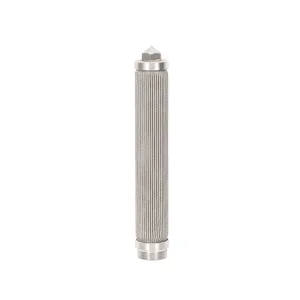
At the center of this industrial evolution is the Polymer Candle Filter Cartridge—a critical mechanical component engineered to operate under extreme thermal environments (up to 350°C) and high hydraulic pressure differentials ($\Delta P$). For Bangladeshi plant engineers, extrusion directors, and factory owners in key industrial zones like Dhaka, Chittagong, Narayanganj, and Gazipur, selecting the appropriate candle filter hardware directly determines product tensile strength, line uptime, energy consumption, and raw material utilization efficiency.
In high-speed polyester (PET), polypropylene (PP), and polyamide (PA) extrusion processes, an unfiltered melt stream containing sub-micron gels, degraded polymer specks, metal wear particles, or carbon deposits leads to filament breakage in spinning nozzles and pinhole defects in blown films. Installing high-surface-area 316L sintered stainless steel candle filter elements reduces scrap rates by up to 34% while extending continuous extrude cycles.
Bangladesh’s domestic plastic recycling sector is transitioning from informal, low-yield processing to fully automated, high-grade pelletizing infrastructure. Driven by global brand sustainability mandates and domestic plastic waste management initiatives, local recyclers process hundreds of thousands of metric tons of post-industrial and post-consumer PET bottles, PE agricultural film, and PP woven sack waste annually.
However, recycled polymers introduced to Bangladesh’s processing lines present significant contamination challenges. Scrap materials often contain silica, paper pulp residue, foreign polymers, and heavily degraded gel formations. Standard woven wire mesh screens blind rapidly under these heavy contaminant loads, causing severe pressure spikes ($\Delta P$) that force frequent machine shutdowns.
By upgrading to continuous duplex Candle Filter Assemblies integrated with automatic hydraulic screen changers, Bangladeshi plants achieve uninterrupted melt filtration. The multi-cylindrical candle structure multiplies the available active filtration area by up to 500% compared to flat screen discs of identical housing footprint, allowing heavy contaminant retention without compromising extruder throughput ($kg/hr$).
Understanding the internal structural metallurgy of candle filter cartridges is vital for specifying elements that withstand high melt viscosities. As an established manufacturer and exporter to Bangladesh, our engineering team manufactures candle filter cartridges utilizing two primary media configurations:
Formed by non-woven micro-denier 316L stainless steel fibers compressed and vacuum-sintered at elevated temperatures, sintered metal fiber felt provides a 3D labyrinthic pore matrix. This architecture exhibits exceptionally high void porosity (up to 80-85%), enabling deep bed contaminant capture with minimal flow resistance.
Constructed by laminating precision-woven stainless steel wire cloth layers (typically SUS304 or SUS316L) bonded via solid-state sintering. This forms a rigid, uniform pore size distribution ideal for precise surface strain retention.
| Filtration Parameter | Sintered Metal Fiber Felt | Multi-Layer Woven Mesh | Standard Single Mesh Screen |
|---|---|---|---|
| Filtration Mechanism | Depth (3D Labyrinth) | Surface / Semi-Depth | Surface Only |
| Void Porosity Vol. % | 75% – 85% | 35% – 50% | 25% – 35% |
| Dirt-Holding Capacity | Exceptional (High) | Moderate - High | Very Low |
| Gel Contaminant Retention | Superior (Deformation Capture) | Moderate | Poor (Gels Extrude Through) |
| Cleaning & Reuse Cycles | 8 to 12 Reuses | 15 to 20 Reuses | Single Use / Disposable |
| Bangladesh Extrusion ROI | Highest (Max Uptime) | High (Precision Applications) | Low (High Labor & Downtime) |
Integrating high-efficiency pelletizing lines with advanced candle filter cartridges requires an optimized mechanical setup. In industrial zones such as Narayanganj and Chittagong, recycling plant designs typically follow this strategic integration roadmap:
Post-consumer PET/PP waste undergoes wet shredding, friction washing, and sink-float separation to strip heavy dirt before thermal plasticization.
Twin-screw extruders melt the polymer while dual vacuum degassing ports extract volatile gases, moisture, and low-molecular-weight impurities.
Melt passes through continuous Polymer Filter (CPF) housings containing SUS316L candle cartridges, filtering out particles down to 10-25 microns.
To maximize Return on Investment (ROI), high-performance stainless steel candle filter elements are designed for thermal and chemical regeneration. Throwing away damaged or fouled filter elements prematurely increases manufacturing costs. We recommend Bangladeshi processing plants establish a standardized 4-stage filter cleaning station:
Importing industrial filtration components and recycling machinery into Bangladesh requires strict compliance with Bangladesh Customs, National Board of Revenue (NBR) directives, and international export documentation standards. As a primary manufacturer and global exporter, we provide complete logistics support:
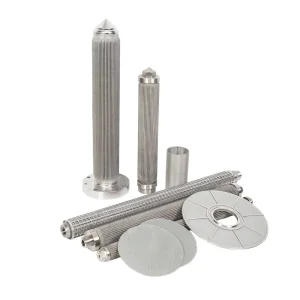
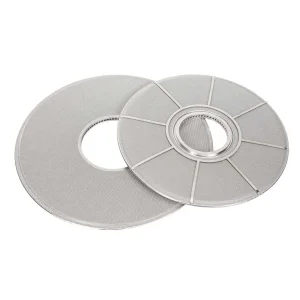
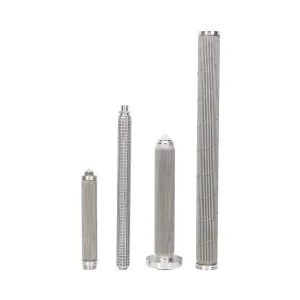
Explore our full spectrum of specialized candle filter cartridges, leaf disc filters, and pelletizing machines delivered to Bangladesh processing facilities.
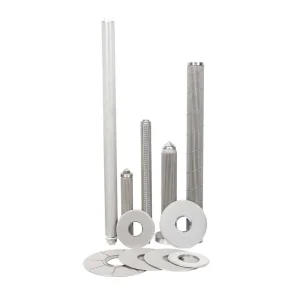
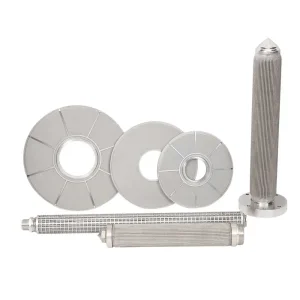
Get expert technical answers regarding polymer candle filter selection, replacement cycles, screen changer compatibility, and import processes.
Partner with a 20+ year specialist manufacturer. Contact our engineering team today to receive CAD specifications, factory-direct quotation, and sample testing kits.