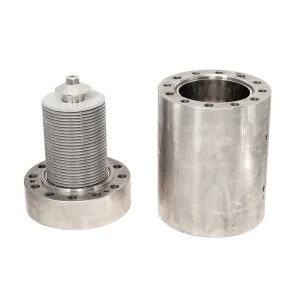
Explore our premium-grade candle filter elements specifically calibrated for plastic extrusion, spunbond nonwoven, and high-temperature polymer processing lines across the Philippines.
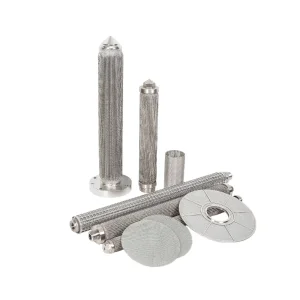
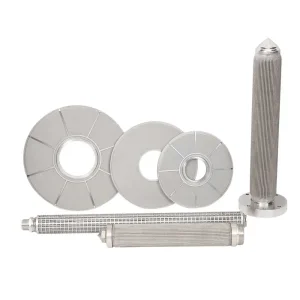
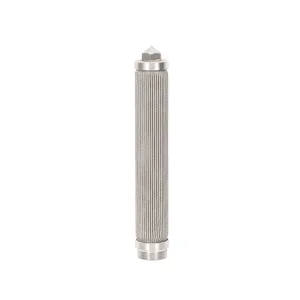
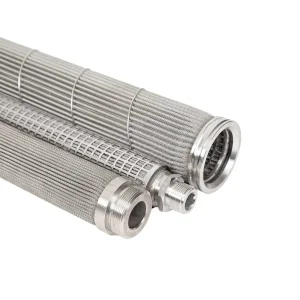
In modern high-viscosity polymer processing, continuous polyester (PET), polypropylene (PP), and polyamide (PA) production demands exceptional melt purity. Candle filter cartridges serve as the mechanical backbone of continuous polymer filtration (CPF) systems, effectively purging gels, degraded cross-linked polymers, and inorganic contaminants prior to extrusion through micro-orifice spinnerets or film dies.
As the global market transitions toward sustainable packaging, circular economy mandates, and higher-density nonwoven media, the operational envelope of candle filter cartridges has expanded dramatically. Global industrial facilities now require micro-scale absolute filtration ratings (down to 3 microns) while handling continuous differential pressures ($\Delta P$) up to 250 bar and operating temperatures exceeding 340°C.
The manufacturing ecosystem of the Philippines is experiencing an accelerated transformation driven by infrastructure investments, expanding consumer food packaging sectors, and legislative updates in waste management.
Key economic zones in Laguna, Cavite, Batangas, and Bulacan host high-density plastic film extruders (BOPP, CPP, LLDPE) and nonwoven hygienic production facilities. Continuous operations require seamless supplies of stainless steel pleated candle cartridges to maintain polymer melt homogenity.
The implementation of the Extended Producer Responsibility (EPR) Act in the Philippines mandates large enterprises to adopt post-consumer recycled content. Processing rPET and recycled polyolefins introduces severe gel concentrations and abrasive particulates, driving demand for high-capacity sintered metal filter elements.
Philippine plant managers favor direct OEM sourcing from Chinese exporters due to rapid maritime transit (5 to 8 shipping days from Ningbo/Shanghai to Manila South Harbor or Subic Bay). This proximity lowers safety stock overhead while guaranteeing quick replacement cycles.
Transitioning from traditional single-use mesh packs to cleanable, reusable 316L stainless steel pleated candle cartridges reduces continuous operating costs by up to 65% annually for Philippine extruders, eliminating unexpected downtime caused by premature screen pack blinding.
A candle filter cartridge is a cylindrical filter element engineered to provide maximum surface area within compact pressure vessels. Understanding its micro-structural composition is essential for optimal filter selection.
Our candle filter cartridges are fabricated using advanced metallurgy processes. Depending on fluid viscosity, thermal conditions, and particle mass, two primary filtration media types are utilized:
Constructed from non-woven micro-diameter stainless steel fibers sintered at high temperatures. This matrix creates a 3D labyrinth depth filter structure with porosity up to 85%, providing low flow resistance and extreme dirt retention for ultra-fine polymer spinning.
Composed of multi-layer stainless steel wire mesh precision-woven and diffusion bonded through vacuum sintering. This geometry ensures robust mechanical strength, fixed pore apertures, and predictable single-pass particulate separation.
To maximize operational lifespan, pleated candle filter designs increase available active filtration surface area by 200% to 400% compared to smooth cylindrical elements of identical outer dimensions.
By expanding surface area ($A$), the face velocity or flux ($V_f = Q / A$) across the media decreases proportionally for a given volumetric flow rate ($Q$). Lower flux dramatically delays differential pressure ($\Delta P$) build-up according to Darcy's Law:
\(\Delta P = \frac{\mu \cdot V_f \cdot L}{k}\)
Where \(\mu\) is dynamic viscosity, \(L\) is media thickness, and \(k\) is permeability. Reduced \(\Delta P\) prolongs on-stream cartridge operational life and prevents gel shear-through.
| Filter Media Type | Material Grade | Micron Rating (\(\mu m\)) | Max Temp (°C) | Max Burst \(\Delta P\) | Primary Industrial Application |
|---|---|---|---|---|---|
| Pleated Sintered Fiber Felt | AISI 316L (1.4404) | 3 – 60 \(\mu m\) (Absolute) | 350 °C | 210 bar | BOPP/BOPET Film, Polyester Spinning |
| Multi-Layer Sintered Mesh | AISI 316L / 304 | 5 – 150 \(\mu m\) | 300 °C | 250 bar | Spunbond Nonwoven, Polymer Recycling |
| Square Weave Wire Cloth | AISI 304 / 316 | 40 – 200 \(\mu m\) | 300 °C | 150 bar | Polyolefin Masterbatch, Extrusion Prep |
| Hastelloy / Special Alloys | Hastelloy C-276 | 5 – 50 \(\mu m\) | 450 °C | 300 bar | Corrosive Monomer & Chemical Refining |
China's industrial filtration manufacturing ecosystem delivers unmatched technical capability, production throughput, and cost competitiveness for global importers and Philippine plant operators.
Our manufacturing centers employ high-temperature vacuum sintering furnaces capable of maintaining precise atmospheric purity. This process eliminates metallurgical oxidation, delivering flawless atomic diffusion bonding between stainless steel layers.
Every batch of candle filter elements undergoes strict quality validation, including First Bubble Point Testing according to ISO 4003, hydraulic collapse testing per ISO 2941, and pressure drop flow characterization per ISO 3968.
Integrated supply chains from raw stainless wire drawing to end-cap machining allow Chinese exporters to supply high-performance candle filters at 30% to 50% lower total cost compared to traditional European OEMs without compromising dimensional precision.
Detailed operational deployment cases illustrating how candle filter cartridges solve specific production bottlenecks in Philippine manufacturing sectors.
A major packaging manufacturer operating in Cavite industrial zones faced recurring pinhole defects and film breakages on a 8.2-meter BOPP line running at 450 m/min. Microscopic analysis revealed micro-gel contamination escaping standard disc filters.
A medical-grade nonwoven fabric mill in Laguna experienced spinneret hole clogging every 48 hours, causing filament variance and frequent line stoppages for die cleaning.
Unlike disposable synthetic depth filters, high-grade stainless steel candle filter cartridges are engineered for repeated cleaning and long-term reusability, yielding superior financial returns.
Cartridges contaminated with high-viscosity polymers undergo thermal pyrolysis or Triethylene Glycol (TEG) boiling tanks at 400°C–450°C to depolymerize synthetic resins into volatile organic vapors.
High-frequency ultrasonic transducers (28–40 kHz) cavity-agitate solvent baths, dislodging carbonized ash and inorganic particulate matter embedded deep within the sintered matrix depth.
Deionized water and compressed air are forced through the cartridge in a reverse flow direction (inside-out) to purge lingering particles prior to bubble point integrity validation.
A premium 316L pleated candle filter element can successfully undergo 10 to 15 full cleaning cycles without degradation of absolute micron retention ratings. This reusable lifecycle reduces consumable component cost per metric ton of processed polymer to less than $0.15.
Next-generation polymer melt filtration innovations shaping the future of industrial extrusion and recycling performance over the next decade.
Advanced 3D-printing mesh technology and asymmetric sintered metal fiber felt allow progressive density gradients (coarse outer layers transitioning to sub-micron inner layers), increasing total dirt holding capacity by up to 50%.
Application of thin atomic ceramic and nano-fluoropolymer coatings on stainless steel wire strands minimizes polymer thermal degradation sticking, facilitating faster cleaning cycles and reduced gel buildup.
Standard operating procedure for specifying, customizing, and importing high-efficiency candle filter cartridges from Chinese OEM exporters.
Define operational parameters: polymer type, melt flow index (MFI), viscosity, operating temperature, max allowable $\Delta P$, and target micron rating.
Validate mechanical connector interface: threaded NPT/BSP, 222/226 double O-ring, bayonet flange, or custom tie-rod insertion geometry.
Ensure supplier provides mill test certificates (MTC) for 316L stainless steel, bubble point integrity reports, and ISO compliance docs.
Coordinate CIF/FOB shipments via Port of Manila or Subic Bay utilizing standard HS Code 8421.99 for liquid filtration components.
Expert engineering responses to common queries regarding candle filter cartridges, custom OEM orders, and importing to the Philippines.
Cylindrical candle filters feature a smooth outer surface, making them easier to mechanically scrape or backwash in low-viscosity applications. Pleated candle filter cartridges fold the filtration medium, increasing total active surface area by 200% to 400%. Pleated cartridges are optimal for high-viscosity polymer melt lines because they significantly reduce face velocity, lower pressure drop ($\Delta P$), and increase dirt holding capacity.
Cartridge replacement is governed by differential pressure monitoring across the filter housing. When $\Delta P$ reaches the manufacturer's critical threshold (typically 150 to 200 bar depending on housing design), the polymer flow must be switched to a secondary filter chamber (dual CPF systems) to allow cartridge removal and ultrasonic or pyrolysis cleaning.
Yes. Our engineering team provides direct 1:1 OEM drop-in replacements. By cross-referencing connection threads, length, outer diameter, and micron ratings, our custom stainless steel candle filter elements match or exceed European OEM filtration performance while dramatically reducing consumable expenses for Philippine plants.
Standard air freight delivery takes 3 to 5 business days. Sea freight shipping from Ningbo, Shanghai, or Shenzhen ports to Manila South/North Harbor or Cebu port takes approximately 5 to 9 days, allowing rapid inventory replenishment for manufacturing facilities in Luzon and Visayas.
Browse our extensive export portfolio of candle filter cartridges, leaf disc filters, screen mesh packs, and plastic recycling equipment.
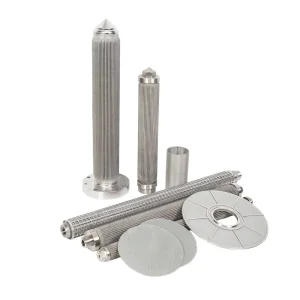
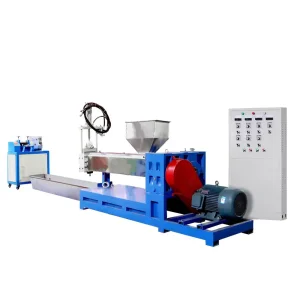
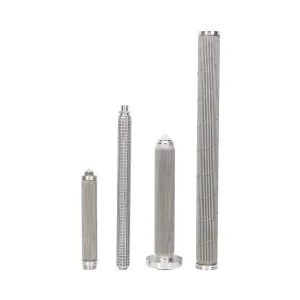
Optimize your melt extrusion performance, eliminate unexpected line stoppages, and reduce consumable filter expenses. Contact our application engineering team today for technical CAD drawings, sample evaluations, or instant quotes.