In high-speed polymer processing—encompassing polyethylene terephthalate (PET), polypropylene (PP), polyamide (PA), and polyethylene (PE) extrusion—the purity of the polymer melt directly dictates finished product tensile strength, optical transparency, barrier consistency, and fiber rupture rates. As global polymer manufacturing transitions toward thinner films, ultra-fine filament deniers, and increased post-consumer recycled (rPET/rPP) content, the rheological and mechanical demands on melt filtration media have escalated exponentially.
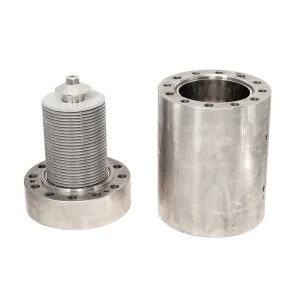
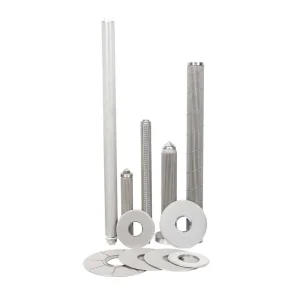
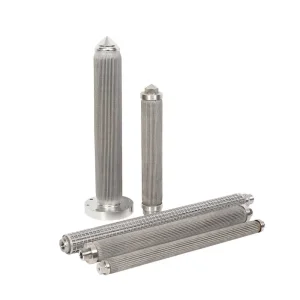
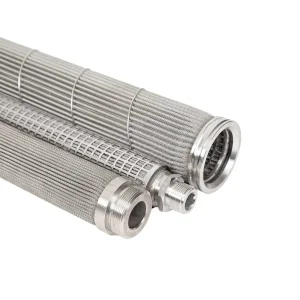
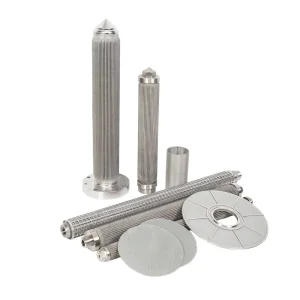
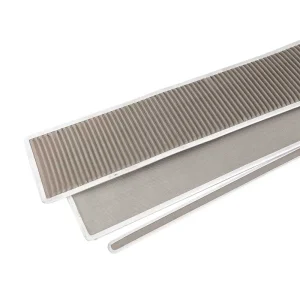
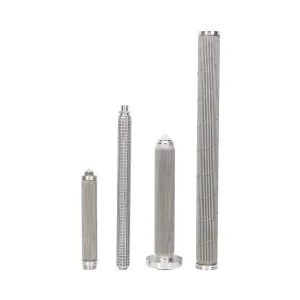
Polymer Candle Filters represent the pinnacle of continuous high-area melt filtration technology. Designed with cylindrical pleated stainless steel wire mesh or multi-layered sintered metal fiber felts, candle filter elements maximize available surface area within compact pressure vessels (Continuous Polymer Filters - CPF). This architectural design minimizes differential pressure ($\Delta P$) buildup, suppresses shear degradation, and prevents micro-gel breakthrough under intense processing conditions exceeding 300°C and 350 bar hydrostatic pressure.
Unlike standard woven wire screens that suffer from wire displacement under high melt viscosity, our 316L sintered metal fiber felts utilize a 3D non-woven matrix. This delivers up to 85% porosity, providing a dirt-holding capacity (DHC) 3.5 times higher than conventional mesh while reducing initial pressure drop by up to 35% under identical melt flow rates.
Egypt has emerged as North Africa’s premier industrial and petrochemical processing hub. Driven by national economic directives under Egypt Vision 2030, the country is expanding its domestic manufacturing base, capitalizing on strategic maritime trade corridors and massive infrastructure investments in the Suez Canal Economic Zone (SCZONE).
Key manufacturing epicenters—including 10th of Ramadan City, 6th of October City, Borg El Arab (Alexandria), Kafr El Dawwar, and Sadat City—house modern extrusion lines, synthetic carpet fiber plants, and flexible packaging convertors. These facilities require dependable, long-life polymer candle filters to sustain continuous 24/7 production cycles.
With major primary polymer producers (such as ETHYDCO, SIDPEC, and EPET) feeding raw resins into local conversion streams, alongside a surging bottle-to-bottle (rPET) recycling sector in the Nile Delta, the demand for fine-micron melt filters capable of handling variable contaminant loads has reached an all-time high.
To serve Egyptian exporters competing in European and Middle Eastern markets, local manufacturers must meet strict international quality criteria (ISO, ASTM, DIN). Pujiang HG Plastic Machinery provides high-grade polymer candle filters engineered specifically to endure local operating environment dynamics—such as ambient thermal variations, power fluctuation recovery resilience, and high ambient particulate challenge—ensuring zero unexpected production halts.
The global polymer filtration market is undergoing a structural shift toward extreme-performance media. Driven by lightweight packaging, multi-layer co-extrusion, and stringent circular economy mandates, filtration systems must now achieve higher purity levels without compromising operational throughput.
Post-consumer recycled resins (rPET, rPP, rHDPE) introduce inorganic ash, paper fibers, aluminum trace specks, and cross-contaminated polymers. Modern candle filters must incorporate graded-density depth layers to trap coarse debris on the exterior while capturing sub-micron gels within the core.
Micro-gels (degraded polymer chains with elevated molecular weight) deform under pressure and squeeze through standard mesh geometries. Our candle elements utilize high-shear depth tortuosity within 316L metal fiber felt to trap and retain deformable gels under dynamic shear rates.
Uneven flow distribution within a filter housing creates stagnation zones, leading to polymer thermal degradation (coking). Optimized candle core perforations and hex-pleat geometry guarantee uniform flux across every square centimeter of media.
We tailor our polymer candle filter specs to match the exact operational conditions of Egyptian industrial sub-sectors:
| Application Sector | Key Egyptian Industrial Clusters | Primary Polymer & Process | Filtration Challenge | Recommended Candle Spec |
|---|---|---|---|---|
| BOPP / BOPET Packaging Film | 10th of Ramadan City, Sadat City | PP / PET (Intrinsic Viscosity: 0.65 - 0.85) | Pinholes, film breaks during bi-axial stretching | 316L Sintered Fiber Felt, 5μm - 10μm absolute, Pleated design |
| Bottle-to-Bottle rPET Recycling | Borg El Arab (Alexandria), 6th of October | Recycled PET Flakes & Granules | Rapid $\Delta P$ spikes, high ash content, paper debris | Asymmetric multi-layer wire mesh pack, 25μm - 40μm, heavy-duty core |
| Synthetic Fiber Spinning | Kafr El Dawwar, Delta Region | Polyester (PET) / Nylon (PA6/66) Melt Spinning | Filament snapping, spinneret nozzle clogging | 316L Micro-fiber felt, 3μm - 7μm rating, vacuum-sintered finish |
| Spunbond & Meltblown Nonwovens | SCZONE Industrial Parks, Giza | High MFI Polypropylene (MFI 25 - 1200) | Thermal degradation specks, melt-blown shot formation | High-porosity candle elements with extended surface area geometry |
Our polymer candle filters are manufactured under strict metallurgical controls, utilizing prime raw materials sourced from certified global mills. Every element undergoes bubble-point integrity testing according to ISO 4003 and air-flow permeability validation according to ISO 4022.
As polymer processing equipment advances toward higher automation and zero-defect quality demands, our R&D roadmap focuses on three next-generation breakthroughs:
Applying Chemical Vapor Deposition (CVD) ceramic nano-coatings to the internal stainless steel fiber matrix. This lowers surface energy, preventing degraded polymer chains from adhering to the metal surface during high-temperature stagnation periods.
Embedding high-temperature RFID tags into the candle adapter base. This enables Egyptian factory managers to log ultrasonic cleaning cycles, track cumulative exposure hours, and predict replacement intervals via predictive maintenance platforms.
Developing eco-friendly, low-emission cleaning processes—combining vacuum pyrolysis with specialized solvent ultrasonic baths—to increase filter re-usability up to 20 cycles without micro-structure deformation.
Challenge: A major flexible packaging manufacturer in 10th of Ramadan City experienced severe web-break rates on their 8.2-meter BOPP line. Micro-gel contamination forced pack changes every 12 days, driving up scrap rates.
Solution: HG Plastic Machinery supplied customized 316L Sintered Fiber Felt Candle Filters (10-micron absolute rating) featuring asymmetric multi-layer gradient depth construction.
Results: Pack lifespan extended from 12 days to 45 days continuous operation. Web breaks reduced by 82%, generating an estimated annual cost savings of $140,000 USD.
Challenge: An rPET pelletizing plant in Borg El Arab struggled with rapid differential pressure ($\Delta P$) buildup caused by fine paper ash and residual adhesives in post-consumer bottle flakes.
Solution: We engineered a high-surface-area pleated candle pack utilizing coarse stainless steel mesh outer layers with high-capacity 25-micron sintered wire cloth inner media.
Results: The plant achieved a 2.5x increase in dirt-holding capacity, allowing smooth, continuous extrusion without premature candle blinding or thermal degradation.
Polymer candle filters represent a substantial capital investment. When maintained according to engineered protocols, high-quality stainless steel candle elements can be cleaned and regenerated multiple times, significantly reducing the Total Cost of Ownership (TCO).
Boiling in Triethylene Glycol (TEG) at 280°C or controlled vacuum pyrolysis at 450°C to burn off residual polymer matrix.
Immersion in high-frequency ultrasonic solvent baths (28-40 kHz) to dislodge carbonized particles from deep media pores.
Reverse hydro-flushing with demineralized water at 80-100 bar to flush out loosened particulates from the inner core outward.
Bubble Point Testing (ISO 4003) and Air Permeability Validation (ISO 4022) to confirm zero pore damage before reuse.
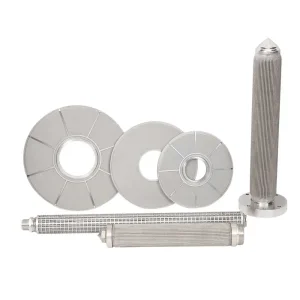
Technical guidance for plant engineers, procurement managers, and OEM operators in Egypt:
Upgrade your Egyptian extrusion, film, or recycling line with custom-engineered 316L polymer candle filters. Request technical datasheets, CAD drawings, or competitive pricing today.