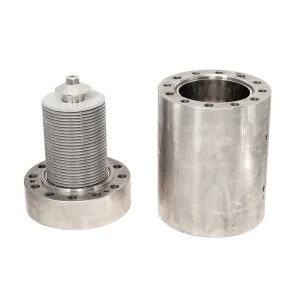
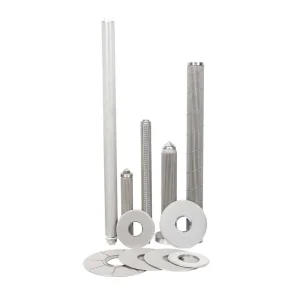
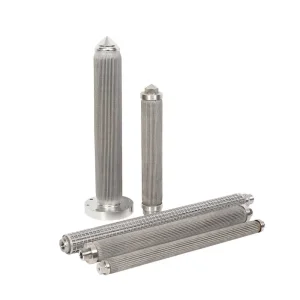
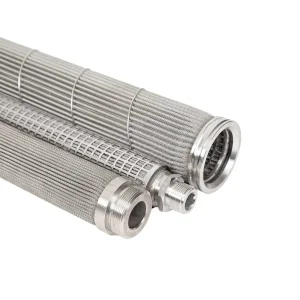
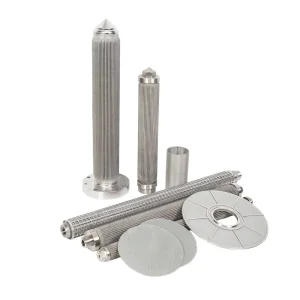
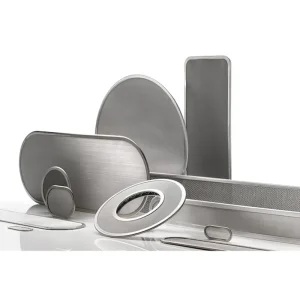
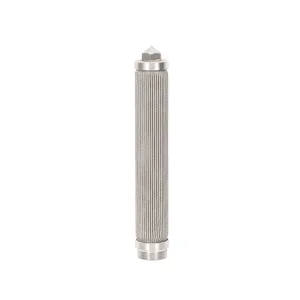
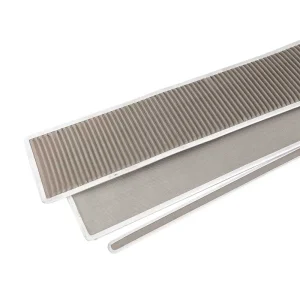
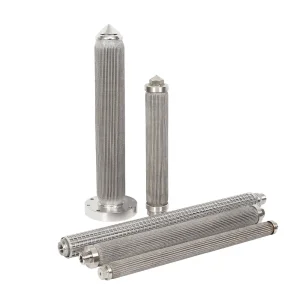
High-performance custom polymer candle filter elements engineered for Midwest manufacturing plants.
The Greater Chicago Metropolitan Area (Chicagoland)—encompassing industrial corridors from Elk Grove Village, O'Hare Logistics Park, and Itasca to Will County and Northern Indiana—stands as one of North America's premier hubs for advanced polymer processing, flexible packaging manufacturing, and synthetic resin compounding. Operating within this high-throughput ecosystem requires continuous extrusion, zero-defect film blowing, and rigorous quality control. At the heart of these high-temperature, high-pressure processing lines is the polymer candle filter element.
Polymer candle filters (also known as Continuous Polymer Filtration cartridges or CPF candles) are specialized, high-capacity metallic filter elements designed to purge gels, degraded polymers, specks, and inorganic particulates from high-viscosity polymer melts. Whether processing Polyethylene Terephthalate (PET), Polypropylene (PP), Polyamide (Nylon/PA), or Post-Consumer Recycled (PCR) resins, selecting the optimal polymer candle filter suppliers in Chicago directly dictates operational metrics: mean time between cleanings (MTBC), pressure drop ($\Delta P$) dynamics, shear rate stability, and overall process profitability.
Information Gain Insight: Unlike standard wire mesh discs, modern multi-layer pleated stainless steel candle filters increase active filtration area by up to 500% within the same vessel envelope, mitigating shear degradation and extending pack life in high-speed Chicago extrusion plants by up to 3.2 times.
The global polymer melt filtration market is undergoing a structural paradigm shift driven by three macro forces: global sustainability mandates for recycled content, demand for ultra-thin optical films, and the rapid expansion of high-speed non-woven fiber lines.
Integrating Post-Consumer Resin (PCR) into film and bottle production introduces non-homogenous contaminants, cross-polymers, and residual paper/aluminum fragments. Premium candle filters with graduated pore depth are essential to retain solids without premature blinding.
In high-viscosity applications such as BOPET and optical-grade polycarbonate, hard particles are not the only threat; soft cross-linked gels cause pinholes and optical distortions. Candle media engineered with sintered metal fiber micro-structures trap gels under dynamic shear rates.
Extruder energy draw is directly proportional to hydraulic flow resistance across the filter pack. Low-$\Delta P$ candle element geometry reduces motor torque consumption on large twin-screw extruders by 8% to 14%.
From a supply chain perspective, Chicago serves as the critical central logistics node connecting Midwestern resin producers (such as those in Texas and the Gulf Coast via rail networks) with regional converters and national packaging distributors. Sourcing high-performance polymer candle filter elements locally in Chicago ensures uninterrupted supply, rapid re-meshing services, and technical auditing.
Polymer candle filter elements are high-precision engineering components subject to thermal stresses, aggressive fluid drag, chemical degradation, and high pressure differentials. Understanding their physical construction allows process engineers in Chicago to select the ideal configuration for their melt line.
A industrial-grade polymer candle filter element consists of four primary structural elements:
| Material Grade | Composition Highlights | Corrosion Resistance | Max Temp (°C) | Best Chicago Industrial Application |
|---|---|---|---|---|
| SUS 304 | 18% Cr, 8% Ni | Standard / Good | 400°C | General PP/PE film, Masterbatch compounding, Virgin PET pellets |
| SUS 316L | 16% Cr, 10% Ni, 2-3% Mo (Low Carbon) | Excellent (Acid & Chloride Resistant) | 550°C | BOPET optical film, Corrosive polymers, Thermal cleaning cycles (TEG/Pyrolysis) |
| Hastelloy C-276 | Nickel-Molybdenum-Chromium Alloy | Superior (Aggressive Chemical Attack) | 650°C | Fluoropolymers (PVDF, PTFE melt processing), Halogenated plastics |
The fluid dynamics of polymer melt passing through a candle filter element are governed by non-Newtonian flow kinetics. As polymer shear rate ($\dot{\gamma}$) increases, apparent viscosity ($\eta$) drops (shear thinning). The differential pressure across the candle pack ($\Delta P$) can be modeled using a modified Darcy-Forchheimer equation:
ΔP = (η / K) · (v · t) + β · ρ · v² · t
Where η = Melt Viscosity (Pa·s), K = Permeability of Sintered Fiber Media (m²), v = Superficial Velocity (m/s), t = Filter Medium Thickness (m), β = Non-Darcian Inertial Coefficient, and ρ = Melt Density (kg/m³).Optimizing candle length (commonly 500mm, 750mm, or 1000mm) and outer diameter (typically 60mm or 70mm) ensures superficial velocity ($v$) remains below critical thresholds ($v < 0.01\text{ m/s}$), preventing gel shear-through.
Different manufacturing zones within Chicagoland demand specialized polymer filtration configurations. Below are detailed operational scenarios based on local industrial capabilities:
High-speed biaxially oriented polypropylene lines require long operational cycles without shutdowns. Multi-pleated SUS 316L candle filters rated at 10–20 microns prevent die-lines and web breaks, guaranteeing pinhole-free oxygen barrier films.
Processing 100% PCR PET flakes from Midwest municipal streams introduces silica, aluminum dust, and degraded PET gels. Sintered stainless steel fiber candles with 40-micron depth filtration absorb high particulate loads without sudden pressure spikes.
Manufacturing medical tubing, IV bags, and spunbond non-woven fabrics demands absolute purity. Ultra-clean SUS 316L candle filters with 3-micron precision guarantee zero particulate contamination and pass stringent biocompatibility standards.
Industrial clients across Illinois and the Midwest operate under strict regulatory and quality frameworks. When evaluating candle filter manufacturers and suppliers in Chicago, compliance documentation and physical testing protocols are non-negotiable.
Every manufactured candle filter undergoes bubble point testing to determine maximum pore size and verify structural integrity, ensuring zero weld defects or mesh breaches prior to deployment.
Filter candle assemblies designed for high-pressure CPF housings comply with ASME Section VIII design criteria, guaranteeing mechanical stability under dynamic pressure surges up to 300 bar.
Complete heat numbers, raw material mill test certificates (MTRs), and full batch traceability are maintained for every stainless steel wire batch and sintered fiber lot.
Local Logistics & Emergency Support in Chicago: Stocking critical candle filter dimensions locally in Chicago reduces plant downtime from weeks to hours during unplanned pack changes or polymer contamination spikes.
One of the major economic advantages of metallic stainless steel polymer candle filters over disposable media is their cleanability and reusability. A high-quality SUS 316L candle filter can undergo 10 to 20 cleaning cycles when processed correctly, drastically lowering total cost of ownership (TCO).
As Chicago extrusion operations move toward Industry 4.0 smart manufacturing, polymer filtration systems are integrating advanced sensing and material science innovations:
By connecting upstream pressure transducers to machine learning models, plant operators can predict exact filter pack blinding curves, scheduling automated backwashes or pack changes without unexpected downtime.
Next-generation candle filters utilize multi-density fiber gradients—coarse media on the upstream side to trap large gels, transitioning to ultra-fine fibers downstream—increasing dirt holding capacity (DHC) by up to 40%.
Specialized surface treatments reduce melt adhesion inside the core tube, lowering residence time distribution (RTD) and preventing thermal degradation of heat-sensitive resins like PVC and EVOH.
Comprehensive range of filtration cartridges, wire mesh screens, and CPF elements for Chicago industries.
Partner with experienced polymer filtration engineers. Receive custom drawing audits, fluid dynamic calculations, and OEM pricing within 24 hours.
Send Inquiry Now