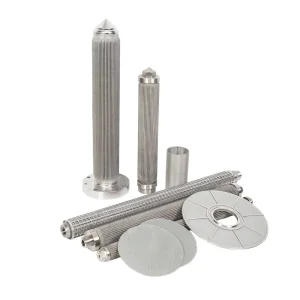
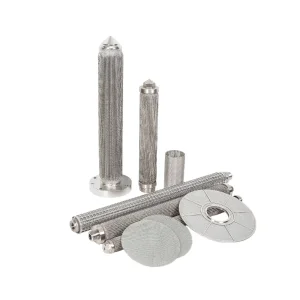
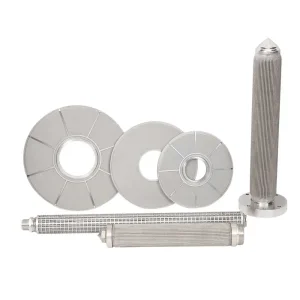
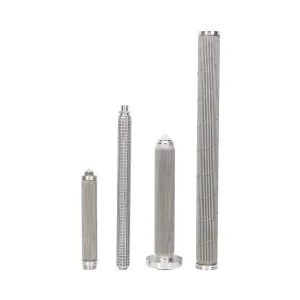
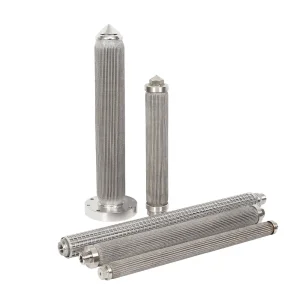
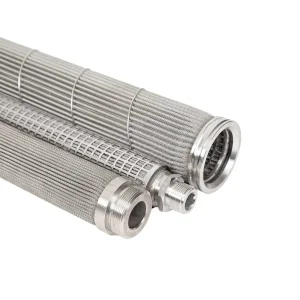
Direct factory-supplied SUS 304/316L candle filter elements engineered for low pressure drops, maximum void volume, and extended service life.
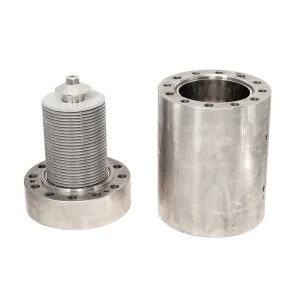
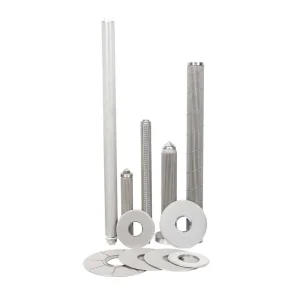
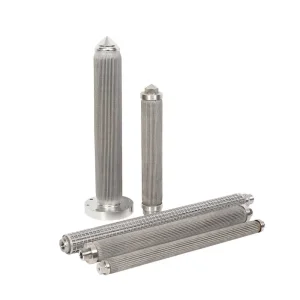
The Greater Boston metropolitan region—extending through key industrial corridors along Route 128, I-495, and specialized manufacturing nodes in Marlborough, Devens, Waltham, and Worcester—represents one of North America’s most sophisticated epicenters for precision engineering, biopharmaceuticals, medical devices, and advanced polymer synthesis. Unlike traditional commodity plastic processing regions, the Boston market places extreme operational demands on polymer filtration technologies. Manufacturers in eastern Massachusetts produce ultra-high-purity optical films, bio-compatible medical tubing, micro-porous fluoropolymer membranes, and engineered resins destined for aerospace and defense electronics.
In these high-value production environments, microscopic gels, degraded polymer specks, airborne particulates, or metallic shear debris can lead to catastrophic end-product failure. A single void pinhole in an intravascular catheter tube manufactured in Marlborough or a gel defect in an optical-grade BOPET film extruded along the I-495 corridor results in immediate batch rejection, regulatory non-compliance under FDA/cGMP standards, and thousands of dollars per hour in unexpected downtime. Consequently, Boston process engineers and plant operators demand industrial continuous polymer filter (CPF) candle elements that combine sub-micron filtration accuracy, structural integrity under differential pressures exceeding 210 bar (3,050 psi), and extended cleaning regeneration lifecycles.
SEO & Engineering Insight: Polymer candle filter systems serving the Boston market must balance high dirt-holding capacity (g/m²) with minimal hydraulic pressure drop (ΔP). Utilizing sintered 316L stainless steel fiber felt media increases void fraction up to 80%, providing up to 3x the operational lifespan of traditional woven wire mesh single-layer screens.
A polymer candle filter element is a cylindrical, high-surface-area filtration component engineered specifically to operate inside continuous polymer filtration (CPF) duplex housings. Operating under high temperatures (typically between 200°C and 350°C) and extreme melt viscosities ($100$ to $10,000 \text{ Pa}\cdot\text{s}$), candle filters function as the final line of defense before the polymer melt enters the spin pack, sheet die, film blowing head, or pelletizing strand plate.
High-performance polymer candle filter cartridges utilize a multi-layer composite structure designed to withstand severe shear forces without media migration or pore deformation. The primary functional layers include:
Heavy-duty coarse woven wire mesh in SUS 304 or 316L that shields the delicate inner filtration layers from physical abrasion during installation and pre-filters large particulate surges.
A non-woven matrix of microscopic stainless steel fibers (down to 2 microns) thermally sintered at high temperatures. Provides high void volume (up to 80-85%) and superior dirt-holding depth filtration.
A heavy-walled, high-strength perforated steel tube engineered to resist extreme crush forces caused by sudden melt pressure spikes (ΔP up to 250 bar) during polymer switching or cold starts.
Polymer melts exhibit non-Newtonian, shear-thinning fluid behavior (pseudoplasticity). When high-viscosity resins such as Polyethylene Terephthalate (PET), Polyamide (PA6/PA66), Polypropylene (PP), or Polycarbonate (PC) pass through candle filter elements, the shear rate inside the micro-pores significantly alters local melt viscosity. Poorly designed filter pleats can lead to localized "dead zones" where polymer residence time is prolonged. Under high processing temperatures, stagnant polymer undergoes thermal degradation, cross-linking, and charring, eventually sloughing off as black specks into the downstream product.
HG win-series polymer candle filters feature optimized triangular dynamic pleat geometry. By ensuring uniform channel flow vectors across the entire filter length, dead zones are eliminated, residence time distribution (RTD) is narrowed, and pressure drops ($\Delta P$) are minimized across the filtration assembly.
Standard parameters for Boston chemical, pharmaceutical, and high-viscosity polymer extrusion applications.
| Parameter / Characteristic | Sintered Metal Fiber Felt Media | Multi-Layer Stainless Wire Mesh | Sintered Wire Mesh Laminate |
|---|---|---|---|
| Standard Material Grade | SUS 316L / AISI 316L (Low Carbon) | SUS 304 / SUS 316 / Hastelloy | SUS 316L Stainless Steel |
| Filtration Rating (Absolute) | 3 µm – 60 µm | 10 µm – 250 µm | 5 µm – 100 µm |
| Porosity / Void Volume | 75% – 85% | 35% – 50% | 50% – 65% |
| Max Operating Temperature | 350°C (662°F) continuous | 300°C (572°F) continuous | 350°C (662°F) continuous |
| Max Differential Pressure (ΔP) | 210 bar – 250 bar | 150 bar – 180 bar | 210 bar |
| Dirt Holding Capacity (g/m²) | High (Up to 3x Wire Mesh) | Moderate | High |
| Cleaning & Regeneration | TEG Hydrolysis, Pyrolysis, Ultrasonic | Solvent Backwash, Ultrasonic | TEG, Chemical Bath, Ultrasonic |
| Primary Boston Applications | BOPET/BOPP Film, Spunbond Nonwovens | Pelletizing, Standard Extrusion | Medical Tubing, High-Purity Resins |
To maximize operational efficiency and maintain competitive dominance, polymer processing plants across Massachusetts utilize custom-tailored polymer melt filter cartridges optimized for specific regional sub-sectors:
Challenge: Processing high-viscosity bio-compatible PEEK, Thermoplastic Polyurethane (TPU), and fluoropolymers requires removing sub-5 micron particulates to prevent micro-ruptures in medical tubing.
Solution: Pleated SUS 316L sintered metal fiber candle filters rated at 3µm absolute, manufactured under ISO cleanroom conditions with complete material traceabilty (EN 10204 3.1 certs).
Challenge: High-speed extrusion of ultra-thin BOPET optical films demands flawless gel capture without causing melt pressure fluctuations that induce film thickness variation (gauge band defects).
Solution: High-area cylindrical pleated candle cartridges featuring multi-layered sintered fiber felt, offering extended on-stream lifecycle and minimal initial differential pressure drop (ΔP < 15 bar).
Challenge: Processing highly contaminated post-industrial and post-consumer recycled (PCR/PIR) polyolefins causes rapid filter clogging and screen blinding.
Solution: Robust SUS 304 multi-layer square weave mesh candle elements engineered for high dirt-holding capacity, quick backwashing capability, and cost-effective multi-cycle thermal cleaning.
Purchasing industrial filtration hardware in the Greater Boston market requires strict adherence to international metallurgical and manufacturing standards. Pujiang HG Plastic Machinery enforces comprehensive quality assurance protocols on all polymer candle filters exported to North American clients:
All stainless steel raw materials (SUS 304 / 316L) conform to FDA 21 CFR 177.1550 and food-contact extraction standards, ensuring safe usage in pharmaceutical packaging and medical extrusion lines.
Every manufactured batch undergoes rigorous bubble point testing in accordance with ASTM F316 guidelines to guarantee absolute micron rating accuracy, pore integrity, and zero manufacturing defects.
From raw wire drawing to automatic plasma welding, every candle filter cartridge is produced under strict ISO 9001 certified quality controls with full material heat number tracking.
Unlike disposable polymer filter bags or single-use screen packs, high-grade SUS 316L candle filters are engineered as durable capital assets capable of undergoing multiple cleaning and regeneration cycles. When polymer melt pressure (ΔP) reaches the recommended terminal limit (typically 150–200 bar), the spent candle elements are removed from the CPF housing and restored to near-virgin condition using standardized New England industrial cleaning protocols:
By utilizing high-quality SUS 316L sintered fiber felt candle elements, Boston extrusion facilities typically achieve 15 to 25 successful cleaning cycles per filter cartridge, reducing recurring consumable filter costs by up to 70% annually compared to lower-grade alternatives.
As polymer processing evolves towards higher throughputs, bio-based feedstocks (such as PLA, PHA, and bio-PET), and smart manufacturing, continuous polymer filtration technology is undergoing rapid innovation. HG Plastic Machinery is actively developing and delivering advanced filtration architectures engineered for tomorrow’s manufacturing challenges:
Integration of smart pressure transducer arrays and IoT monitoring algorithms that track real-time ΔP rise rates, predicting exact filter blinding points and scheduling optimal CPF housing changeovers without human intervention.
Processing heat-sensitive bioplastics requires ultra-low residence time and minimal pressure build-up. Our next-gen gradient pore sintered felts prevent thermal degradation of PLA and PHA during micro-filtration.
Applying specialized surface passivations and nano-ceramic coatings to SUS 316L wire mesh elements reduces polymer adhesion, slowing gel buildup and increasing operational run-times between cleanings by up to 40%.
Direct insights from our senior filtration engineering team regarding selection, lead times, and technical specifications.
SUS 304 provides robust mechanical strength and oxidation resistance suitable for standard polyolefin extrusion (PP, PE) and non-corrosive resins. SUS 316L contains molybdenum (2-3%) and lower carbon content, providing superior resistance to chemical pitting, organic acids, and aggressive additives commonly encountered in PET, Polyamide, bio-polymers, and fluoropolymer processing.
Pleated candle filters increase total surface area by 200% to 400% compared to cylindrical filters of the same outer diameter. Pleated elements are ideal for high-throughput lines (such as BOPET/BOPP films) requiring low initial pressure drops (ΔP) and long operational cycles. Cylindrical elements are preferred for extremely high-viscosity melts or processes where dynamic flow channel cleaning is paramount.
For standard OEM dimensions and micron ratings, production turns around in 7 to 10 business days. Expedited air freight directly to Boston Logan International Airport (BOS) takes 3 to 5 business days, ensuring emergency replacement elements arrive rapidly to minimize plant downtime. Ocean freight to the Port of Boston is available for bulk scheduled inventory replenishment.
Yes. We regularly produce exact 1:1 dimensional drop-in replacement candle filter elements compatible with major international Continuous Polymer Filter (CPF) housing brands (including Maag, Nordson, Kreyenborg, Seebach, and Fuji Filter). We match thread connections, NPT/BSP fittings, hexagonal end caps, and seal seating surface specs precisely.
Partner with Pujiang HG Plastic Machinery for OEM/ODM factory-direct polymer candle filters engineered to your exact micron ratings, thermal limits, and pressure tolerances.
Send Inquiry NowFrom spunbond nonwoven cartridges to high-viscosity melt filtration solutions, explore our export-grade manufacturing capabilities.